
Solving Caffeine Dependence: Proven Treatment Methods
Key Takeaways
- Caffeine withdrawal is a formal DSM-5 diagnosis while caffeine use disorder remains a condition for further study, with persistent failed reduction attempts sitting at the symptom cluster’s center 12.
- Cold turkey usually fails because the 12-to-24 hour onset and 2-to-9 day withdrawal window drive people back to baseline before symptoms resolve 1.
- Structured gradual tapering paired with CBT tools produced durable reductions out to one year in manualized trials, even when delivered as a self-directed workbook 3, 4.
- Plan for a difficult mid-taper stretch where headache, fatigue, and cognitive fog peak; protect sleep, hold the current step, and avoid escalating back to baseline 13.
When the ‘Acceptable’ Stimulant Becomes a Clinical Problem
You already know what dependence feels like from the inside. You know the difference between liking a substance and needing it to feel normal. So when the third coffee of the day stops working, and the fourth one only takes the edge off a headache you’ve started waking up with, you’re not confused about what’s happening. You’re just hoping caffeine doesn’t count.
Here’s the honest answer: caffeine sits in a strange clinical gray zone. The DSM-5 formally recognizes caffeine withdrawal as a diagnosable condition, and caffeine use disorder has been proposed as a condition for further study 2, 7. That’s not the same status as cocaine or methamphetamine, and pretending otherwise would be dishonest. But it’s also not nothing. Researchers have documented the same pattern you’d recognize from any stimulant: tolerance, withdrawal, persistent failed attempts to cut down, and continued use despite real consequences 6.
If you’re in recovery from other stimulants, you’ve probably been told caffeine is the one you get to keep. For some people, that’s true. For others, it quietly becomes the substance that runs the morning, dictates the afternoon, and keeps the conditioning loop intact under a different name. This article isn’t about scaring you off coffee. It’s about what actual caffeine dependence treatment looks like when caffeine has crossed from habit into clinical territory, and what the evidence says works.
What Caffeine Dependence Actually Looks Like on Paper
The DSM-5 Status: Withdrawal Is Real, Use Disorder Is Still Debated
Here’s where the diagnostic picture gets honest. The DSM-5 lists caffeine as one of ten substance classes, and caffeine withdrawal is a formally recognized diagnosis 7, 17. That part isn’t controversial. If you stop drinking your usual amount and a headache settles in by the next morning, a clinician can name what’s happening and chart it.
What’s still debated is the bigger label. Caffeine use disorder isn’t a full diagnosis in DSM-5 the way alcohol use disorder or stimulant use disorder is. It sits in Section III as a condition for further study, meaning the criteria are written down and being tested, but they haven’t crossed into formal nosology yet 2, 6. Some researchers argue the evidence is already strong enough; others want more data before adding another disorder to the manual 7.
You don’t need to wait for that debate to finish to take your own pattern seriously. The proposed criteria look familiar:
- persistent desire or unsuccessful efforts to cut down
- continued use despite knowing it causes physical or psychological problems
- tolerance
- withdrawal
- using more than intended 6
Recent network analysis points to the persistent desire to cut down as one of the most central symptoms in the whole pattern 12. If you’ve tried to reduce and kept failing, that isn’t a willpower issue — it’s the symptom researchers find sitting at the center of the cluster.
Caffeine doesn’t have to be a Schedule II problem to be a real one. It just has to be running you.
The Symptom Pattern You’re Probably Recognizing
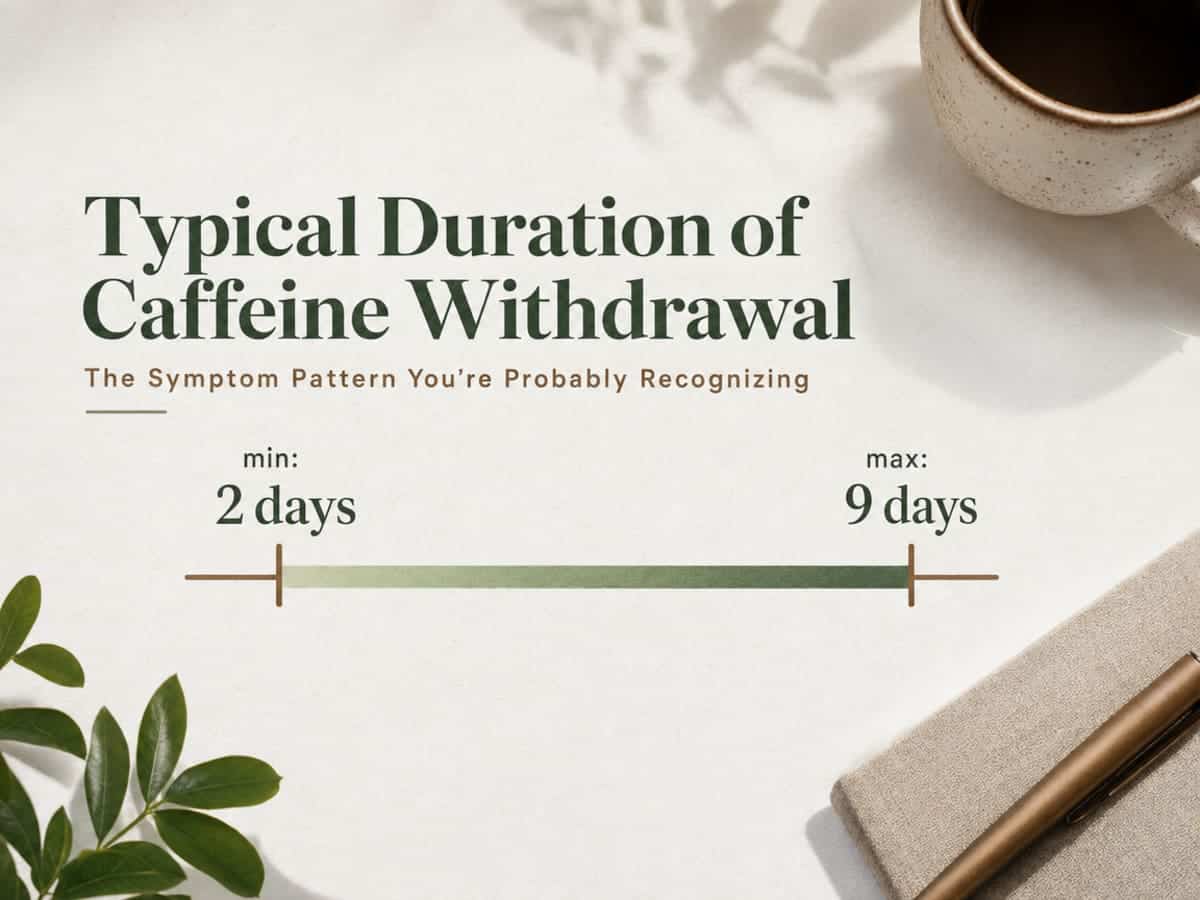
The empirical work on caffeine withdrawal is unusually clean. A foundational review identified ten valid symptoms, with onset typically 12 to 24 hours after your last dose and a full duration of 2 to 9 days 1. That timeline is the spine of every treatment decision you’re going to make later — it’s what tapering is designed to outrun.
The ten symptoms cluster into patterns you’ll recognize from any stimulant downshift:
- headache that builds through the morning
- fatigue that doesn’t lift with rest
- difficulty concentrating
- irritability
- depressed mood
- a kind of cognitive fogginess that makes routine tasks feel heavier than they are 1
- flu-like body aches, nausea, and muscle stiffness (in some people)
The headache tends to be the most reliable signal — it’s often the first thing that tells you you’ve gone past your usual window.
What matters here isn’t the symptom list itself. It’s the timing. If you skip your morning coffee on a Saturday and feel destroyed by Saturday night, that isn’t dramatic. That’s the documented onset curve. And if you white-knuckle through day three thinking it should be over, the duration data says you may still have most of a week left 1. Knowing the actual shape of the withdrawal window changes how you plan around it. You stop interpreting normal symptoms as personal failure, and you start designing reductions that don’t drop you into the worst of it on a Tuesday meeting day.
How Common This Is Among High-Functioning Adults
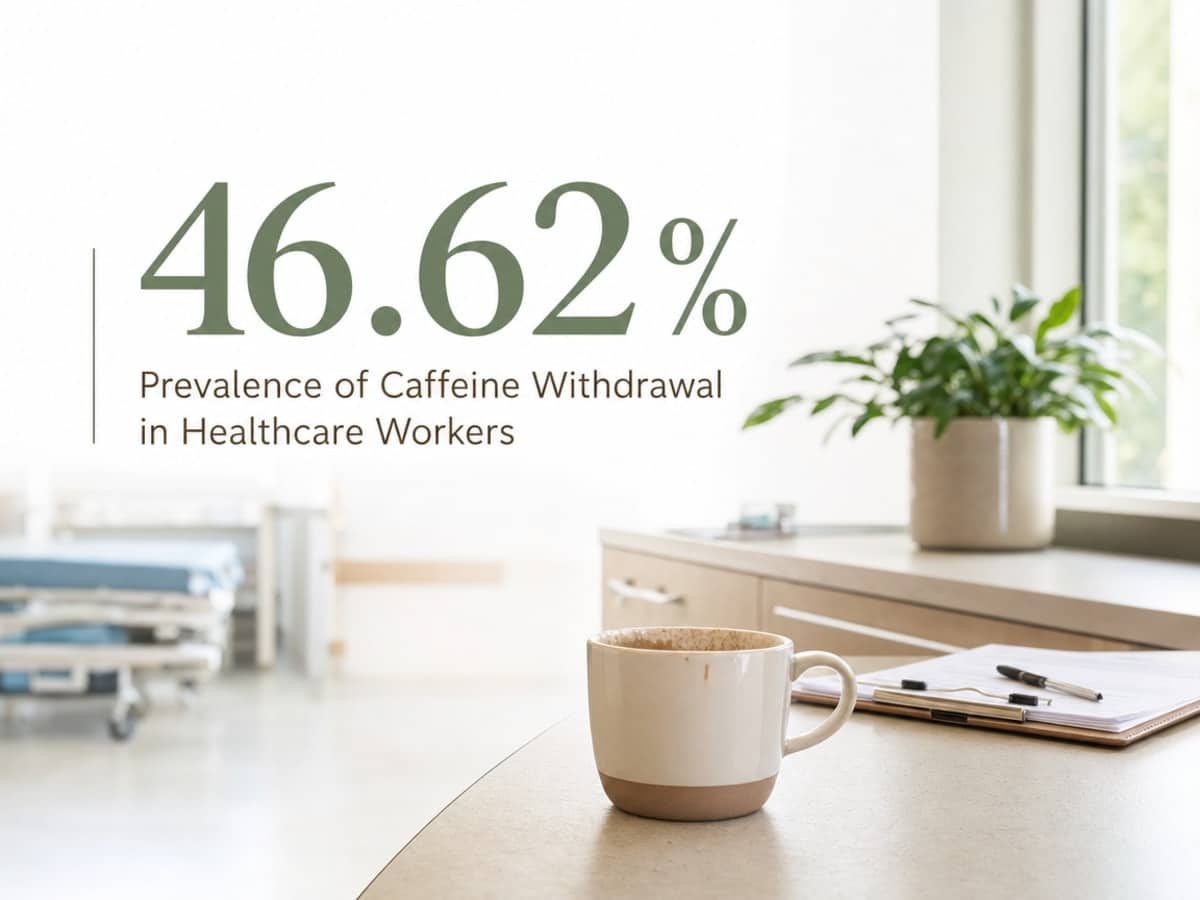
If you’re picturing the typical person with caffeine dependence as someone who can’t function without coffee and clearly has a problem, the prevalence data doesn’t match. A 2024 study of healthcare workers — nurses, physicians, support staff, people holding clinical shifts together — found that 19.5% met criteria for caffeine use disorder and 46.62% reported caffeine withdrawal, on an average daily intake of 146.67 mg 11. That’s roughly one and a half cups of brewed coffee. Not five, not eight. One and a half.
This matters for you for two reasons. First, the assumption that caffeine problems only show up in heavy users is wrong; the pattern can develop at intakes that look unremarkable on paper. Second, if you’re in recovery from other stimulants, you’re already operating in a population with elevated reinforcement sensitivity. The same neural and behavioral systems that learned to recruit a substance for cognitive performance don’t reset just because the substance changed legal categories. Caffeine dependence isn’t a moral lapse on top of recovery work. It’s the same machinery, running on a different fuel.

Why Willpower and Cold Turkey Usually Fail
You’ve probably already tried the obvious move: wake up Monday, skip the coffee, decide today’s the day. By Tuesday afternoon your head is splitting, you can’t track a conversation, and by Wednesday you’re back to your usual intake plus an extra cup to make up for the lost ground. That isn’t a character failure. That’s the withdrawal curve doing exactly what the research says it does — peaking inside the 12-to-24 hour onset window and lasting anywhere from two to nine days 1. Cold turkey asks you to white-knuckle through the worst stretch with no pharmacological support and no behavioral scaffolding. Most people can’t, and the ones who can often relapse the moment a deadline lands.
The willpower frame also misreads what’s actually broken. Network analysis of caffeine use disorder symptoms keeps surfacing the same finding: the persistent desire to cut down — and the repeated failed attempts that come with it — sits near the center of the symptom cluster 12. You’re not failing to quit because you lack discipline. You’re failing because repeated unsuccessful reduction attempts are one of the defining features of the disorder. Trying harder using the same method that didn’t work last time isn’t a plan; it’s the symptom.
The comparative literature on cessation methods is honest about this. Reviewers note that direct head-to-head evidence between abrupt and gradual cessation is limited, but gradual reduction is the dominant clinical recommendation because it’s the approach that minimizes the withdrawal symptoms most likely to drive relapse 16. You already know this pattern from stimulant recovery work — the conditioning loop doesn’t break by force, it breaks by design.
The Evidence Behind Structured Tapering
What the Manualized CBT Trial Showed
The headline study in this small but useful literature tested a one-hour, therapist-guided behavioral intervention paired with a take-home booklet. Participants received psychoeducation about caffeine, a personalized gradual reduction schedule, and cognitive-behavioral strategies for handling the situations and thoughts that drove their use. That’s it. One session of focused work, plus a workbook to carry the plan home 3.
The results are worth sitting with. Compared to a waitlist control, the treatment group showed a significant reduction in self-reported caffeine intake — and, critically, in salivary caffeine levels, which is a biological marker you can’t talk your way around. The reductions held with no significant increases at follow-up assessments out to one year 3. A single hour of structured guidance, followed by a written plan, produced changes that didn’t unravel.
What that tells you is practical. The active ingredients aren’t mysterious or specialized. They’re psychoeducation about what withdrawal actually looks like, a written taper you can hold in your hand, and a small set of CBT tools for the moments when your usual triggers fire. You already use versions of these tools in stimulant recovery. The trial confirms what you’d intuit: when those tools get pointed specifically at caffeine, the conditioning loop loosens — and stays loose.
The Manual-Only Path When Therapist Contact Isn’t Available
Not everyone can get to a clinician for a caffeine-specific session, and the research community took that seriously. A randomized controlled trial stripped the therapist out entirely and tested whether the manual alone — the same workbook, no live counseling — could move the needle 4, 14.
It did. Participants who worked through the manual on their own showed significant reductions in caffeine consumption and caffeine-related distress compared to controls, and those gains were still measurable at 20 weeks post-treatment 4. A self-directed booklet, used without anyone checking in, produced durable change in adults who recognized their pattern and wanted out of it.
That matters for how you think about starting. You don’t have to wait for the right appointment or the right insurance approval to begin structured work. A clear written plan, used honestly, is itself an evidence-based intervention. The caveat is real: the manual-only path works best when the underlying pattern is caffeine alone. If caffeine is sitting on top of broader stimulant recovery, the manual is a useful tool inside counseling — not a replacement for it.
Choosing Your Goal: Reduction or Abstinence
Before you build a taper, you need to know what you’re tapering toward. The treatment-seeking literature is useful here because it tells you what people in your position actually choose. In a study profiling adults who showed up for caffeine dependence treatment, 60% set a goal of reduction — bringing intake down to a level that didn’t run them anymore — while 40% wanted complete abstinence 5. Neither group was wrong. They were solving different problems.
Reduction tends to fit when caffeine is functional for you in moderate doses and the trouble is the dose creep — the fourth cup, the late-afternoon energy drink, the 3 p.m. crash you keep treating with more caffeine. You’re not trying to leave the substance behind; you’re trying to get back to a dose that doesn’t generate withdrawal or sleep disruption. Abstinence tends to fit when caffeine is sitting close to the same conditioning machinery that drove your other stimulant use, when the persistent desire to cut down has stopped responding to moderation attempts 12, or when sleep, anxiety, or cardiac symptoms are no longer negotiable 8.
Building Your Taper: A Practical Framework
Establishing Your Baseline Before You Cut
You can’t reduce what you haven’t measured. Before you change anything, spend three to five days logging every caffeine source you actually consume — coffee, tea, energy drinks, soda, pre-workout, chocolate, any medication that contains caffeine. Write down the time, the size, and the milligram estimate. Typical references:
- A 12-ounce brewed coffee runs about 120 to 200 mg depending on the roast.
- A standard energy drink lands between 80 and 300 mg.
- Pre-workout formulas can hit 300 mg in a single scoop.
The reason this step matters: the manualized treatment trials that produced durable reductions started with exactly this kind of personalized baseline before building the schedule 3. You’re not guessing at your intake — you’re working from a number. That number also tells you something diagnostic. If your honest total surprises you, that gap between perceived and actual use is the same blind spot you’d recognize from any stimulant pattern.
Note the timing too, not just the volume. The 3 p.m. cup that’s keeping you awake at 11 is a different problem than the 7 a.m. cup that’s holding off a withdrawal headache. Both need addressing, but they don’t taper the same way.
The Step-Down Schedule and Why Pace Matters
The comparative review of cessation methods lands on gradual reduction as the dominant clinical approach precisely because it keeps you below the threshold where withdrawal symptoms spike and drive you back to baseline 16. The mechanics are straightforward: reduce your total daily caffeine by roughly 10 to 25% per week, holding each new level for five to seven days before stepping down again. That pacing isn’t arbitrary — it’s calibrated to the documented 2-to-9 day withdrawal duration, giving your system time to settle at each step before the next cut 1.
If your baseline is 400 mg, you might land at 320 mg in week one, 240 mg in week two, 180 mg in week three, and so on. A taper to a stable maintenance dose typically takes four to six weeks; a taper to full abstinence may take eight to twelve. Slower is almost always better than faster here. The instinct to compress the schedule — to be done by Friday — is the same instinct that made cold turkey fail.
Two practical moves protect the pace:
- Cut the latest dose of the day before you cut the earliest one; your sleep recovers faster than your morning function does.
- Dilute rather than skip when possible. Mixing half-decaf into your regular pot lets you step down by volume without changing the ritual, and the ritual is often what the conditioning loop is actually defending.
Managing Symptoms Without Sabotaging the Taper
Even a well-paced taper produces some symptom load. The clinician-oriented review of caffeine withdrawal emphasizes supportive care: hydration, adequate sleep, and short-term use of non-caffeinated pain relief for the headache that tends to lead the cluster 13. Acetaminophen or ibuprofen, used as directed, can take the edge off without reinforcing the pattern. Watch the labels though — some over-the-counter headache formulations contain caffeine, which defeats the entire schedule.
Protect your sleep aggressively during the first two weeks. Withdrawal fatigue and poor sleep feed each other, and the data links caffeine-use-disorder criteria to worse sleep even at baseline 8. A consistent bedtime, a dark room, and no screens for the last 30 minutes do more for daytime function than another half-cup would.
CBT Tools That Translate Directly from Stimulant Recovery
You already own most of the skills this work requires. The cognitive-behavioral toolkit that helped you map triggers, interrupt automatic use, and rebuild routines after other stimulants is the same toolkit the caffeine literature keeps validating — the manualized trial that produced one-year reductions was built around psychoeducation, gradual reduction, and CBT strategies, not novel techniques 3.
Start with trigger mapping. The 7 a.m. cup that’s holding off a withdrawal headache is a pharmacological cue. The 2 p.m. cup you reach for the moment a hard email lands is a behavioral one. They look identical from the outside and need different interventions. Stimulus control — moving the coffee maker off the counter, deleting the energy drink from your standing grocery order, walking a different route past the cafe — does the same conditioning work it did the first time around.
Cognitive restructuring matters here too, because the thoughts that protect caffeine use are subtle. “I’ve earned this one.” “I can’t get through this meeting without it.” “It’s just coffee.” Notice them, name them, and check them against your taper. The persistent desire to cut down sits at the center of the symptom network for a reason 12— the same thoughts that justified the last failed attempt will show up again.
Finally, urge surfing. You’ve done it before with substances that hit harder. A caffeine craving peaks and falls inside the same window. Let it.
Where Outpatient Counseling Fits
For some readers, the manual and a careful taper will be enough. The manual-only RCT showed that adults working through a structured booklet without any therapist contact produced durable reductions at 20 weeks 4. If caffeine is the only piece in play, you can start there.
Outpatient counseling earns its place when caffeine is layered onto something more complicated. If you’re already in stimulant-recovery work, a clinician can fold caffeine into the existing case formulation — the same trigger map, the same relapse-prevention plan, just with an additional target written in. Assessments matter here because the proposed criteria overlap with broader substance-use criteria in ways that need a trained eye to untangle 10, especially when sleep, anxiety, or mood symptoms are clouding the picture 8.
What outpatient sessions add is accountability and pattern recognition. Someone outside your head tracking the taper, watching for the subtle ways caffeine use migrates rather than reduces, and adjusting the plan when a week goes sideways. Programs like Arrow Passage Recovery’s outpatient counseling are built for exactly this — ongoing individual and group work that treats caffeine as a legitimate target inside a larger recovery picture, not a footnote.
Ready to Tackle Caffeine Dependence Together?
Connect with a specialist for support and a clear next step toward effective caffeine dependence treatment.
Start Your Personalized Caffeine Recovery Conversation Today
Connect with an expert to explore tailored support for overcoming caffeine dependence and reclaiming your well-being.
Frequently Asked Questions
Is caffeine dependence an actual diagnosis?
Partly. Caffeine withdrawal is a formal DSM-5 diagnosis, so the physical syndrome is officially recognized 7, 17. Caffeine use disorder isn’t a full diagnosis yet — it sits in DSM-5’s Section III as a condition for further study, with proposed criteria being actively researched 2, 6. The pattern is real and treatable even while the label gets finalized.
How long does caffeine withdrawal last, and when does it start?
Onset typically begins 12 to 24 hours after your last dose, and the full duration runs 2 to 9 days based on the foundational symptom review 1. Headache usually leads, followed by fatigue, irritability, and concentration problems. If you’re on day three and still feeling rough, that’s inside the documented window — not a sign something has gone wrong.
Should I taper my caffeine intake or quit cold turkey?
Taper. The comparative literature on cessation methods consistently favors gradual reduction because it keeps withdrawal symptoms below the threshold that drives relapse back to baseline 16. Cold turkey forces you through the worst stretch of symptoms with no buffer, and most people abandon the attempt within a week. A stepped reduction over four to six weeks is the dominant clinical approach.
Do I have to quit caffeine completely, or can I just cut back?
Either goal is legitimate. In a study of adults seeking treatment for caffeine dependence, 60% set a reduction goal and 40% chose abstinence 5. Reduction fits when moderate doses still work for you. Abstinence fits when the persistent desire to cut down keeps overriding moderation attempts 12or when sleep, anxiety, or cardiac symptoms aren’t negotiable. Pick the one you’ll actually hold.
Can I treat problematic caffeine use on my own, or do I need a therapist?
You can start solo. A randomized trial of a manual-only program — no therapist contact — produced significant reductions in caffeine consumption and distress that held at 20 weeks 4, 14. A structured workbook used honestly is itself evidence-based. Counseling earns its place when caffeine sits on top of broader stimulant recovery or co-occurring sleep, anxiety, or mood issues that need a trained assessment 8.
How does caffeine fit into recovery from other stimulant use?
It runs on the same machinery. The conditioning loops, tolerance patterns, and trigger architecture you learned to map in stimulant recovery apply directly — the manualized caffeine trial worked because it used standard CBT tools, not novel ones 3. Treat caffeine as a legitimate target inside your existing case formulation, especially since use-disorder criteria correlate with greater overall substance use and worse sleep 8.
References
- A critical review of caffeine withdrawal: empirical validation of symptoms and signs, incidence, severity, and associated features. https://pubmed.ncbi.nlm.nih.gov/15448977/
- Caffeine Use Disorder: A Review of the Evidence and Future Implications. https://pubmed.ncbi.nlm.nih.gov/25089257/
- A Brief Manualized Treatment for Problematic Caffeine Use. https://pmc.ncbi.nlm.nih.gov/articles/PMC4737992/
- A randomized controlled trial of a manual-only treatment for problematic caffeine use. https://pubmed.ncbi.nlm.nih.gov/30580203/
- Characterization of Individuals Seeking Treatment for Caffeine Dependence. https://pmc.ncbi.nlm.nih.gov/articles/PMC3642245/
- Caffeine Use Disorder: A Comprehensive Review and Research Agenda. https://pmc.ncbi.nlm.nih.gov/articles/PMC3777290/
- Caffeine Use Disorder: A Review of the Evidence and Future Implications. https://pmc.ncbi.nlm.nih.gov/articles/PMC4115451/
- Prevalence and Correlates of Caffeine Use Disorder Symptoms in a Nonclinical Sample. https://pmc.ncbi.nlm.nih.gov/articles/PMC7071067/
- Caffeine use disorder: An item-response theory analysis of proposed DSM-5 criteria. https://pubmed.ncbi.nlm.nih.gov/29454178/
- Concurrent Validity of Caffeine Problems and Diagnostic Criteria for Substance Use Disorders. https://pmc.ncbi.nlm.nih.gov/articles/PMC5165670/
- Estimate the prevalence of daily caffeine consumption, caffeine use disorder, and caffeine withdrawal among healthcare workers. https://pmc.ncbi.nlm.nih.gov/articles/PMC10984976/
- Network analysis of caffeine use disorder, withdrawal symptoms and mental health. https://pmc.ncbi.nlm.nih.gov/articles/PMC11753023/
- Caffeine Withdrawal – StatPearls. https://www.ncbi.nlm.nih.gov/books/NBK430790/
- A Randomized Controlled Trial of a Manual-Only Treatment for Problematic Caffeine Use. https://pmc.ncbi.nlm.nih.gov/articles/PMC6563338/
- Treatment for Caffeine Dependence (NCT01951872). https://clinicaltrials.gov/study/NCT01951872
- Methods to Stop Caffeine Use and Minimize Caffeine Withdrawal: A Literature Review. https://scholarsarchive.byu.edu/cgi/viewcontent.cgi?article=1363&context=studentpub
- Substance Use Disorders Criteria (DSM-5 Overview). https://webcampus.med.drexel.edu/nida/module_2/content/5_0_AbuseOrDependence.htm