
7 Steps for How to Taper Off Alcohol Safely
Key Takeaways
- Run an honest risk assessment using AUDIT scores, daily units, and withdrawal history to decide whether a home taper or assisted withdrawal is appropriate 5.
- Measure your baseline by logging every drink in standard units for two to three days, since accurate counting shapes both the schedule and clinical decisions.
- Design a gradual reduction schedule, typically seven to ten days, distributing drinks across waking hours and extending the timeline rather than making steeper cuts 3.
- Monitor pulse, tremors, sleep, and mood several times daily, and stop the taper for seizures, hallucinations, pulse over 120 bpm, or persistent vomiting 14.
- Cover thiamine, hydration, electrolytes, and regular protein-rich meals to protect against Wernicke’s encephalopathy and stabilize blood sugar during peak withdrawal days 15.
- Bridge to FDA-approved medications such as acamprosate, naltrexone, or disulfiram alongside counseling, because detox alone rarely sustains long-term sobriety 7, 11.
- Build a continuing care plan with named clinicians, weekly therapy, peer support, and a relapse protocol while motivation is still high 12.
Before You Pour Out the Bottle: What a Taper Actually Is
If you’ve been drinking heavily for months or years, quitting cold turkey can trigger tremors, seizures, or in severe cases, delirium tremens, which can be fatal 14. Tapering is the practice of gradually reducing alcohol intake, allowing your nervous system to recalibrate without crashing.
A taper is not a green light to manage severe dependence by yourself. For some, it’s a sensible harm-reduction bridge to sobriety. For others, it’s a medically supervised process involving prescribed medications and daily check-ins. The appropriate approach depends on your drinking patterns, medical history, and past withdrawal symptoms 5.
This guide outlines seven steps clinicians use:
- assessing risk,
- measuring baseline intake,
- designing a schedule,
- monitoring symptoms,
- supporting your body with thiamine and nutrition,
- bridging to longer-term treatment, and
- building lasting care.
You may find after step one that a home taper isn’t suitable for you, which is a valuable outcome of the assessment process.
Step 1: Run an Honest Risk Assessment
Before deciding on a tapering method, it’s crucial to honestly assess your current drinking habits. A home taper is safe for some but dangerous for others, with specific thresholds determining the risk level.
According to NICE-derived guidance, if you drink more than 15 units a day or score 20 or higher on the AUDIT questionnaire, you should consider assisted withdrawal, which often includes medication and clinical supervision. If your intake exceeds 30 units daily, or if you have a history of withdrawal seizures or delirium tremens, inpatient or residential assisted withdrawal is recommended 5. A unit is approximately 8 grams of alcohol; 15 units equals about six standard US drinks, and 30 units is about twelve.
Clinicians also consider other risk factors:
- heart, liver, or pancreas issues;
- uncontrolled high blood pressure;
- any seizure history;
- pregnancy;
- co-occurring depression, anxiety, or suicidal thoughts;
- benzodiazepine or opioid use;
- older age; and
- the stability of your home environment.
Any of these can necessitate a higher level of care, even with moderate daily alcohol consumption.
Be truthful about previous attempts to cut down. If past efforts resulted in tremors, a racing heart, hallucinations, or seizures, your nervous system has demonstrated its response to alcohol cessation. Future withdrawals tend to be more severe, a phenomenon known as kindling, which clinicians take seriously 4.
If your assessment indicates you’re above these thresholds, the appropriate action is to seek professional help. Outpatient clinicians, primary care providers, and addiction specialists can perform formal assessments like AUDIT and CIWA-Ar to determine if a home taper with check-ins, outpatient medication-assisted taper, or residential detox is best 10. Choosing a higher level of care when indicated is not a failure but a pragmatic approach to the problem.

Step 2: Measure Your Baseline in Standard Drinks
An effective taper requires knowing your exact starting point. Before planning, spend two or three days meticulously logging every drink in standard units, avoiding estimates. This step, though potentially uncomfortable, is foundational to the entire process.
In the US, a standard drink contains about 14 grams of pure alcohol, equivalent to roughly 12 ounces of 5% ABV beer, 5 ounces of 12% wine, or 1.5 ounces of 40% distilled spirits. However, actual intake can be higher than perceived; for example, a 16-ounce craft IPA at 7.5% ABV is closer to two standard drinks, and many wine pours or mixed drinks exceed standard measurements.
For two to three days, record each drink as you consume it, noting the time and any accompanying cues like hunger or stress. This log helps capture your true baseline, including drinks you might typically overlook. Sum your daily totals to find your average intake. This number establishes your starting point for reduction and is crucial information for any clinician you consult.
This counting serves a dual purpose: it helps determine if your intake warrants assisted or inpatient care, and it provides concrete data for your tapering schedule. Reducing from twelve drinks a day differs significantly from reducing from six. If you find yourself unable to log honestly or if counting increases your drinking, this indicates a need to consult a clinician or the SAMHSA helpline before proceeding.
Step 3: Design a Realistic Reduction Schedule
Once your baseline is established, you can create a structured reduction schedule. The goal is to decrease intake gradually and predictably, allowing your nervous system to adapt at each step.
For lower-risk individuals, a home taper typically spans seven to ten days. This timeframe aligns with standard medical detox protocols, where patients are stabilized for two to three days, followed by a seven-to-ten-day taper of support medication 3. The biological need for this adjustment period remains consistent whether managed at home or in a clinical setting.
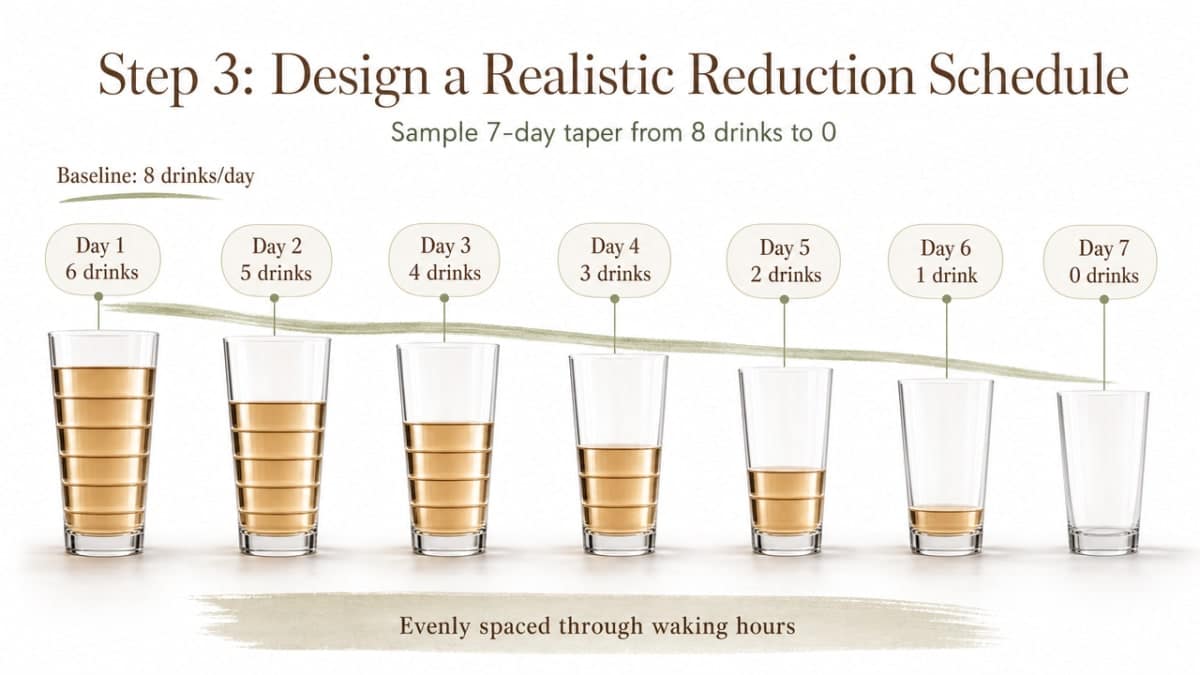
Consider a sample schedule for someone drinking eight standard drinks daily:
- reduce to six on day one,
- five on day two,
- four on day three,
- three on day four,
- two on day five,
- one on day six, and
- zero on day seven.
Distribute drinks evenly throughout waking hours; a morning drink can help prevent blood alcohol levels from dropping too sharply overnight, when symptoms are often most severe.
If your baseline is higher, extend the schedule rather than making steeper daily cuts. For instance, someone drinking twelve drinks daily might reduce by two drinks per day for the first three days, then by one drink per day, reaching zero around day nine or ten. The principle is consistent: gradual reductions and predictable timing, avoiding drastic cuts that can lead to relapse.
Withdrawal symptoms often peak between 24 and 72 hours after the last significant reduction, making days two through four the most challenging. Plan for lighter reductions during this period if possible. Choose a low-stress week for your taper, free from major deadlines or conflicts. Inform at least one trusted person about your plan for support. Keep your bedtime drink as the last one to eliminate, as sleep disruption is a common trigger for relapse during home tapers.
Document your schedule before you begin. Display it prominently or share it with a trusted individual. A written plan provides accountability. If you consistently exceed your planned intake for two consecutive days, it indicates that a home taper may not be sufficient, and seeking clinical assistance or contacting the SAMHSA helpline is advisable 3.
Step 4: Monitor Symptoms and Know the Red Lines
Once your taper begins, focus shifts to symptom monitoring. Withdrawal symptoms typically emerge in waves, starting six to twelve hours after a significant reduction and peaking between day two and day four. You’re looking for specific signs that indicate how your nervous system is coping.
Check your symptoms three or four times daily and record your observations. Your resting pulse is an objective indicator; count it for a full minute while still, before your next drink. A pulse over 100 bpm without exertion is a warning sign. Observe your hands for tremors, note any sweating (especially night sweats), and track sleep, appetite, nausea, or vomiting. Mood changes like irritability, persistent anxiety, or a sense of dread are also important. These are similar to the symptoms clinicians assess using the CIWA-Ar scale.
Two additional warning signs warrant attention: if you consistently drink more than your schedule for two days, or if anxiety becomes so severe that you consider drinking to alleviate it. These suggest the taper requires more support than you can manage alone. Escalating to assisted outpatient withdrawal or residential detox in such cases is not a setback but a proper response to monitoring data.
Step 5: Cover the Non-Negotiables: Thiamine, Hydration, Food
During tapering, certain nutritional and hydration elements become critical for safety. Neglecting them can lead to complications, even if your tapering schedule is otherwise well-managed.
Thiamine (vitamin B1) is paramount. Heavy drinking depletes thiamine, and a deficient brain under withdrawal stress is susceptible to Wernicke’s encephalopathy, which can cause confusion, eye-movement problems, unsteady gait, and permanent memory damage if untreated 15. Prophylactic thiamine is standard during withdrawal because the benefits far outweigh any risks. Consult a clinician or pharmacist about a daily oral dose before starting your taper. If you are malnourished or have been drinking instead of eating, a doctor’s consultation is essential, as severe deficiency may require higher-dose or injectable thiamine 3.
Hydration and electrolytes are also crucial. Alcohol dehydrates the body, and withdrawal symptoms like sweating and vomiting exacerbate fluid loss. Sip water consistently throughout the day. Incorporate an oral rehydration solution or a low-sugar electrolyte mix once or twice daily to replenish sodium, potassium, and magnesium, which are often depleted during withdrawal. Avoid energy drinks and excessive caffeine, as they can overstimulate an already agitated nervous system.
Nutrition is vital, even with a reduced appetite. Eat small, regular meals rich in protein and complex carbohydrates, such as eggs, oatmeal, beans, rice, or chicken. Stable blood sugar helps mitigate shakiness and anxiety, which often peak around day three. A multivitamin, in addition to thiamine, can address folate and B-complex deficiencies common with heavy drinking. While these measures support your body, they do not replace medical care if symptoms escalate.
Step 6: Bridge to Medications and Counseling for AUD
This step is often overlooked in home tapers but is crucial for long-term sobriety. Completing the taper is the initial phase; what follows determines whether the effort is sustained.
Detoxification alone has limited impact on long-term drinking patterns. It addresses the acute biological effects of alcohol but does not resolve cravings, environmental cues, or the neural adaptations developed over years of use 11. Without further intervention, individuals often return to the same environment that fostered their drinking, with a nervous system now acutely aware of alcohol’s absence.
The bridge involves medication combined with counseling. Three FDA-approved medications are standard for alcohol use disorder:
- Acamprosate
- helps reduce post-acute restlessness and cravings;
- Naltrexone
- diminishes alcohol’s reward effects; and
- Disulfiram
- causes unpleasant physical reactions to alcohol 7, 12.
These are recommended for use with counseling and behavioral support. NICE guidance suggests offering acamprosate or oral naltrexone, plus individual psychological intervention, for individuals with moderate to severe dependence after successful withdrawal 6.
Discuss these options before your last tapering day. The period between completing the taper and the onset of strong cravings can be very short. A primary care physician, addiction medicine specialist, or outpatient program can prescribe and monitor these medications. They are most effective when combined with cognitive behavioral therapy, motivational enhancement, or structured outpatient programs that provide alternative activities and support. The taper brings you to zero; these interventions help you maintain it.
Step 7: Build a Continuing Care Plan You’ll Actually Use
The initial weeks without alcohol are often challenging, but the quiet months that follow are where many relapses occur. A continuing care plan, developed while you are motivated, provides structure for these later periods.
Begin by identifying key support figures. Schedule a follow-up with a primary clinician, addiction specialist, or outpatient program coordinator within two weeks of your last drink. Arrange weekly sessions with a therapist or counselor, ideally one trained in CBT or motivational enhancement, as alcohol use disorder is a chronic, relapsing condition that benefits from ongoing care 13. Additionally, establish peer support through a mutual-help group, a sober friend, or an online community.
Detail specific actions and appointments: which meeting on Tuesday, which therapist on Thursday, medication refill dates, and who to contact during difficult moments. Plans with concrete details are more likely to be followed than vague intentions. Also, develop a relapse protocol: what steps you will take if you drink, focusing on immediate action rather than shame. The NIAAA emphasizes that recovery often involves a combination of supports that evolve over time, and adapting your care plan tends to yield better outcomes 12.
When to Stop Tapering and Call for Help
If a taper is not progressing as planned, it’s crucial to recognize that it requires a different approach and professional intervention. The decision to halt a home plan and seek help is a critical clinical judgment, often made too late.
Talk to Someone Now About Alcohol Tapering
Get immediate guidance and support for starting your safe alcohol taper today.
Ready for safe, supported alcohol withdrawal?
Connect with a professional who understands your unique recovery needs and next steps.

Frequently Asked Questions
Is it safe to taper off alcohol at home by myself?
A home taper can be safe for lower-volume drinkers without a history of severe withdrawal symptoms like seizures or delirium tremens, or significant medical conditions. If you consume more than 15 units of alcohol daily, score 20 or higher on the AUDIT, or have experienced severe withdrawal previously, supervised medical withdrawal is a safer option 5.
How long does a typical alcohol taper take?
For lower-risk home tapers, a duration of approximately seven to ten days is generally appropriate. This timeframe aligns with medical detox protocols, which typically involve two to three days of stabilization followed by a seven-to-ten-day tapering of supportive medications 3. For higher baseline consumption, extending the schedule is safer than attempting rapid daily reductions.
What withdrawal symptoms mean I should stop tapering and call for medical help?
Immediately stop tapering and seek medical help if you experience any seizure, hallucinations, severe confusion, a resting pulse exceeding 120 bpm, fever, chest pain, or persistent vomiting that prevents fluid retention. Severe withdrawal, including seizures and delirium tremens, can be fatal 14. Call 911 for a seizure or active delirium tremens. For other concerning symptoms, contact your doctor, urgent care, or the SAMHSA helpline 8.
Do I really need thiamine and other supplements while tapering?
Yes, thiamine (vitamin B1) is particularly crucial. Chronic heavy drinking depletes thiamine, and a deficient brain during withdrawal is at risk for Wernicke’s encephalopathy, which can cause confusion, eye movement issues, and permanent memory damage if untreated. Prophylactic thiamine is standard during alcohol withdrawal due to the severe consequences of deficiency 15. Adequate hydration, electrolytes, and regular meals are also important for overall support.
What happens after the taper; is detox enough on its own?
No, detoxification alone is generally insufficient for long-term sobriety, as it primarily clears alcohol from the system without addressing underlying behavioral patterns or cravings 11. The standard of care post-withdrawal involves combining an FDA-approved medication for alcohol use disorder (such as acamprosate, naltrexone, or disulfiram) with counseling or a structured outpatient program 7. It is advisable to discuss these options with your clinician before completing the taper, as cravings can intensify rapidly.
How do I know if I need inpatient detox instead of an outpatient taper?
Key indicators for inpatient or residential assisted withdrawal include drinking more than 30 units daily, a history of withdrawal seizures, or previous delirium tremens 5. Other factors like unstable medical conditions, suicidal ideation, concurrent use of benzodiazepines or opioids, or an unsupportive home environment can also necessitate inpatient care. An ASAM-trained clinician can provide a formal assessment 10.
References
- Alcohol Use and Your Health. https://www.cdc.gov/alcohol/about-alcohol-use/index.html
- Alcohol Use. https://www.cdc.gov/alcohol/index.html
- Clinical management of alcohol withdrawal: A systematic review. https://pmc.ncbi.nlm.nih.gov/articles/PMC4085800/
- Alcohol Withdrawal in Hospitalized Patients. https://www.ncbi.nlm.nih.gov/books/NBK604324/
- Harmful drinking and alcohol dependence: advice from recent NICE guidelines. https://pmc.ncbi.nlm.nih.gov/articles/PMC3223772/
- Alcohol use disorders: harmful drinking and alcohol dependence. https://www.ncbi.nlm.nih.gov/books/NBK552038/
- Treatment Options for Substance Use Disorder. https://www.samhsa.gov/substance-use/treatment/options
- National Helpline for Mental Health, Drug, Alcohol Issues. https://www.samhsa.gov/find-help/helplines/national-helpline
- Substance Withdrawal Management. https://www.ncbi.nlm.nih.gov/books/NBK64038/
- The ASAM Clinical Practice Guideline on Alcohol Withdrawal Management. https://pubmed.ncbi.nlm.nih.gov/32511109/
- Evidence-Based Approaches to Drug Addiction Treatment. https://www.drugabuse.gov/publications/principles-drug-addiction-treatment-research-based-guide-third-edition/evidence-based-approaches-to-drug-addiction-treatment
- Treatment for Alcohol Problems: Finding and Getting Help. https://www.niaaa.nih.gov/publications/brochures-and-fact-sheets/treatment-alcohol-problems-finding-and-getting-help
- Understanding Alcohol Use Disorder. https://www.niaaa.nih.gov/publications/brochures-and-fact-sheets/understanding-alcohol-use-disorder
- Alcohol Withdrawal. https://medlineplus.gov/ency/article/000764.htm
- Thiamine Deficiency and Wernicke–Korsakoff Syndrome. https://www.ncbi.nlm.nih.gov/books/NBK430922/