
Key Takeaways
- Kratom can produce genuine physical dependence, with tolerance, withdrawal, and cravings, though most users experience this without the severe life disruption typically linked to addiction.
- Dosing frequency drives dependence more than dose size, so spacing doses further apart tends to reduce withdrawal risk better than simply taking smaller amounts.
- Withdrawal usually starts within 12 to 24 hours, peaks around day three, and resolves within a week, though sleep and mood symptoms can linger.
- Most kratom-associated deaths involve other substances like opioids, benzodiazepines, or alcohol, making polysubstance use the clearest safety signal to avoid.
The Honest Answer Sits in the Middle
Yes, kratom can be addictive. While online discussions often present extreme views—either a harmless plant or a severe opioid crisis—the reality is more nuanced. For many, the primary issue is physical dependence, characterized by increasing tolerance, using more than intended, and experiencing discomfort when skipping a dose. This differs from the widespread social and occupational disruption often associated with the term “addiction.” A 2024 clinical review highlighted that individuals meeting criteria for kratom use disorder typically experience tolerance, withdrawal, and craving, rather than significant life impairment.
This distinction is important because it influences the approach to help. Many individuals turn to kratom to manage conditions like chronic pain, anxiety, or to transition off prescription opioids. The research acknowledges these motivations, emphasizing that such use is often a coping mechanism rather than recklessness. Understanding the evidence on dependence, withdrawal, and available pathways forward is crucial for making informed decisions about kratom use.
What Dependence Actually Looks Like with Kratom
Physical Dependence vs. Full Use Disorder
There’s a clear distinction between physical dependence on kratom and a full kratom use disorder. Physical dependence means the body has adapted to the presence of kratom. When a dose is skipped, symptoms like stomach upset, restless legs, sleep disturbances, or mood changes can occur. This is a physiological adjustment, not a sign of weakness.
A full kratom use disorder encompasses physical dependence but also involves kratom use interfering with other aspects of life, such as work or relationships. An online survey of U.S. adult kratom users found that 29.5% met criteria for a past-year kratom use disorder, with tolerance and withdrawal being the primary diagnostic factors, not significant social impairment. Over half of the respondents did not meet these criteria. A 2024 clinical review confirmed that when a diagnosis is met, it’s usually driven by tolerance, withdrawal, using more than intended, and craving, with serious functional damage being less common. This suggests that while dependence is real, its impact may not align with common stereotypes of addiction.
A Self-Reflection Checklist, Not a Verdict
To assess your relationship with kratom, consider these questions, adapted from the DSM-5 framework used in research:
- Do you take more kratom, or use it for longer periods, than you intended?
- Have you attempted to reduce your use but found it difficult?
- Do you spend a significant amount of time thinking about or planning your next dose?
- Do cravings emerge when you are stressed, tired, or in pain?
- Have you noticed needing larger amounts of kratom to achieve the same effect?
- Do you experience physical discomfort—such as stomach issues, sleep problems, mood changes, or restlessness—when you go too long without a dose?
- Have you continued using kratom despite it causing problems you wished to avoid?
If some of these resonate, it indicates that physical dependence may be present or a use disorder could be developing. This self-awareness is a crucial first step toward understanding your situation and exploring potential changes.
Why Frequency Matters More Than Dose Size
The frequency of kratom dosing has a greater impact on dependence than the size of individual doses. A 2024 study examining kratom users through the lens of DSM-5 criteria found that the number of daily doses was a stronger predictor of withdrawal and use disorder symptoms than the amount taken per dose. For instance, someone taking a moderate dose multiple times a day exhibited more withdrawal and use disorder symptoms than someone taking a larger dose once daily.
The Pharmacology Behind the Pull
Kratom’s effects are partly due to its interaction with the mu-opioid receptor system. The leaves contain mitragynine and 7-hydroxymitragynine, which act as partial agonists at these receptors. These are the same receptors targeted by opioids like morphine and oxycodone, though kratom’s compounds bind with a less intense effect. This “partial” action explains why kratom’s effects are often described as milder and why some individuals can use it for extended periods without the severe consequences associated with full opioids.
However, regular use leads to receptor adaptation, resulting in tolerance—the need for more kratom to achieve the same effect. When use stops, the body’s system, accustomed to kratom, must recalibrate, leading to withdrawal symptoms. There is also cross-tolerance with morphine, meaning kratom and prescription opioids can influence each other’s effects. This is particularly relevant for individuals transitioning from or considering returning to opioid pain medication. Escalating doses and increased dosing frequency elevate the risk of developing a use disorder or experiencing adverse reactions, especially when other substances are involved. Understanding this mechanism demystifies the physiological basis of kratom’s effects and dependence.
What Withdrawal Actually Feels Like
Kratom withdrawal, experienced after regular use, manifests as an amplified version of the discomfort felt when doses are delayed. While unpleasant, it is generally survivable and not typically medically dangerous like withdrawal from alcohol or benzodiazepines.
Based on systematic reviews and expert consensus, symptoms usually begin within 12 to 24 hours of the last dose, peaking within the first three days and subsiding over the next four to seven days. Some symptoms, such as sleep disturbances, low mood, and cravings, can persist for a couple of weeks. The exact timeline can vary depending on individual factors like dosing frequency, duration of use, and overall health. Common physical symptoms include nausea, cramps, diarrhea, loss of appetite, restlessness, muscle aches, jitters, sweating, and a runny nose. Psychological symptoms often include anxiety, irritability, and depressed mood, with cravings appearing in waves, particularly during periods of stress or pain. This pattern is consistent with opioid-like withdrawal. Knowing what to expect and understanding that these symptoms are temporary can help individuals manage the process, often making a supported taper more effective than abrupt cessation.
The Harm-Reduction Question, Held Honestly
Many individuals turn to kratom not for recreational purposes, but as a response to challenging circumstances, such as managing chronic pain, coping with anxiety after benzodiazepine withdrawal, or navigating the aftermath of prescription opioid use. Research acknowledges this context, recognizing that kratom can serve a harm-reduction role for some.
A 2024 review explored kratom’s potential in harm reduction for individuals with opioid, alcohol, stimulant, and polysubstance use issues. The findings suggest a plausible case, with many users reporting successful transitions away from more harmful substances. However, the review also cautions that robust clinical trials confirming kratom’s safety and efficacy as a harm-reduction tool are still lacking. While replacing a full opioid with a partial mu-opioid agonist like kratom may reduce certain risks, kratom itself can still lead to dependence, withdrawal, and other problems, especially when combined with other substances. This dual reality—potential benefit alongside inherent risks—is crucial for an accurate understanding. For those who have used kratom to move away from more dangerous substances, this step counts as progress, and it can be integrated into a broader plan for continued harm reduction and eventual cessation.
Safety Signals Worth Knowing
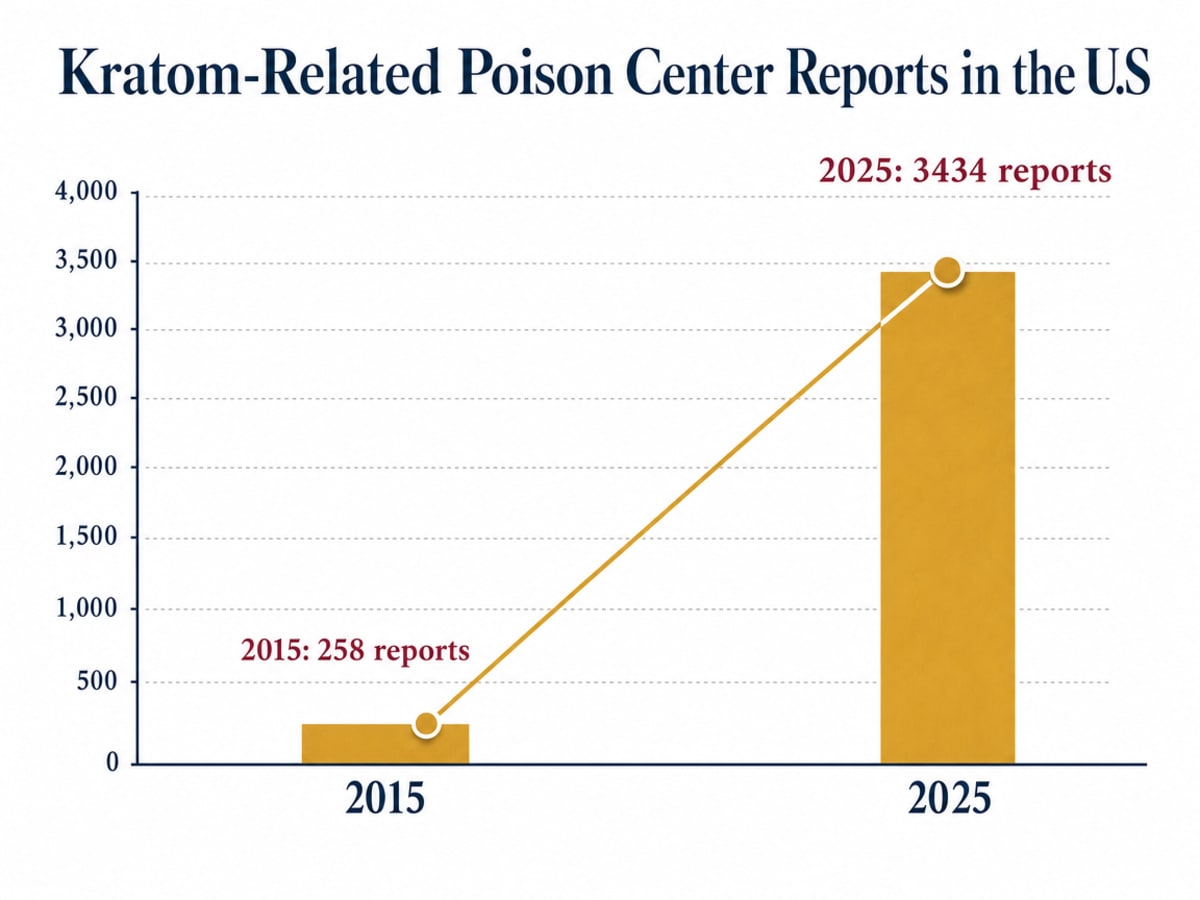
Kratom is not a regulated pharmaceutical, and its safety profile reflects this. Reports to U.S. poison centers related to kratom increased significantly from 258 in 2015 to 3,434 in 2025, a rise of approximately 1,200%. This increase aligns with greater public use and increased clinical recognition. However, a deeper look into the data reveals important patterns. Of 233 kratom-associated deaths in surveillance data, 184 involved multiple substances, such as kratom combined with opioids, benzodiazepines, alcohol, or stimulants. Kratom-only deaths accounted for 49 cases. This indicates that the most dangerous scenarios typically involve polysubstance use rather than kratom alone.
Pathways Out That Respect Your Autonomy
Tapering Instead of Cold Turkey
If you decide to reduce or stop kratom use, a gradual taper is often more effective than quitting abruptly. Cold turkey cessation can lead to intense withdrawal symptoms, particularly during the peak discomfort of days two and three, which often causes individuals to relapse. A planned taper allows the nervous system to adjust gradually.
Given that dosing frequency impacts dependence more than dose size, a practical strategy is to first extend the time between doses. For example, gradually increasing the interval from every three hours to every four, and then to every five, can be effective. Once the number of daily dosing points is reduced, you can then begin to trim the amount taken at each dose. Small, consistent reductions are generally more sustainable than drastic ones. Each step, no matter how minor, contributes to progress, whether it’s eliminating one dose per day or sleeping through the night without needing kratom.
When Medication and Integrated Care Help
While some individuals can successfully taper on their own, others, especially those with prolonged daily use or a history of prescription opioid use, benefit significantly from medical support. Buprenorphine is the medication most frequently cited in clinical literature for managing moderate-to-severe kratom dependence. Although controlled trials specifically for isolated kratom use disorder are limited, buprenorphine’s mechanism of action—as a partial mu-opioid agonist, similar to kratom’s alkaloids—makes it a logical choice. Real-world experience suggests it can effectively alleviate withdrawal symptoms, facilitating recovery.
It is crucial to discuss any history of buprenorphine use or current opioid use with a prescriber before making changes, as cross-tolerance between kratom and prescription opioids is real and improper timing can trigger precipitated withdrawal. Integrated care is also vital. If underlying issues like anxiety, depression, PTSD, or unmanaged pain contribute to kratom use, addressing these concurrently with mental health and substance use treatment providers increases the likelihood of sustained recovery.
Treating the Reason Kratom Entered Your Life
Kratom use often begins as a response to underlying issues, such as chronic pain, anxiety following benzodiazepine withdrawal, or the challenges of opioid cessation. Addressing these root causes is essential for lasting change, as simply stopping kratom without resolving the initial motivations often leads to relapse. Research indicates an association between kratom use and higher odds of substance use disorder and psychological distress, suggesting that these issues frequently co-occur. Therefore, treating both the kratom use and the underlying conditions is critical.
Effective strategies vary by individual. For pain, this might involve working with a pain specialist who explores non-opioid options. For anxiety or trauma, therapy such as CBT or EMDR can be beneficial. For those with a history of prescription drug use, programs offering integrated dual diagnosis care, which address both mental health and substance use concurrently, can be particularly helpful. Resources like SAMHSA’s confidential helpline (1-800-662-HELP) can also provide a starting point for exploring options. The goal is to develop a comprehensive plan that supports long-term well-being.
Talk to a Specialist About Kratom Dependence
Get immediate, confidential support for questions about kratom use and your next steps toward recovery.
Ready to talk about kratom dependence recovery?
Connect with a specialist for guidance on safe, non-judgmental support tailored to prescription drug dependence.
Frequently Asked Questions
Is kratom physically addictive, or just habit-forming?
Kratom can be physically addictive. Regular use can lead to tolerance, withdrawal symptoms, and cravings because its main alkaloids interact with the same mu-opioid receptors as prescription opioids. However, for most individuals who experience problems, the issue is primarily physical dependence rather than the severe social disruption often implied by the term “addiction.”
How long does kratom withdrawal last?
For most people, the most intense withdrawal symptoms begin within 24 hours of the last dose, peak within the first three days, and then gradually subside over the next four to seven days. However, symptoms like sleep disturbances, low mood, and cravings can linger for an additional week or two. The duration can vary based on individual factors such as dosing frequency and duration of use. While uncomfortable, kratom withdrawal is generally not medically dangerous, unlike withdrawal from substances like alcohol or benzodiazepines.
Can I taper off kratom on my own, or do I need medical help?
Many individuals successfully taper off kratom independently, particularly by first extending the time between doses, as frequency is a significant factor in dependence. Medical assistance is advisable if you use kratom multiple times a day, have a history of prescription opioid or benzodiazepine use, or have previously attempted to quit and relapsed. Both self-guided tapering and medically supported approaches are valid steps toward reducing or stopping kratom use.
Does using kratom to get off opioids or benzos actually work?
For some individuals, kratom can serve as an interim step in reducing or discontinuing opioid or benzodiazepine use. A 2024 review indicated a plausible harm-reduction role for kratom in managing opioid, alcohol, and stimulant use, though it noted a lack of controlled trials to definitively confirm its efficacy and safety in this context. While substituting a full opioid with kratom, a partial mu-opioid agonist, may reduce certain risks, kratom still carries its own potential for dependence and withdrawal. If it has helped you transition away from more harmful substances, that is a valid outcome, and planning subsequent steps is important.
How do I know if my kratom use has crossed into a use disorder?
The clinical framework for identifying a use disorder includes criteria such as tolerance, withdrawal symptoms, using more kratom than intended, experiencing cravings, making unsuccessful attempts to cut back, and spending significant time obtaining or recovering from its effects. If several of these apply to your situation, your kratom use may extend beyond simple dependence into a use disorder. A survey of U.S. adult kratom users found that 29.5% met past-year criteria for a use disorder. Consulting a clinician can provide a formal assessment, but recognizing these patterns honestly is the first step toward addressing the issue.
Is buprenorphine or another medication used to treat kratom dependence?
Buprenorphine is the medication most commonly reported in clinical literature for treating moderate-to-severe kratom dependence. Its effectiveness is attributed to its action as a partial mu-opioid agonist, similar to kratom’s alkaloids. However, there are no controlled trials specifically proving its safety and efficacy for isolated kratom use disorder. If you are currently using opioids or have a history of buprenorphine use, it is essential to discuss this with a prescriber to ensure proper timing and avoid precipitated withdrawal when considering buprenorphine treatment.
References
- Controversies in Assessment, Diagnosis, and Treatment of Kratom Use Disorder. https://pmc.ncbi.nlm.nih.gov/articles/PMC11344726/
- Kratom as a potential substance use disorder harm reduction agent. https://pmc.ncbi.nlm.nih.gov/articles/PMC11169875/
- Assessment of Kratom Use Disorder and Withdrawal Among an Online Convenience Sample of US Adults. https://pubmed.ncbi.nlm.nih.gov/35220331/
- Kratom addiction per DSM-5 SUD criteria, and kratom physical dependence: Insights from dosing amount versus frequency. https://pubmed.ncbi.nlm.nih.gov/38788532/
- Kratom (Mitragyna speciosa) Use and Mental Health. https://pubmed.ncbi.nlm.nih.gov/38889703/
- An update on the clinical pharmacology of kratom: uses, abuse potential and safety. https://pubmed.ncbi.nlm.nih.gov/38217374/
- Kratom Dependence and Treatment Options. https://pubmed.ncbi.nlm.nih.gov/32682371/
- Pharmacotherapy for Management of ‘Kratom Use Disorder’. https://pubmed.ncbi.nlm.nih.gov/33974767/
- Kratom Withdrawal: A Systematic Review with Case Series. https://pubmed.ncbi.nlm.nih.gov/30614408/
- Kratom Use and Associations With Mental Health in the United States. https://pubmed.ncbi.nlm.nih.gov/42127205/
- Increases in Kratom-Related Reports to Poison Centers — United States, 2015–2025. https://www.cdc.gov/mmwr/volumes/75/wr/mm7511a1.htm
- Kratom exposure cases reported to United States Poison Centers. https://pubmed.ncbi.nlm.nih.gov/42013627/
- Kratom Use and Toxicities in the United States. https://pubmed.ncbi.nlm.nih.gov/31099038/
- Health Effects Associated With Kratom (Mitragyna speciosa) and Polydrug Use. https://pubmed.ncbi.nlm.nih.gov/35645563/
- Associations Between Kratom-Related State Policy Environments and Use in the United States. https://pubmed.ncbi.nlm.nih.gov/37306164/
- Kratom policy: The challenge of balancing therapeutic potential with public safety. https://pubmed.ncbi.nlm.nih.gov/31103778/
- Kratom. https://nida.nih.gov/research-topics/kratom
- FDA and Kratom. https://www.fda.gov/news-events/public-health-focus/fda-and-kratom
- Increases in Kratom-Related Reports to Poison Centers. https://pubmed.ncbi.nlm.nih.gov/41886310/
- Drug Fact Sheet: Kratom. https://www.dea.gov/sites/default/files/2020-06/Kratom-2020_0.pdf
- Kratom withdrawal: Discussions and conclusions of a scientific expert panel. https://pmc.ncbi.nlm.nih.gov/articles/PMC10311168/
- Past-Year Kratom Use in the U.S.: Estimates From a Nationally Representative Survey. https://pmc.ncbi.nlm.nih.gov/articles/PMC8319032/
- Public health researcher warns of the drug kratom’s dangers and advocates for legislation. https://www.unthealth.edu/newsroom/story/public-health-researcher-warns-of-the-drug-kratoms-dangers-and-advocates-for-legislation
- National Helpline for Mental Health, Drug, Alcohol Issues. https://www.samhsa.gov/find-help/helplines/national-helpline