
Outpatient Treatment Program Cleveland OH – Flexible Care
Key Takeaways
- Outpatient and IOP care in Cleveland is built around evening groups, telehealth, and individual sessions so working adults can keep their job, family, and routine intact.
- Local data shows roughly 184,000 metro residents experienced a substance use disorder in the past year, and polysubstance use combined with anxiety, depression, or trauma is the norm rather than the exception 7.
- Confidentiality protections under 42 CFR Part 2 and HIPAA, plus FMLA and EAP options, let Clevelanders attend treatment without disclosing a diagnosis to employers or managers.
- Before committing, compare session schedules, east-side or downtown location and parking, insurance coverage under parity laws or Ohio Medicaid, and whether the program treats co-occurring conditions in one integrated team 6.
What outpatient actually looks like when you still have a job to keep
You’re looking for a way to get real help without disrupting your job, family responsibilities, or daily life. Outpatient treatment in Cleveland means you live at home, keep working, and attend structured therapy on a set schedule.
Standard outpatient typically involves one to two sessions per week. An intensive outpatient program (IOP) usually consists of three sessions weekly, each lasting about three hours, often scheduled in the evenings to accommodate work schedules. Many local programs combine in-person group therapy with telehealth check-ins and individual therapy, making virtual sessions from home a common part of the week.
The clinical approach to addiction has evolved. The old acute-care model treated addiction like a temporary illness, to be fixed in a single intense stay. However, researchers and clinicians now recognize substance use as a chronic condition. Modern IOPs are designed to integrate with work and family life rather than requiring a complete separation from them 5.
If you’re managing a busy professional life, outpatient care is designed for your situation. You don’t have to choose between your career and getting better. The following sections detail the schedule, privacy, insurance coverage, and initial steps to begin treatment.
The Cleveland reality behind your search
You are not alone in seeking this type of help. The Cleveland–Elyria–Mentor metro area has approximately 184,000 residents aged 12 and older who have experienced a substance use disorder in the past year, representing about 9.4% of that population, according to SAMHSA’s NSDUH data 7. This significant number indicates that many individuals in the community are managing substance use while maintaining their daily lives.
Nationally, only about 19.3% of individuals aged 12 or older who needed substance use treatment in 2024 actually received care at a specialty facility 8. Many do not pursue treatment due to financial constraints, time limitations, or concerns about the impact on their job, reputation, or family. This gap highlights a systemic challenge in making care accessible for functioning individuals.
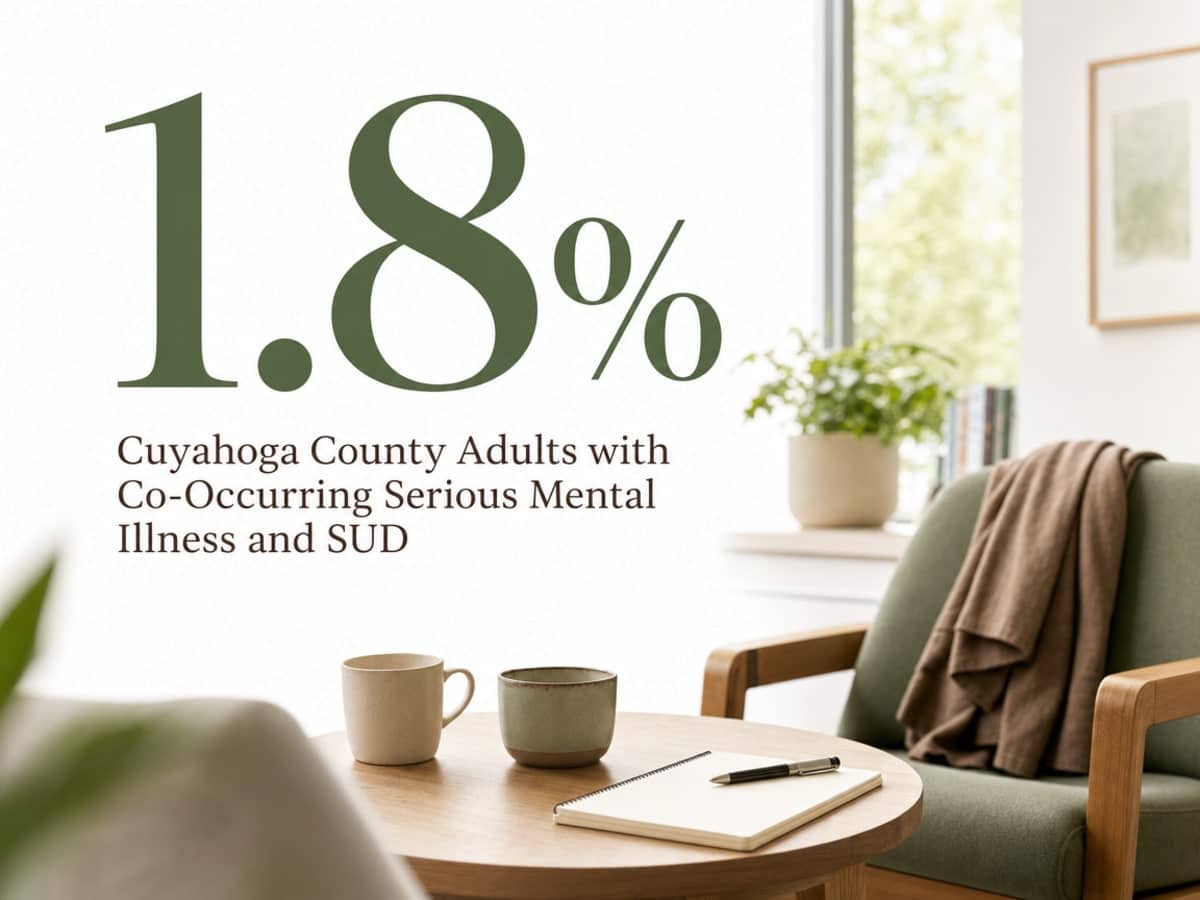
Local data further illustrates this need. The Cuyahoga County ADAMHS needs assessment identifies persistent service gaps and notes that approximately 1.8% of adults in the area have both a serious mental illness and a substance use disorder, a dual-diagnosis profile that outpatient programs are increasingly designed to address 1. Furthermore, Cleveland’s drug landscape is complex, with surveillance reports indicating widespread polysubstance use rather than isolated single-drug cases 10.
Therefore, searching for an outpatient program is a common and necessary step for many competent, employed adults in this city. This article aims to guide you through the process of accessing care.
Why structured outpatient and IOP are the clinically right call for many working adults
There’s a misconception that “real” help for addiction requires a complete withdrawal from daily life. This perspective is outdated and can hinder individuals from seeking appropriate care.
Substance use is understood as a chronic condition, similar to managing high blood pressure. SAMHSA’s clinical guidance for intensive outpatient treatment emphasizes that the acute-care model is insufficient because it doesn’t align with the long-term nature of addiction 5. Modern IOPs are designed with the understanding that individuals will continue to work, parent, and maintain relationships, practicing recovery skills in their everyday environment where they will ultimately need to apply them.
For working adults, structured outpatient treatment offers distinct advantages over residential care:
- It allows individuals to maintain their employment and identity, preserving the financial and social support systems crucial for recovery.
- It provides repeated, real-world practice opportunities; navigating a challenging workday followed by a group session is more beneficial than practicing skills in a controlled facility.
- Outpatient care allows clinicians to adjust the intensity of treatment as needed, offering more sessions during unstable periods and fewer as stability improves, with individual therapy integrated for co-occurring conditions.
Choosing outpatient care because you are still functioning is not a sign that your problem is less serious. Rather, it indicates that you have valuable aspects of your life worth protecting while you address your substance use. Clinical data, your personal schedule, and your treatment team can all support this approach.
What a week in IOP looks like around a 9-to-6
Session counts, evening tracks, and telehealth blends
A typical IOP week for someone working Monday through Friday involves:
- Three group sessions, each lasting approximately three hours, scheduled in evening tracks that begin after 6 p.m.
- One individual therapy session, often scheduled during lunch or immediately after work.
- A brief telehealth check-in or family session as needed.
This totals roughly ten to twelve clinical hours per week, mostly outside of standard work hours.
Standard outpatient treatment is less intensive, typically involving one or two sessions per week, usually individual therapy with occasional group sessions. Many individuals begin with IOP for initial stabilization and then transition to standard outpatient as they progress in their recovery. The goal is to match the intensity of treatment to your current needs.
Telehealth has significantly enhanced flexibility. Participating in a group session from your home office between meetings is a valid form of treatment. SAMHSA’s modern IOP guidance explicitly supports flexible structures that accommodate work and family obligations, moving away from rigid acute-care models 5. For those who travel for work, hybrid tracks allow continuous engagement with their group, even when away from home.
While it may appear busy on paper, in practice, the weekly commitment feels more like a standing appointment than a second job, comparable to a regular fitness routine rather than medical leave.
Getting there: Red Line, Downtown, University Circle, and the parking question
The location of your treatment center is a practical consideration. If your office is downtown, a clinic near Tower City or in Ohio City allows for a quick commute after work. For those working in University Circle—at institutions like Cleveland Clinic, University Hospitals, or Case Western Reserve University—a program on the east side can keep commute times under fifteen minutes in the evenings.
The RTA Red Line offers a convenient transportation option, connecting the airport to Tower City downtown and extending to East 105th and Cedar near University Circle, with a total travel time of about forty minutes 11. This provides a quiet commute to decompress before an evening group session, avoiding traffic stress.
Parking can be a concern. Downtown garages in areas like the Warehouse District and Ohio City are generally accessible after 6 p.m. when daytime workers leave. University Circle also has various parking lots and street parking options that are easier to find in the evening. When contacting a program, it’s advisable to ask about evening parking arrangements and the discretion of the entrance. These are common questions that well-established clinics are prepared to answer.
Treating the polysubstance reality, not a tidy single-substance story
Many individuals delay seeking help due to concerns that their situation is too complex for standard programs. This often involves the use of multiple substances, such as alcohol combined with prescription medications like Adderall or Xanax, or recreational drugs like cocaine. If this scenario resonates with you, you are not an exception in Cleveland; you are part of the majority.
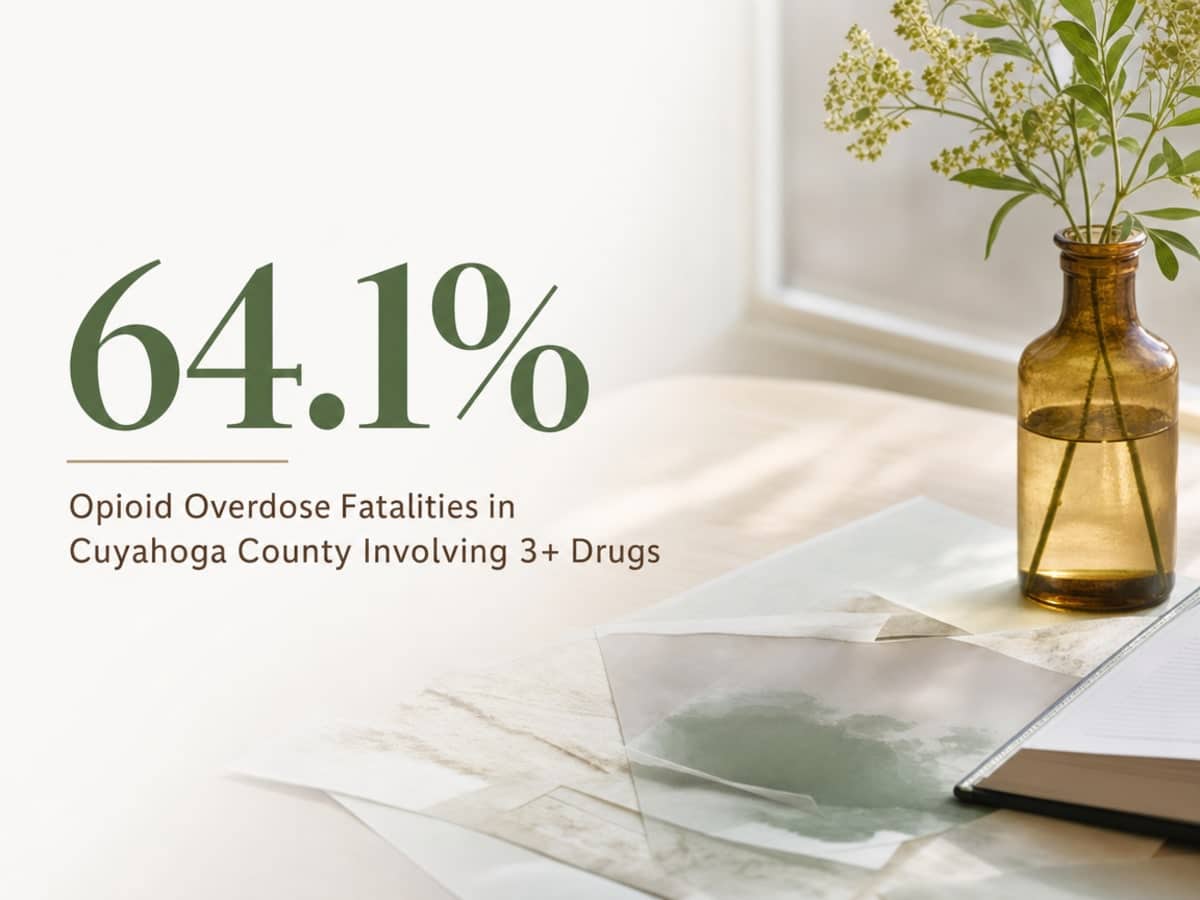
Local data confirms this reality. A Cuyahoga County study of 543 accidental adult opioid overdose deaths revealed that 64.1% involved three or more drugs, with fentanyl present in 63.4% of cases and cocaine in 37.0%. Deaths among African American residents increased significantly during the study period, largely driven by cocaine-fentanyl combinations 2. Regional drug surveillance reports also indicate that polysubstance use is common among individuals who use drugs 10. The concept of a “clean,” single-drug case, often found in older treatment manuals, is increasingly rare.
For outpatient care, this means a program should inquire about all substances involved during the initial call, not just the primary concern. Clinicians should anticipate that alcohol use might be accompanied by a benzodiazepine prescription, or that stimulants used for work might be balanced with substances to aid sleep. Effective treatment plans can integrate medication-assisted treatment for opioid use, careful tapering for benzodiazepines, relapse prevention strategies for stimulants, and open discussions about alcohol, all within the same weekly schedule.
Dual diagnosis: when anxiety, depression, or trauma is riding along
Substance use often co-occurs with underlying mental health conditions such as anxiety, depression, or unresolved trauma. Treating substance use without addressing these co-occurring mental health issues can lead to relapse.
SAMHSA’s clinical framework defines a co-occurring disorder as one or more substance use disorders alongside one or more mental health conditions. Integrated treatment, where the same clinical team addresses both conditions, is the recommended standard, rather than separate referrals to different providers 4. This means your treatment team will understand your relapse prevention needs, your history of PTSD, your antidepressant dosage, and how your anxiety manifests under pressure.
In Cuyahoga County, the ADAMHS needs assessment estimates that approximately 1.8% of adults have both a serious mental illness and a substance use disorder 1. For these individuals, care is significantly improved when providers collaborate. A comprehensive outpatient program in Cleveland can integrate therapies like EMDR for trauma, CBT for anxiety, and medication management into your weekly schedule, rather than requiring you to coordinate these services independently.
If you have been managing both substance use and mental health conditions for an extended period, you are encouraged to discuss all aspects of your situation during intake.
Step-down care: why moving from PHP or residential into IOP usually wins
If you have completed a residential stay or are considering partial hospitalization (PHP), the transition plan afterward is crucial. Local data suggests that what happens after a higher level of care often has a greater impact on long-term outcomes than the initial treatment itself.
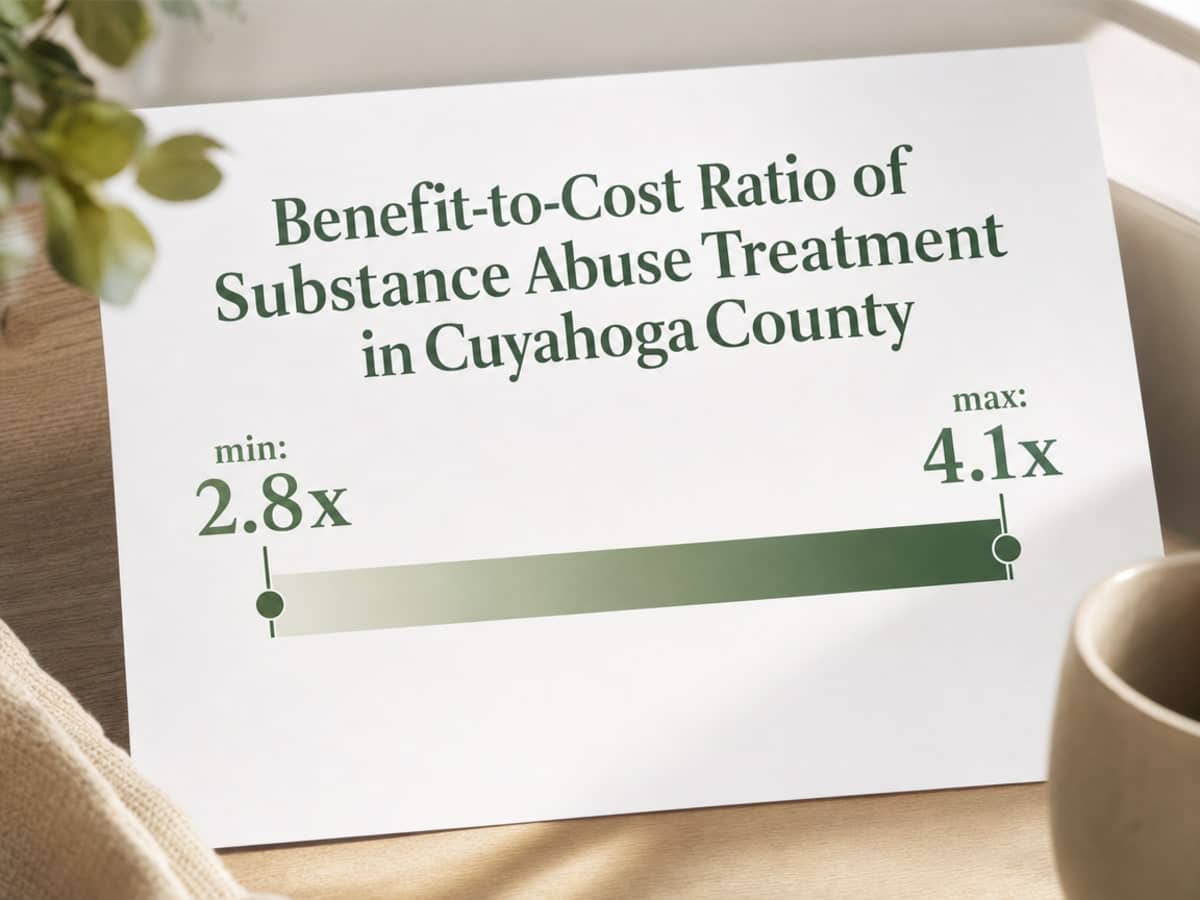
A long-term study of substance abuse treatment clients in Cuyahoga County found that every dollar spent on treatment yielded $2.80 to $4.10 in reduced criminal activity and increased earnings 3. Crucially, clients who transitioned from residential treatment to less intensive care showed greater benefits than those who only received residential treatment. This indicates that continued care is where the gains are sustained.
This aligns with the understanding of substance use as a chronic condition. The acute-care model, which involves a short, intensive stay, does not effectively address the risk of relapse in the months following discharge 5. The initial 90 days back in your home and work environment are critical for applying new skills. IOP is designed for this period, offering three evening group sessions per week, an individual session, and support from a clinical team familiar with your history. This continuous connection is vital during the time when individuals often disengage after residential treatment.
If you are weighing treatment options and residential care is presented as the “serious” choice, consider this reframe: residential treatment is an initial step, not the final solution. Transitioning to structured outpatient care is what transforms a short-term stay into sustained well-being, demonstrating a significant return on investment in the long run.
Confidentiality, FMLA, EAP, and the documentation that protects your career
Concerns about privacy and the impact on your career are valid. However, the protections surrounding outpatient care are more robust than many people realize.
Federal laws, specifically 42 CFR Part 2 for substance use records and HIPAA, provide stringent confidentiality protections for addiction and mental health records. Your employer will not receive details about your diagnosis, attendance, or treatment plan from your provider. Even with a release of information, typically only a confirmation of your participation in care is shared.
Three key tools can help you manage time for treatment discreetly:
EAP (Employee Assistance Program): If your company offers an EAP, it is designed to be confidential and operates independently from HR. Contacting the EAP does not create a record in your personnel file. EAPs often cover initial sessions and can provide referrals to in-network providers.
FMLA (Family and Medical Leave Act): FMLA allows for leave for serious health conditions, including substance use and many mental health conditions. You can use FMLA intermittently, for example, for a weekly afternoon session or early departure for group therapy, without disclosing the specific reason to your manager. The necessary paperwork is submitted to HR or a third-party administrator, with a clinician’s certification that does not specify your diagnosis. Modern outpatient programs are accustomed to providing the standard FMLA certification language 5.
What your insurance is likely to cover
If you have a PPO plan through your employer from common providers in Northeast Ohio—such as Aetna, Anthem Blue Cross, UnitedHealthcare, or Cigna—outpatient and IOP services are almost always covered under your behavioral health benefits. The Mental Health Parity and Addiction Equity Act mandates that plans treat substance use and mental health benefits no more restrictively than medical-surgical benefits. This means you can expect a copay per session for standard outpatient or a per-day/per-episode rate for IOP, subject to the same deductible and out-of-pocket maximum as your other medical care.
Ohio Medicaid also covers these services. The Ohio Medicaid Behavioral Health Manual explicitly lists outpatient therapy, IOP, case management, and related services as billable, structured benefits with defined documentation requirements 6. This confirms that these are standard, reimbursable services across the state’s healthcare landscape.
When contacting a program’s intake line, ask three key questions:
- What is my estimated per-session or per-week cost after insurance?
- Is prior authorization required, and will the program handle it?
- What is the turnaround time for benefit verification?
A reputable program will typically verify your benefits while you are on the phone and provide a clear cost estimate before you commit to an intake appointment.
How to start this week without blowing up your calendar
Starting treatment doesn’t require an elaborate plan; it begins with a few manageable steps this week.
Tuesday: Make one call. Choose a Cleveland outpatient program and contact their intake line. Inquire about evening IOP openings, insurance acceptance, and assessment availability. This call should take about fifteen minutes. If your employer offers an EAP, consider calling them first, as this conversation remains separate from HR.
Wednesday: Protect the hour. Block a recurring 6 p.m. to 9 p.m. window on your calendar three nights a week. You can label it as a “standing appointment” or similar. This creates space for care that clinical evidence supports as integral to your normal life, not a replacement for it 5.
Thursday: Tell one person. Share your decision with one trusted individual—a partner, sibling, or close friend. This is not about informing your manager yet, but about vocalizing your commitment to someone who will notice if you become withdrawn. Speaking it aloud can help reduce the burden.
These three steps—one call, one calendar block, and one honest conversation—are your starting point. The most challenging part of outpatient care in Cleveland is often making that initial phone call. Once you do, the system is designed to support you.
Speak Confidentially With a Cleveland Intake Specialist
Get immediate answers about discreet outpatient options that fit your demanding work schedule.
Frequently Asked Questions
Can I do outpatient treatment in Cleveland while working full-time?
Yes, modern outpatient programs are specifically designed for working individuals. Standard outpatient involves one to two sessions weekly, while Intensive Outpatient Programs (IOPs) typically offer three evening sessions per week, each lasting about three hours, often starting after 6 p.m. Telehealth options further enhance flexibility. SAMHSA’s clinical guidance supports flexible IOP structures that accommodate work schedules 5.
How private is outpatient care, and will my employer find out?
Your employer will not receive your diagnosis, attendance, or treatment plan from your provider. Federal laws, including 42 CFR Part 2 for substance use records and HIPAA, provide strong confidentiality protections. If you use FMLA for intermittent leave, the certification confirms a serious health condition without specifying the details. Employee Assistance Programs (EAPs) are confidential and separate from HR. You control the information shared about your treatment.
What’s the difference between standard outpatient and intensive outpatient (IOP)?
IOP provides approximately nine to twelve clinical hours per week, typically through three group sessions and individual therapy, offering a structured approach. Standard outpatient is less intensive, with one or two weekly sessions, primarily individual therapy. Many individuals begin with IOP for initial stabilization and then transition to standard outpatient as their recovery skills strengthen. The intensity of treatment is adjusted based on your current needs and progress.
Does insurance typically cover outpatient and IOP in Ohio?
Yes, most commercial PPO plans (e.g., Aetna, Blue Cross, UnitedHealthcare, Cigna) cover outpatient and IOP under behavioral health benefits, adhering to parity laws that require comparable coverage to medical care. Ohio Medicaid also explicitly covers outpatient therapy, IOP, and case management as billable services with defined documentation requirements 6. It is advisable to contact the program’s intake team to verify your benefits and obtain a cost estimate before starting treatment.
Can outpatient treatment handle polysubstance use and co-occurring anxiety or depression?
Yes, Cleveland programs are well-equipped to address polysubstance use and co-occurring mental health conditions, which are common. Local surveillance reports indicate that polysubstance use is prevalent 10. SAMHSA’s guidelines recommend integrated treatment for co-occurring substance use and mental health conditions, meaning one clinical team addresses both. It is important to provide a complete picture of your substance use, including alcohol, prescriptions, stimulants, and any mental health concerns like anxiety or trauma history, during intake. A comprehensive program will develop a plan that addresses all these factors.
How soon can I actually start, and what do I need to do this week?
Most Cleveland outpatient programs can schedule an assessment within a few business days, sometimes even within the same week for evening IOPs. To get started this week, make one call to an intake line, inquire about evening openings and insurance verification, and block a recurring weeknight time slot on your calendar. If your employer offers an EAP, contact them first, as it is confidential, separate from HR, and may cover initial sessions.
References
- Cuyahoga County Alcohol, Drug Addiction and Mental Health Services Board: Needs Assessment. https://health.csuohio.edu/sites/default/files/CuyahogaCountyNeedsAssessment2020.pdf
- Trends in opioid overdose fatalities in Cuyahoga County, Ohio. https://pmc.ncbi.nlm.nih.gov/articles/PMC9948855/
- Economic benefits of substance abuse treatment. https://pubmed.ncbi.nlm.nih.gov/15797638/
- Co-Occurring Disorders and Other Health Conditions | SAMHSA. https://www.samhsa.gov/substance-use/treatment/co-occurring-disorders
- Substance Abuse: Clinical Issues in Intensive Outpatient Treatment. https://www.ncbi.nlm.nih.gov/books/NBK64093/
- Ohio Medicaid Behavioral Health Manual 1.27 (August 2024). https://dam.assets.ohio.gov/image/upload/medicaid.ohio.gov/BH/provider/Manuals/BH_Manual_1.27_Aug_2024_final.pdf
- Substance Use and Mental Disorders in the Cleveland–Elyria–Mentor MSA. https://www.samhsa.gov/data/sites/default/files/NSDUHMetroBriefReports/NSDUHMetroBriefReports/NSDUH-Metro-Cleveland.pdf
- SAMHSA Releases Annual National Survey on Drug Use and Health. https://www.samhsa.gov/newsroom/press-announcements/20250728/samhsa-releases-annual-national-survey-on-drug-use-and-health
- Ohio 2023 Uniform Reporting System Mental Health Data Results. https://www.samhsa.gov/data/sites/default/files/reports/rpt53139/Ohio.pdf
- Drug Abuse Trends in the Cleveland Region. https://cp.cuyahogacounty.gov/media/1218/finalreport.pdf
- Cleveland Public Transportation. https://case.edu/travel/visit-cwru/cleveland-public-transportation