
What Happens When Quitting Drinking Cold Turkey?
Key Takeaways
- Quitting drinking cold turkey means abruptly stopping alcohol after heavy or daily use, triggering a nervous system reaction far more serious than a hangover 11.
- The 24-to-72-hour window carries the highest medical risk, with potential seizures, hallucinations, and delirium tremens that can require ICU-level care 1, 10.
- Heavy daily drinkers, anyone past 15 drinks a day or an AUDIT score of 20+, and those with prior withdrawals should not detox unsupervised 3, 4.
- Lasting recovery depends on what happens after detox: continued therapy, medication for alcohol use disorder, and integrated care for co-occurring mental health conditions 7.
The First 72 Hours Are Not Like a Hangover
Deciding to stop drinking is a significant step. If you’ve been drinking heavily or daily for months or years, the initial days without alcohol are not merely a severe hangover. Alcohol withdrawal is a distinct event where your nervous system reacts to the sudden absence of a substance it has chemically adapted to. Symptoms typically begin within hours of your last drink and peak between 24 and 72 hours 11. During this critical window, serious complications like seizures, hallucinations, and delirium tremens (DTs) can occur 1, 10.
The intensity of withdrawal symptoms depends on factors such as the amount and duration of drinking, previous withdrawal experiences, and co-occurring health conditions 4. Understanding these risks is crucial for planning a safe cessation.
What Your Body Actually Does When Alcohol Disappears
Chronic heavy alcohol consumption alters brain chemistry. Alcohol enhances GABA, the brain’s primary calming neurotransmitter, and suppresses glutamate, its main excitatory one. In response, the brain reduces its natural calming receptors and increases excitatory ones to maintain balance while drinking. When alcohol is removed, this compensatory mechanism leads to an overactive nervous system. This hyperexcitability manifests as tremors, a racing heart, sweating, and anxiety. In severe cases, it can lead to seizures and delirium 11, 1.
These physical symptoms are not signs of weakness but rather indicators that your body is undergoing a significant recalibration process. The severity of this process correlates with the extent of the brain’s adaptation to alcohol.
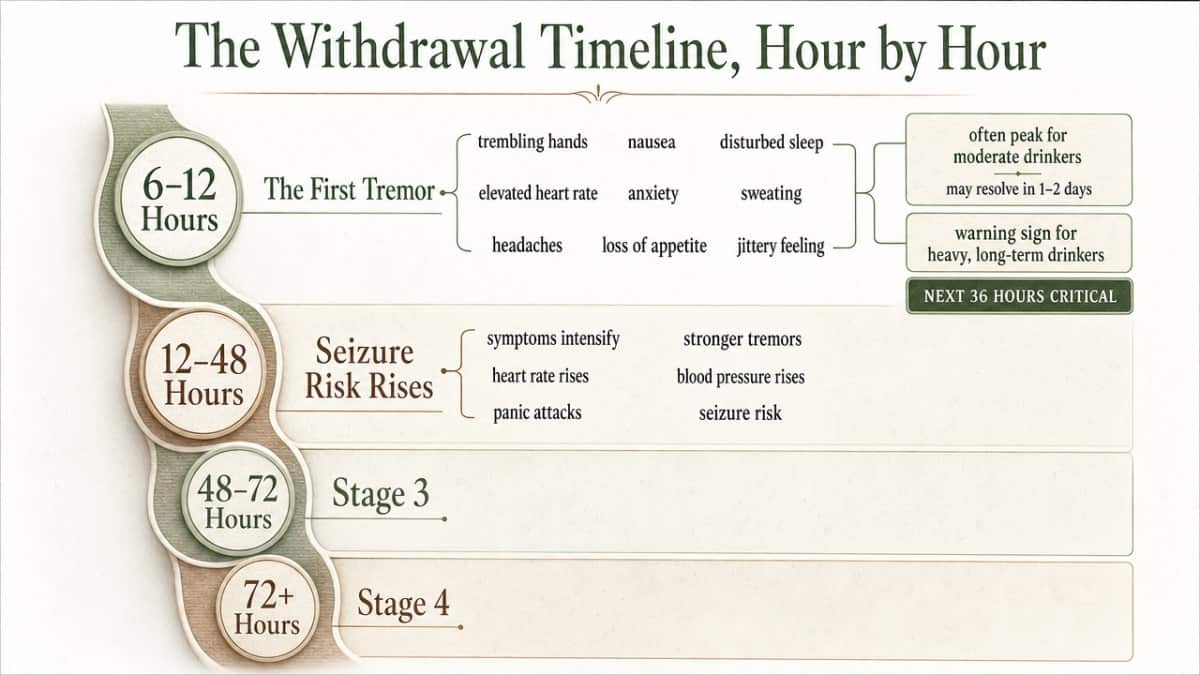
The Withdrawal Timeline, Hour by Hour
6 to 12 Hours: The First Tremor
The earliest signs of withdrawal typically appear 6 to 12 hours after your blood alcohol level begins to drop 11. You might experience trembling hands, nausea, disturbed sleep, an elevated heart rate, and a general sense of anxiety. Other common symptoms include sweating, headaches, loss of appetite, and a jittery feeling.
For moderate drinkers, these symptoms often represent the peak of withdrawal and resolve within a day or two. However, for heavy, long-term drinkers, this stage serves as an initial warning that the nervous system is reacting, indicating that the subsequent 36 hours are critical.
12 to 48 Hours: Where Seizures Become a Real Risk
Between 12 and 48 hours after the last drink, symptoms intensify. Tremors become more pronounced, heart rate and blood pressure rise, and panic attacks may occur. Some individuals may experience alcohol hallucinosis, perceiving shadows or sounds that are not present, though they typically recognize these as unreal.
This period is also when withdrawal seizures are most common. These are often generalized tonic-clonic seizures, characterized by loss of consciousness and full-body convulsions, with no memory of the event afterward 1. Most seizures occur within the first 48 hours of cessation 1. A history of previous withdrawal seizures significantly increases the risk of recurrence. Seeking immediate medical attention is crucial if you are experiencing these symptoms or are at high risk.
48 to 72 Hours: Delirium Tremens and Why It Lands People in the ICU
The most dangerous phase of alcohol withdrawal typically occurs 48 to 72 hours after the last drink: delirium tremens (DTs). DTs is a severe condition characterized by profound confusion, disorientation, and vivid hallucinations that are perceived as real. Physiological symptoms include extreme fluctuations in heart rate, blood pressure, and body temperature due to erratic autonomic nervous system activity 10.
Day 4 and Beyond: The Long Tail Most People Don’t Expect
After 72 hours, the immediate physical dangers usually subside. However, a second phase of withdrawal, known as post-acute withdrawal syndrome (PAWS), can last for weeks or months. Symptoms include low energy, cognitive fog, mood swings, irritability, persistent sleep disturbances, and intense cravings. This period is challenging because the brain is slowly rebuilding its natural calming systems, a process that takes time.
During PAWS, ongoing support through therapy, medication, and structured programs becomes vital. Successfully navigating detox is the first step, but sustained recovery requires continued effort and support to manage these lingering symptoms and prevent relapse.
Who Can Probably Taper at Home, and Who Should Not Try
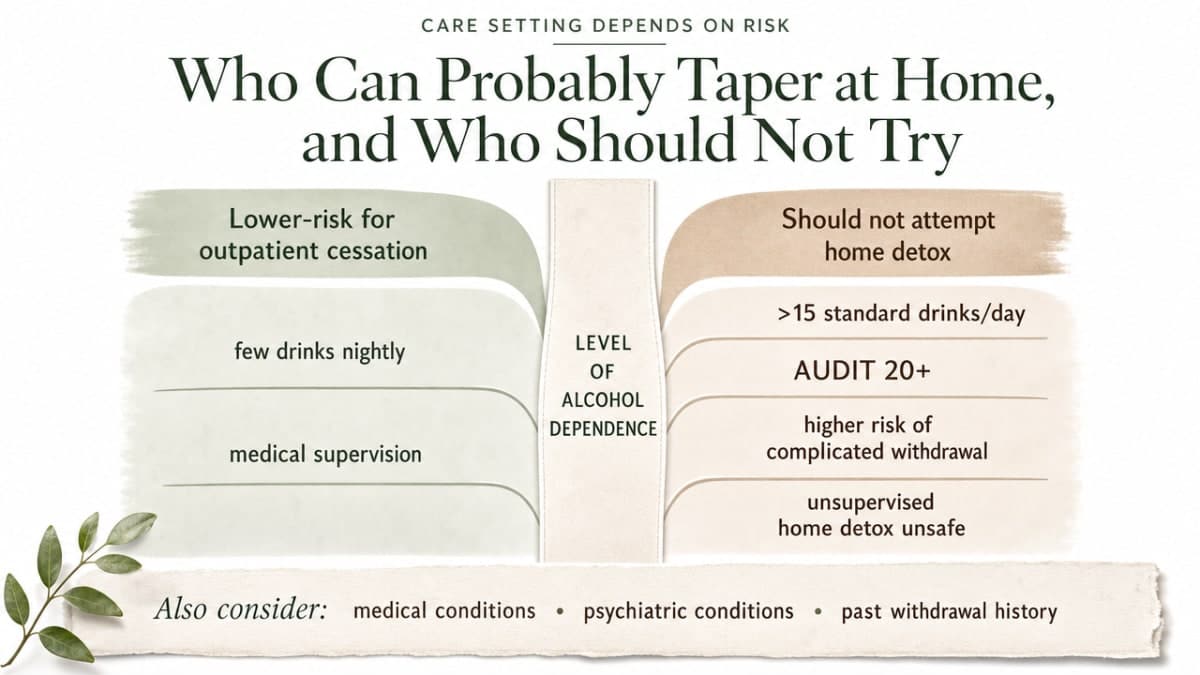
Not everyone requires inpatient medical detoxification. The decision to attempt cessation at home, even with medical guidance, depends on the individual’s level of alcohol dependence. Clinical guidelines, such as those from the UK NICE, recommend considering assisted withdrawal for individuals consuming more than 15 standard drinks daily or scoring 20 or higher on the AUDIT screening tool 3. Exceeding these thresholds increases the risk of complicated withdrawal, making unsupervised home detox unsafe. The American Society of Addiction Medicine also emphasizes considering medical and psychiatric conditions, as well as past withdrawal history, when determining the appropriate level of care 4.
Individuals who are lower-risk candidates for outpatient cessation with medical supervision typically:
- Drink a few drinks nightly for a relatively short period
- Have no history of seizures or DTs
- Possess stable physical and mental health
- Have a supportive person at home to monitor for warning signs
Conversely, individuals should avoid attempting cold turkey at home if they:
- Have been drinking heavily (approximately 15 or more drinks daily) for months or years
- Have a history of withdrawal seizures or delirium tremens
- Have undergone detox previously
- Suffer from heart disease, liver disease, diabetes, or seizure disorders
- Are pregnant
- Use other sedatives or opioids
- Are experiencing active depression, severe anxiety, PTSD, or suicidal ideation 3, 4
For those in a middle ground—moderate daily drinking, AUDIT scores in the teens, no past withdrawals but some medical issues—consulting a primary care physician or addiction medicine specialist is crucial. They can conduct an assessment, potentially prescribe short-term medication, and advise on the safety of home detox. Choosing supervised detox when in doubt is a proactive measure to protect your health and support your commitment to sobriety.
The Kindling Effect: Why Each Cold Turkey Attempt Gets Worse
Repeated cycles of heavy drinking followed by abrupt cessation can lead to a phenomenon known as kindling. This effect means that each subsequent withdrawal experience tends to be more severe than the last, with an increased risk of seizures and other serious symptoms 13. While animal studies provide strong evidence, human research also supports this observation. For individuals who have previously undergone withdrawal, the risk of seizures in future attempts is elevated 1.
This information is not intended to discourage further attempts at sobriety but rather to inform a safer approach. If you have relapsed after previous attempts, a supervised detox becomes even more critical. Your body remembers past withdrawal experiences, necessitating a more carefully planned and supported cessation process.
What Supervised Detox Actually Looks Like
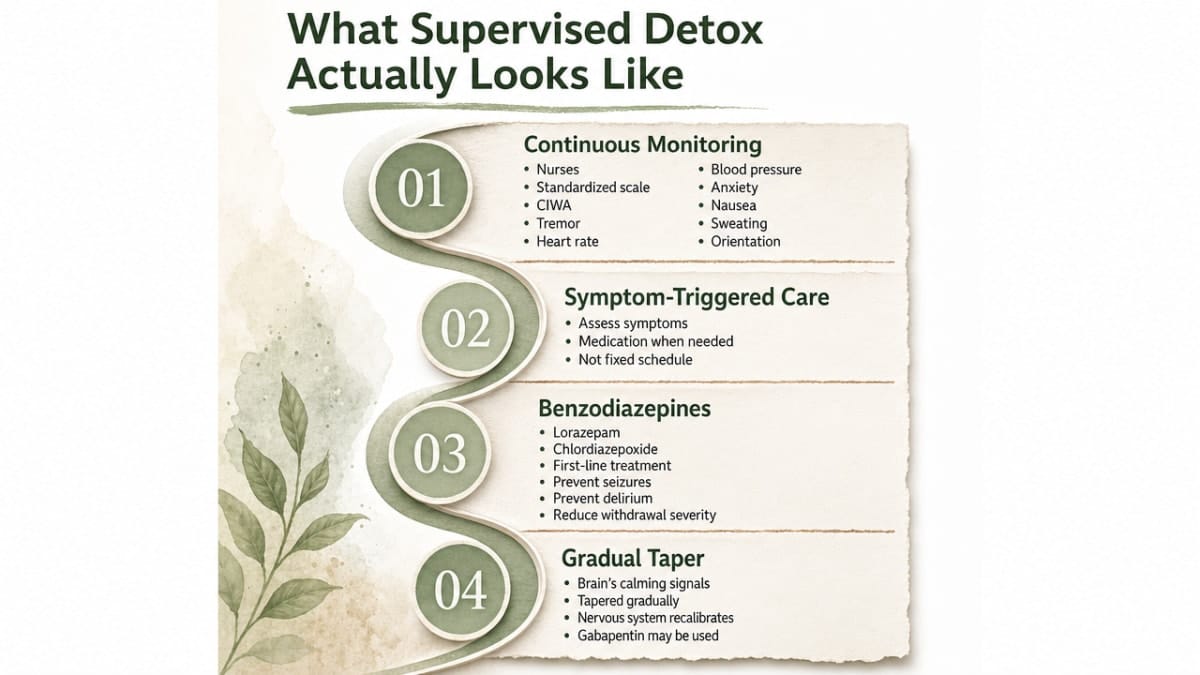
Medically supervised alcohol detox involves a structured medical environment focused on patient safety and comfort. It typically includes four key components.
First, continuous monitoring is provided by nurses who use standardized scales, such as the CIWA, to assess symptoms like tremor, heart rate, blood pressure, anxiety, nausea, sweating, and orientation. This symptom-triggered care ensures medication is administered precisely when needed, rather than on a fixed schedule 2.
Second, medication, primarily benzodiazepines like lorazepam or chlordiazepoxide, is used as the first-line treatment. These medications are highly effective in preventing seizures and delirium and reducing overall withdrawal severity by restoring the brain’s calming signals, which are then gradually tapered as the nervous system recalibrates. Gabapentin may be used as an adjunct or alternative for milder withdrawal, though its evidence base is less robust 14.
Third, nutrition is crucial. Heavy drinkers often have thiamine (vitamin B1) deficiencies. Administering thiamine before glucose is standard protocol to prevent Wernicke encephalopathy, a serious neurological condition, thereby protecting the brain during its vulnerable state 12.
Fourth, comprehensive discharge planning begins on day one. This includes arranging therapy appointments, considering medication for alcohol use disorder, addressing any co-occurring mental health conditions, and establishing a supportive environment for post-detox recovery 2. Detox is a critical initial step, but the subsequent support is essential for long-term sobriety.
When Anxiety, Depression, or Trauma Are Riding Along
Many individuals use alcohol to cope with underlying mental health issues such as anxiety, depression, or trauma. Removing alcohol without addressing these co-occurring conditions is a significant factor in relapse. Integrated treatment, where addiction care and mental health care are coordinated, yields better outcomes than treating each condition separately 7, 8.
During withdrawal, emotional symptoms can initially worsen as the brain rebalances. Anxiety may spike, depression can deepen, and past trauma responses may resurface without alcohol’s numbing effect. This temporary emotional decline is a normal part of the healing process, indicating that alcohol was masking deeper issues that now require attention.
A thorough detox plan should assess for self-harm ideation, existing diagnoses of depression, anxiety, PTSD, or bipolar disorder, and current psychiatric medication use. These factors influence the safety of outpatient detox, the choice of medications, and the type of therapy needed alongside physical recovery 4. For those who have self-medicated for an extended period, a comprehensive plan that addresses both substance use and mental health is essential for lasting recovery.
Building a Plan That Gets You to Day 30, Not Day 3
Sustained sobriety requires a robust plan that extends beyond the initial detox period. Begin by setting a specific start date in the near future and confide in a trusted individual. Seek a medical opinion before beginning, either from your primary care doctor, an urgent care clinician, or the SAMHSA National Helpline (1-800-662-4357), which can connect you to local resources 9. If supervised detox is recommended, consider it seriously; it provides a safe environment to protect your brain from severe withdrawal complications.
Crucially, plan for post-detox support before detox concludes. Schedule therapy appointments, discuss medication for alcohol use disorder with your clinician, and address any co-occurring mental health conditions like depression, anxiety, or PTSD, as integrated care improves outcomes 7. Prioritize basic needs such as sleep, nutrition, hydration, daylight exposure, and maintaining connections with supportive individuals.
While day 3 marks a significant medical milestone, day 30 represents a critical life achievement. The journey between these points relies on structured support rather than willpower alone. If previous attempts at quitting independently have resulted in relapse, it indicates a need for increased support in your next attempt. Programs like Arrow Passage Recovery are designed to provide the necessary structure and assistance to ensure lasting recovery.
Ready for Safe Support Through Alcohol Withdrawal?
Connect with caring specialists for immediate guidance and next steps to safely manage quitting alcohol cold turkey.
Talk With Someone Who Understands Your Journey
Get guidance and support for a safer, more stable alcohol withdrawal experience.
Frequently Asked Questions
Is quitting drinking cold turkey dangerous?
For light or occasional drinkers, stopping abruptly is generally safe, though uncomfortable. However, for individuals who drink heavily or daily, quitting cold turkey can be dangerous, potentially triggering seizures and delirium tremens (DTs) 1, 10. DTs is a severe, disorienting state with unstable vital signs that may require intensive care. If you have a history of heavy or prolonged drinking, or previous withdrawal experiences, it is crucial to consult a clinician before attempting to stop.
How long do alcohol withdrawal symptoms last?
Acute withdrawal symptoms typically begin within hours of your last drink, peak between 24 and 72 hours, and gradually subside over several days 11. Following this acute phase, a period known as post-acute withdrawal syndrome (PAWS) can occur, lasting weeks or even months. PAWS symptoms include low energy, cognitive difficulties, mood swings, sleep disturbances, and cravings. While the first three days pose the highest medical risk, the extended PAWS phase is often when relapses are most common.
What are the signs I need emergency medical help during withdrawal?
Seek immediate emergency medical attention (call 911 or go to an emergency room) if you experience any of the following: a seizure, severe confusion or disorientation, hallucinations that you cannot recognize as unreal, chest pain, a persistently racing heart, very high blood pressure, fever, or thoughts of self-harm 1, 10. Any sudden and significant change in mental status, such as an inability to follow a conversation or recognize familiar individuals, requires urgent intervention. The SAMHSA National Helpline at 1-800-662-4357 is available 24/7 for guidance if you are unsure 9.
Can I safely detox from alcohol at home?
Detoxing from alcohol at home can be safe for some individuals, but it requires medical supervision. According to NICE guidelines, assisted withdrawal should be considered for anyone consuming more than 15 standard drinks daily or scoring 20 or higher on the AUDIT 3. For those below these thresholds, with no history of seizures or DTs, stable health, and a supportive person at home, outpatient cessation with medical guidance may be appropriate 4. However, home detox is not recommended if you have a history of prior withdrawals, heart or liver disease, or active mental health conditions.
Why does each attempt to quit cold turkey feel worse than the last?
This phenomenon is known as kindling. Each cycle of heavy drinking followed by abrupt cessation appears to sensitize the nervous system, increasing the risk and severity of seizures and other withdrawal symptoms in subsequent attempts 13. Individuals with a history of withdrawal are at a higher risk for seizures in future attempts 1. This effect underscores the importance of seeking professional support for subsequent attempts, as a supervised detox can provide the necessary protection for a body that has experienced withdrawal before.
What happens during medically supervised alcohol detox?
Medically supervised detox involves continuous monitoring of symptoms using standardized scales like CIWA, with care adjusted as needed. Benzodiazepines, such as lorazepam or chlordiazepoxide, are the primary medications used to prevent seizures and delirium and reduce withdrawal severity 2. Gabapentin may be used in milder cases, though with more limited evidence 14. Thiamine is administered before glucose to prevent Wernicke encephalopathy 12. Additionally, comprehensive discharge planning, including therapy, medication for alcohol use disorder, and mental health care, begins from the first day 2.
References
- Update on the Neurobiology of Alcohol Withdrawal Seizures. https://pmc.ncbi.nlm.nih.gov/articles/PMC1312739/
- Alcohol Withdrawal in Hospitalized Patients. https://www.ncbi.nlm.nih.gov/books/NBK604324/
- Harmful drinking and alcohol dependence: advice from recent NICE guidelines. https://pmc.ncbi.nlm.nih.gov/articles/PMC3223772/
- The ASAM Clinical Practice Guideline on Alcohol Withdrawal Management. https://pubmed.ncbi.nlm.nih.gov/32511109/
- Facts About Excessive Drinking. https://www.cdc.gov/drink-less-be-your-best/facts-about-excessive-drinking/index.html
- Facts About U.S. Deaths from Excessive Alcohol Use. https://www.cdc.gov/alcohol/facts-stats/index.html
- Finding Help for Co-Occurring Substance Use and Mental Disorders. https://www.nimh.nih.gov/health/topics/substance-use-and-mental-health
- Co-Occurring Disorders and Other Health Conditions. https://www.samhsa.gov/substance-use/treatment/co-occurring-disorders
- National Helpline. https://www.samhsa.gov/find-help/helplines/national-helpline
- Chapter on Alcohol Use Disorders in “Substance Abuse: Clinical Issues in Intensive Care”. https://www.ncbi.nlm.nih.gov/books/NBK64026/
- Alcohol withdrawal syndrome: mechanisms, manifestations, and management. https://pmc.ncbi.nlm.nih.gov/articles/PMC6591749/
- Wernicke-Korsakoff Syndrome. https://www.ncbi.nlm.nih.gov/books/NBK430922/
- Kindling in alcohol withdrawal. https://pubmed.ncbi.nlm.nih.gov/15289470/
- Gabapentin for alcohol withdrawal and relapse prevention: a systematic review. https://pubmed.ncbi.nlm.nih.gov/33277358/