
The Twelve Steps of AA: A Spiritual Path to Recovery
Key Takeaways
- The Twelve Steps unfold as four spiritual movements—surrender, inventory and confession, amends, and ongoing maintenance through service—rather than a linear checklist to complete and set aside.
- Clinical evidence supports the Steps as a legitimate pathway for alcohol use disorder, with manualized Twelve-Step Facilitation matching or outperforming other treatments on continuous abstinence 1, 2.
- The program’s inclusive language around a Higher Power lets Christians and others engage without abandoning their theology, though the Steps alone are insufficient for co-occurring mental illness and require integrated clinical care 5, 9.
- Lasting recovery depends on what happens after year one: daily practice of Steps 10 and 11, sponsorship and service, and structured aftercare that may include faith community, counseling, and medication 3, 8.
Why the Steps Are a Spiritual Practice, Not a Self-Help Checklist
If you’ve approached the Twelve Steps expecting a simple solution for addiction, you’ll notice the language is more akin to a spiritual journey than a productivity system. This is intentional; the Steps were designed as a spiritual practice, not merely a behavioral checklist. Treating them otherwise often diminishes their effectiveness.
Researchers observing long-term AA members consistently note a profound shift, often described as a “spiritual awakening.” This includes a diminished desire to drink, increased mental clarity, and a sense of connection to a Higher Power 4. Sociologists have characterized AA as a form of “lived religion,” with its own narratives, rituals, and moral framework that redefines an individual’s self-perception 5.
While spirituality is central to the Steps’ efficacy, it’s not the sole factor. Social connection, accountability, and skill development also play significant roles. Research views spirituality as one of several mechanisms contributing to recovery 10. The Steps demand a deeper engagement than mere self-improvement, and this depth is often what leads to lasting change.
This article explores the spiritual progression of the Steps, presenting them as a continuous journey rather than a linear list of tasks.
The Four Movements of the Twelve Steps
Surrender: Steps 1 Through 3
The initial three Steps focus on acknowledging a lack of control, a concept many actively resist. Step 1 involves admitting powerlessness over alcohol and the unmanageability of one’s life. Step 2 introduces the idea of a Power greater than oneself that can restore sanity. Step 3 is about committing one’s will and life to the care of this Power, as understood by the individual.
While seemingly straightforward, these Steps require deep introspection. Truly internalizing Step 1 can take considerable time, as the urge to control one’s drinking often persists. This gradual process of letting go is the essence of genuine surrender.
For those with a faith background, Steps 2 and 3 resonate with concepts of trust and dependence on a divine entity. AA’s inclusive phrasing, “a Power greater than ourselves,” allows individuals with varied spiritual beliefs to engage. Christians, for instance, often pray these Steps directly addressing the Father, Son, and Holy Spirit.
Research indicates this initial phase marks the beginning of a profound shift in identity and meaning, beyond just behavioral changes 11. Members frequently report a transformative experience when they cease resisting their limitations 4. The key is to begin, even if the full impact isn’t immediately felt.
Inventory and Confession: Steps 4 Through 7
Following the initial surrender, Steps 4 through 7 prompt a thorough examination of one’s past. Step 4 calls for a “searching and fearless moral inventory.” Step 5 requires admitting the exact nature of one’s wrongs to God, oneself, and another person. Step 6 involves becoming ready for God to remove these character defects, and Step 7 is humbly asking for their removal.
This phase is often challenging, as individuals confront past resentments and behaviors they may have suppressed. The process is not meant to be comfortable, but rather to alleviate the burden of carrying these issues alone.
Step 5 carries significant spiritual weight. Sharing one’s inventory with a sponsor or trusted individual, while not strictly therapy or sacramental confession, draws from both. The relief experienced after this honest disclosure is a common outcome.
Steps 6 and 7 shift the focus from personal effort to divine intervention. Instead of struggling to overcome character defects, individuals ask for transformation. Members who engage deeply with these Steps often describe a gradual reduction in compulsive behaviors and shame, reflecting a sustained change in their relationship with themselves and a Higher Power 4. Each honest conversation or written reflection is a step forward.
Amends: Steps 8 and 9
Step 8 involves creating a list of all individuals harmed and developing a willingness to make amends. Step 9 is the act of making these direct amends whenever possible, unless doing so would cause further harm to them or others.
While Step 4 is often difficult to start, Step 9 can be the hardest to complete. Amends go beyond mere apologies; they involve active repair, which might include financial restitution, difficult conversations, or acknowledging past dishonesty. This echoes the biblical concept of restitution, where actions follow remorse.
It’s crucial not to omit anyone from the amends list. Working with a sponsor helps determine the appropriate timing, order, and safety of each interaction. When direct amends are impossible due to death or potential harm, “living amends”—changing one’s behavior—serve as the repair.
Responses to amends can vary widely. Some individuals may be receptive, while others may choose not to engage or may accept the amends but still maintain distance. The purpose of Step 9 is not to secure forgiveness on one’s own terms, but to take responsibility for one’s actions.
This is the point where the moral transformation of sobriety becomes outwardly visible to family, colleagues, and community 5. Every apology, letter, debt paid, or truth revealed represents a significant achievement.
Maintenance and Service: Steps 10 Through 12
The final three Steps represent an ongoing way of life, not a conclusion. Step 10 involves continuing personal inventory and promptly admitting wrongs. Step 11 focuses on improving conscious contact with God through prayer and meditation, seeking knowledge of His will and the strength to follow it. Step 12, having experienced a spiritual awakening, entails carrying the message to others and applying these principles in all aspects of life.
Step 10 ensures continuous self-awareness. Regular, honest self-assessment—identifying selfishness, dishonesty, or fear—prevents minor issues from escalating into relapses. This consistent, unglamorous practice is vital for sustained sobriety.
Step 11 transforms the spiritual journey from crisis management to an ongoing relationship. For people of faith, this mirrors established practices of daily prayer and contemplation. Qualitative research highlights that this maintenance phase is associated with sustained inner peace, gratitude, and a profound connection to a Higher Power 3.
What the Evidence Actually Says About the Steps
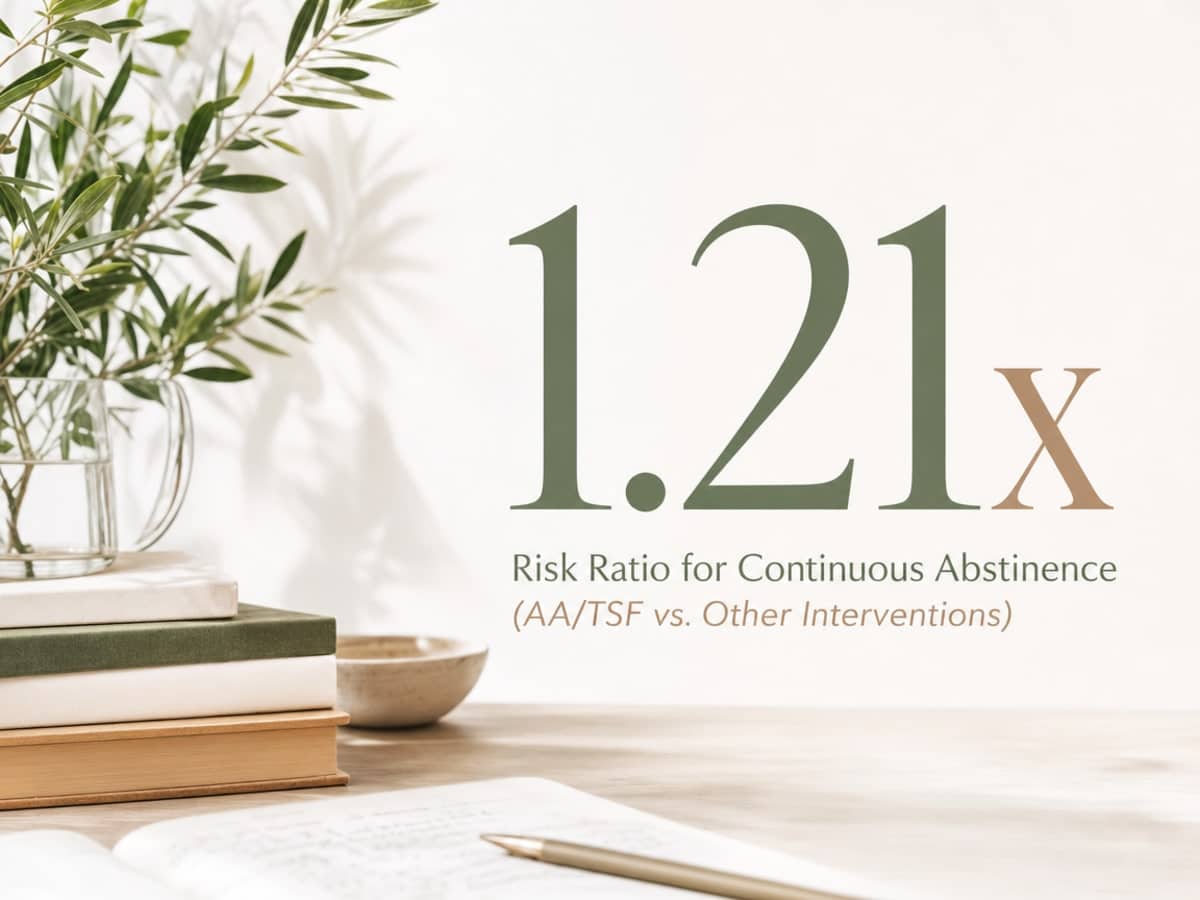
The 2020 Cochrane review provides strong clinical evidence regarding the effectiveness of manualized AA and Twelve-Step Facilitation (TSF). This review compared these approaches with other evidence-based treatments for alcohol use disorder, such as cognitive behavioral therapy and motivational enhancement. The findings indicated that individuals assigned to a structured 12-step approach were significantly more likely to maintain continuous abstinence at 12, 24, and 36 months, with a risk ratio of 1.21 (95% CI 1.03–1.42) for continuous abstinence at 12 months 1. This also came with better cost-effectiveness 2.
It’s important to understand the scope of this research. It specifically addresses alcohol use disorder in adults, comparing manualized TSF—a clinician-led protocol that integrates individuals into AA—against other clinical interventions. The conclusion is that when a trained professional actively connects individuals to the Twelve-Step community and guides them through the initial Steps, the outcomes for sustained sobriety are at least comparable to, and often better than, other established treatments 1.
Two important caveats should be noted. First, the Cochrane authors acknowledge inherent limitations, such as the impossibility of blinding in a program based on shared identification and the variability of AA meeting implementation 1. Second, broader literature on AA suggests that spirituality is not the sole mechanism of change. Factors like social network changes, accountability, coping skills, and motivation also contribute significantly 10. Researchers studying spiritual change within the Steps confirm its real and measurable impact, though establishing direct causality between spiritual awakening and abstinence remains complex with current research tools 11.
Therefore, the Steps are not merely a folk remedy; they represent an evidence-based pathway for alcohol use disorder. They have a recognized mechanism profile, known limitations, and a proven track record. This warrants serious consideration, while also maintaining realistic expectations about what the program alone can achieve.
Higher Power, Christian Faith, and the Honest Tension
The phrase “God, as we understood Him” in Step 3 often raises questions for individuals with a specific faith background. This inclusive language was intentionally chosen by the founders to ensure accessibility for those who might be resistant to traditional religious concepts. It serves as an open door, not a requirement to abandon one’s theology.
In practice, Christian members typically adopt one of two approaches: some directly incorporate the Father, Son, and Holy Spirit into their prayers and personal work, while respecting AA’s broader language in meetings. Others use the general “Higher Power” terminology in meetings and their specific faith language in private prayer and with their spiritual mentors. Both approaches are consistent with the program. Sociologists studying AA as a “lived religion” observe that members routinely integrate their personal theological vocabulary into the Steps without disrupting the shared framework 5.
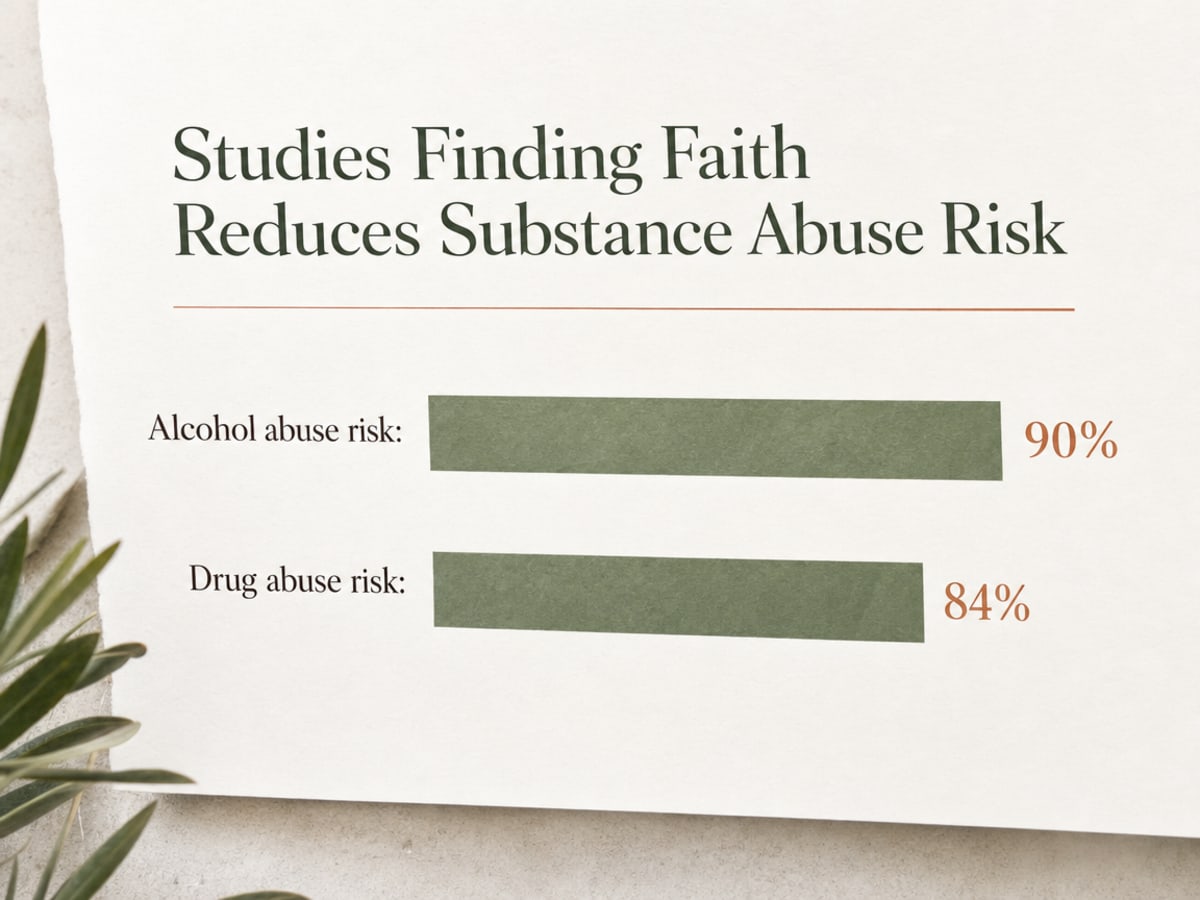
Clinical research supports the positive role of faith in recovery. A review of 185 studies on substance use and religion found that approximately 90% reported faith reducing the risk of alcohol abuse, and 84% reported it reducing drug abuse risk. Less than 2% found faith increased risk 6, 7. Higher religiosity is also associated with greater treatment completion rates 8.
It’s important to acknowledge the nuanced relationship: the Steps are not exclusively a Christian program, and claiming otherwise misrepresents AA. However, they are also not antithetical to Christian faith. The practical question for individuals is whether they can engage with the Steps using their personal understanding of God, alongside others who may hold different beliefs. Many Christians in long-term recovery affirm that this is indeed possible.
When the Steps Are Not Enough on Their Own: Co-Occurring Conditions and Integrated Care
While the Steps are powerful, they are not a comprehensive treatment for co-occurring mental health conditions such as PTSD, bipolar disorder, severe depression, or psychotic disorders. For individuals facing these challenges, simply intensifying engagement with the program is not the solution, as the Steps were not designed to address these specific conditions.
A randomized trial involving adults with alcohol dependence and serious mental illness demonstrated that while Twelve-Step Facilitation effectively encouraged meeting attendance, it did not surpass integrated dual-diagnosis treatment in substance use outcomes when mental illness and addiction were addressed concurrently 9. While Twelve-Step attendance remained beneficial, it was insufficient on its own when a co-occurring illness was present.
This finding emphasizes the need for integrated care, which combines psychiatric treatment for mental health diagnoses, evidence-based therapies like CBT or EMDR for trauma, and medication when prescribed—including medication-assisted treatment for opioid or alcohol use disorder—alongside engagement with the Twelve Steps. These components are complementary, not competitive, with spiritual work or faith.
For Christian readers considering psychiatric medication, it’s important to note that AA’s spiritual literature, and most pastors, do not view medication as a failure of faith. Individuals are encouraged to follow their prescriber’s recommendations. The Steps and psychiatric care serve different, yet equally vital, functions. There is wisdom in utilizing both for comprehensive recovery 10.
Year Two, Year Five: What Sustains the Work After the Newcomer Chip
Recovery extends far beyond the initial completion of the Twelve Steps. The period after the first year presents new challenges as the initial intensity fades, family dynamics shift, and daily life resumes. This phase is critical for the spiritual practices developed in the first year to mature into a more stable foundation.
Research on long-term AA affiliation consistently shows that sustained sobriety is achieved by those who maintain ongoing engagement with meetings, sponsorship, and spiritual practices. These individuals describe their experience in terms of continuous gratitude and identification with the community, rather than a single transformative event 3. The spiritual awakening is not an endpoint, but rather the foundation for continued growth 4.
Three key elements typically support long-term recovery:
- a consistent daily practice of Steps 10 and 11, involving honest self-reflection and prayer;
- meaningful service, such as sponsoring others or contributing to meetings;
- and a structured aftercare plan that acknowledges that meetings alone may not address every challenge. For individuals of faith, this often includes involvement with a home church, a sponsor, ongoing counseling, and, if applicable, a prescriber who understands their full history.
Higher religiosity is correlated with treatment completion, underscoring the importance of maintaining connections to faith communities for sustained recovery 8. Developing a long-term plan should involve discussions with treatment providers about ongoing aftercare, including relapse prevention and community support, which are crucial for navigating the later stages of recovery. Programs like those offered by Arrow Passage Recovery are designed to support individuals through these extended phases. Continued engagement with the Steps, meetings, and comprehensive support systems is essential.
Ready for Support on Your Spiritual Recovery?
Connect with someone who understands the Twelve Steps and faith-based recovery, any time you need guidance.
Discuss Your Next Steps on the Spiritual Path
Connect with a caring guide to explore personalized recovery rooted in spiritual growth and lasting support.

Frequently Asked Questions
Do I have to be religious to work the Twelve Steps?
No. The Steps were intentionally written with the phrase “as we understood Him” to be inclusive of individuals without a religious background or those who have had negative experiences with religion. The program asks for a willingness to consider a Power greater than yourself, not adherence to a specific creed. Members define their Higher Power in various ways, and research confirms that diverse spiritual understandings coexist within AA meetings 3. You are encouraged to bring your current beliefs, as further spiritual development often occurs over time.
How do the Twelve Steps fit with Christian faith?
For most Christian readers, the Twelve Steps align naturally with their faith. The framework of the Steps—encompassing surrender, confession, repentance, restitution, prayer, and service—draws heavily from spiritual practices that have been central to the church for centuries. Christians can personalize the Steps by directly addressing the Father, Son, and Holy Spirit in their private spiritual work, while respecting the broader language used in AA meetings. Sociologists who study AA as a “lived religion” have observed that members routinely integrate their own theological vocabulary into the Steps 5.
Is AA enough on its own, or do I also need clinical treatment?
For many individuals with alcohol use disorder, manualized AA and Twelve-Step Facilitation can yield outcomes comparable to other evidence-based treatments 1. However, the sufficiency of AA depends on individual needs. If you have co-occurring mental health conditions, a history of trauma, or severe withdrawal risks, integrated clinical care—including psychiatric treatment, therapy, and medication when indicated—is essential alongside the program 9. The Steps and clinical care are complementary, each addressing different aspects of recovery, and many individuals in long-term recovery benefit from both.
Can I take medication for addiction or mental health while working the Steps?
Yes. The Twelve Steps are not in conflict with prescribed medication, a point AA literature has consistently clarified. Medication-assisted treatments for opioid or alcohol use disorder, as well as antidepressants, mood stabilizers, or antipsychotics, do not undermine the spiritual work of the program. Broader research on AA indicates that spirituality is one of several mechanisms in recovery, not a substitute for medical care 10. If you encounter differing opinions in a meeting, consult your sponsor and your prescriber. It is recommended to follow your doctor’s medical advice while continuing your engagement with the Steps.
What if Step 4 or Step 9 feels too hard to face?
It is common for these Steps to feel challenging, and this is not an indication of doing something incorrectly. Step 4 is a frequent point where individuals pause, and Step 9 involves making amends that become visible to others. It is advisable to proceed deliberately and work with a sponsor who has personal experience with these Steps. Breaking the inventory into smaller, manageable sessions can be helpful. For Step 9, discuss each amends with your sponsor before acting. The relief often follows the act of honesty 4. Progress, even in small increments—one page written, one conversation, one apology—is valuable.
How long does it take to actually work the Twelve Steps?
There is no set timeframe for completing the Twelve Steps. Some individuals may work through all twelve with a sponsor in approximately a year, while others may spend more time on Steps like 1 or 4 as needed. Consistent engagement is more important than speed. Long-term AA research indicates that members who maintain sobriety describe an ongoing practice—including daily Step 10, regular Step 11, and continued service—rather than a definitive endpoint 3. The Steps are best viewed as an evolving way of life rather than a course to be completed.
References
- Alcoholics Anonymous and other 12‐step programs for alcohol use disorder. https://pmc.ncbi.nlm.nih.gov/articles/PMC7065341/
- Alcoholics Anonymous and 12-Step Facilitation Treatments for Alcohol Use Disorder: A Distillation of a 2020 Cochrane Review for Clinicians and Policy Makers. https://pubmed.ncbi.nlm.nih.gov/32628263/
- Affiliation to the Alcoholics Anonymous (AA) community: A qualitative study of motivation, experiences, and recovery. https://pmc.ncbi.nlm.nih.gov/articles/PMC11572606/
- Spiritual Awakening in 12-Step Recovery: Impact Among Alcoholics Anonymous Members. https://pmc.ncbi.nlm.nih.gov/articles/PMC10947114/
- Moral Narratives of Sobriety: A Qualitative Study of a Lived Religion in Alcoholics Anonymous. https://digitalcommons.unl.edu/cgi/viewcontent.cgi?article=1838&context=sociologyfacpub
- Ch. 6.1: Spirituality and Religion in Substance Misuse Prevention and Recovery. https://pressbooks.ulib.csuohio.edu/substancemisusepart1/chapter/ch-6-1-spirituality-and-religion-in-substance-misuse-prevention-and-recovery/
- Belief, Behavior, and Belonging: How Faith is Indispensable in Preventing and Recovering from Substance Abuse. https://pmc.ncbi.nlm.nih.gov/articles/PMC6759672/
- Addiction Treatment Outcomes and Religiosity. https://aquila.usm.edu/cgi/viewcontent.cgi?article=1568&context=honors_theses
- 12-Step Facilitation for the Dually Diagnosed. https://pmc.ncbi.nlm.nih.gov/articles/PMC3976999/
- Alcoholics Anonymous Effectiveness: Faith Meets Science. https://pmc.ncbi.nlm.nih.gov/articles/PMC2746426/
- Spiritual Implications of the Alcoholics Anonymous Twelve-Step Program. https://dash.harvard.edu/server/api/core/bitstreams/7312037d-ca19-6bd4-e053-0100007fdf3b/content