
The 7 Top Addictions & Their Hidden Warning Signs
Key Takeaways
- Alcohol is the addiction most often missed because it’s socially normalized; watch for mood that only resets with a drink, wrecked sleep patterns, and money that doesn’t reconcile.
- Opioid warning signs cluster across body, behavior, and situation, including pinpoint pupils, slowed breathing, repeated failed cut-down attempts, and missing pills from medicine cabinets 6.
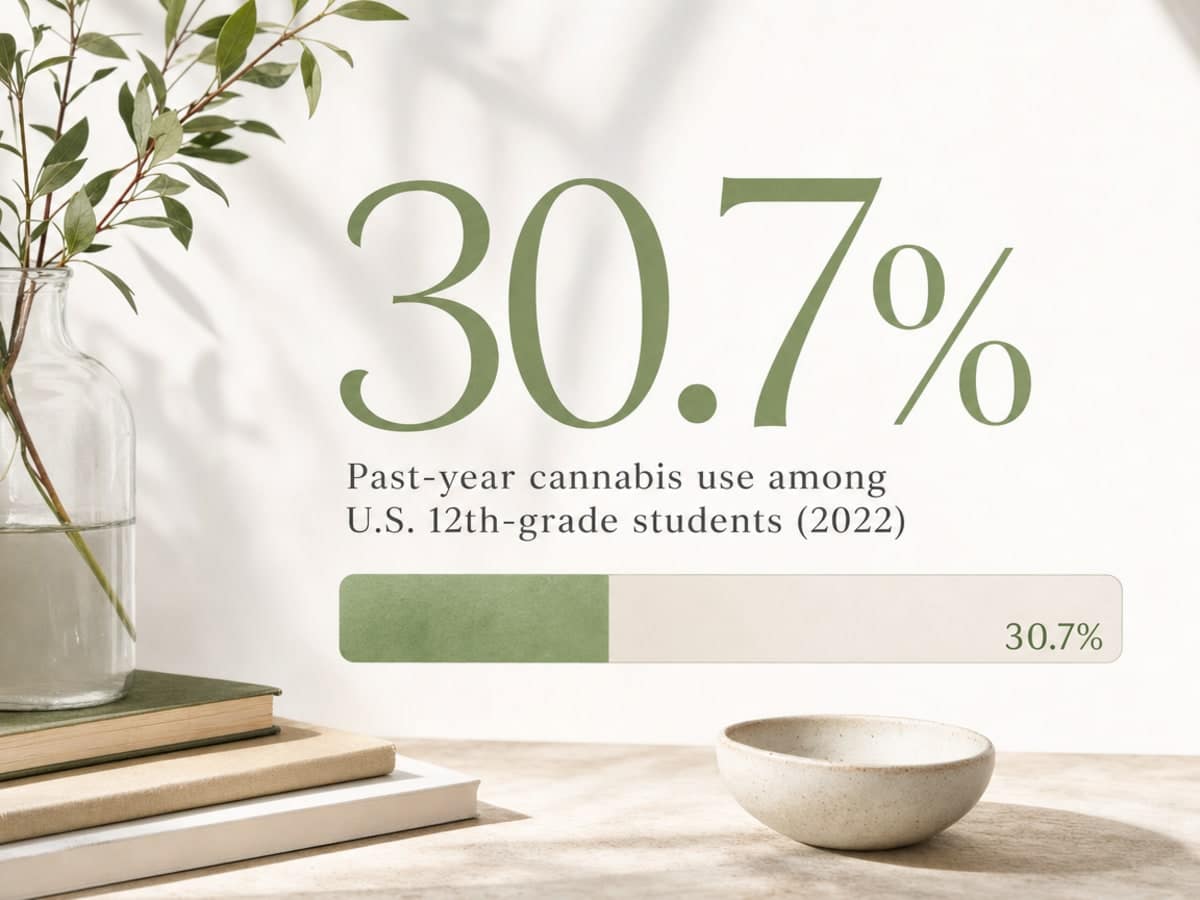
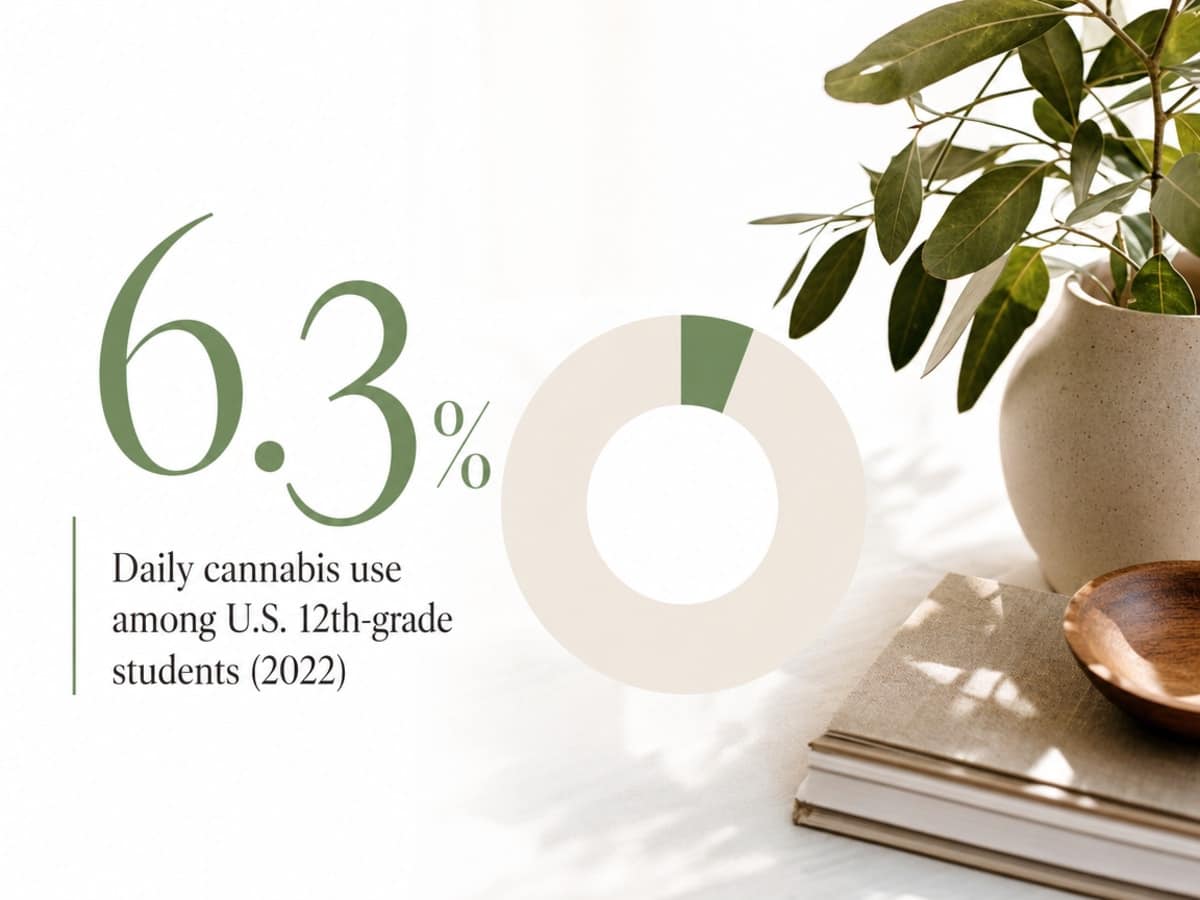
- Cannabis use among teens is more common and more daily than many parents realize, with 6.3% of 12th-graders using daily and tolerance, lost mornings, and abandoned activities signaling trouble 7, 8.
- Nicotine and vaping hide in devices that look like USB drives, with bathroom-trip patterns, irritability between hits, and unfamiliar charging cables doing more telling than smell ever will 9.
- Prescription stimulant misuse shows up as dose creep without a doctor’s input, all-nighters as strategy, and borrowed pills with vague supply chains 11, 12.
- Benzodiazepines often start as legitimate anxiety relief, then turn problematic through inching doses, rebound panic between doses, and pharmacy shuffling across multiple prescribers 2.
- Behavioral addiction like gaming lacks settled diagnostic criteria, but destroyed sleep, headset-only friendships, and emotional withdrawal from family signal something worth taking seriously 1, 2.
What you’re actually seeing at home
You’ve been watching. That’s why you’re here. Maybe it’s the way your son’s bedroom door stays closed longer than it used to, or the new flatness in your wife’s voice when she gets home from work. Maybe the money math isn’t adding up, or the sleep schedule has slid into something you don’t recognize. You’re not imagining it.
Most of the addictions hurting families right now don’t look like the movie version. They don’t start with a dramatic scene. They start with a missed dinner, a forgotten pickup, a temper that’s a little shorter than it was last month. The hidden signs show up first in mood, sleep, money, school or work output, and the friends who suddenly stopped coming around.
This guide walks through the seven addictions families are facing most often today, and the quieter signs that tend to show up before a crisis does. Alcohol. Opioids. Cannabis. Nicotine and vaping. Prescription stimulants. Benzodiazepines. And behavioral patterns like gaming that pull a person away from the people who love them.
You’ll also see why so many of these come tangled with depression, anxiety, PTSD, or ADHD, and why integrated care matters when both pieces are in play 1. You don’t need certainty to act. You need language.
Alcohol: the addiction hiding in plain sight
Why normalized drinking is the hardest to name
Alcohol is the one you’re most likely to second-guess yourself about. It’s at the dinner you hosted last weekend. It’s in the work happy hour your spouse can’t seem to miss. It’s the reason nobody flinches when your adult son brings a six-pack to a Tuesday cookout. That’s exactly what makes it so hard to call by its real name.
About 17% of U.S. adults binge drink, meaning four or more drinks for women or five or more for men on a single occasion 5. That’s roughly one in six grown-ups, sitting next to you at parent-teacher night, coaching the soccer team, running the meeting. When something is that common, your worry can feel like overreaction. It isn’t.
Binge drinking is the pattern that tends to slide into something harder to walk back. If you’ve started counting drinks at family gatherings, or feeling relieved when your partner has “only” had two, your instincts are tracking something real.

Hidden signs in mood, sleep, and money
The signs that matter rarely look like the ones in the brochure. Watch for the shape of the week instead of the smell on someone’s breath.
Mood that resets only with a drink. Your partner comes home wound tight, pours a glass, and only then softens enough to talk to you. The drink isn’t the celebration anymore. It’s the off switch. Over months, that off switch gets earlier and harder to do without.
Sleep that’s wrecked in a specific way. Falling asleep on the couch by nine. Waking at three and not getting back down. Morning grogginess that no amount of coffee fixes. Alcohol does this even when the amount looks moderate from the outside.
Money that doesn’t reconcile. Bar tabs you didn’t know about. A wine budget that quietly doubled. Cash withdrawals on the joint account with no clear story attached. You don’t need a forensic accountant to notice. You just need to trust the small gap between what’s said and what’s spent.
Add in the cancelled plans, the irritability when drinking gets delayed, and the defensiveness when you ask gently, and you have a pattern. None of this proves a diagnosis. It tells you that what you’re seeing is worth naming out loud, to a doctor, a counselor, or your loved one 1.
Opioids: when the warning signs look like exhaustion
Physical signs families miss until it’s late
Opioids don’t usually announce themselves. They look like a long week. Your daughter nods off at the dinner table and you tell yourself she’s been studying too hard. Your husband’s been complaining about his back, and now he sleeps through the alarm. The body is telling you something, but the story you have for it is so reasonable.
The signs CDC lists for opioid use disorder and overdose tend to cluster in three places: the body, the behavior, and the situation around the person 6. Knowing the physical markers is what gives you a chance to act before an emergency.
- Physical
- small, constricted “pinpoint” pupils, slow or shallow breathing, choking or gurgling sounds during sleep, a limp body, discolored lips or fingernails, falling asleep mid-sentence 6.
- Behavioral
- repeated unsuccessful efforts to cut down, failing to meet obligations at work, school, or home 6.
- Situational
- new social challenges, missing pills from a medicine cabinet, a partner’s prescription that finishes early 6.
If two or three of these are showing up in the same person, that’s a pattern worth naming to a doctor today, not next month.
Behavioral shifts: cut-down attempts, missed obligations, new circles
The behavior tends to shift before the body does. You’ll see it in the small promises that stop landing.
The quiet attempts to stop. Your son tells you he’s “taking a break” this weekend. Then next weekend. Then he gets irritable on day two and the break ends. Repeated, unsuccessful efforts to cut down are one of the clearest markers CDC names for opioid use disorder 6. He’s not lying to you on purpose. He’s losing a fight he didn’t expect to be in.
Obligations that start slipping. A missed shift. A skipped class. The dog walk that didn’t happen. Your partner used to be the one who never forgot a birthday, and now you’re covering for them with their own mother. Failure to meet obligations at work, school, or home is on CDC’s list for a reason 6.
A new circle, or no circle at all. Old friends stop calling. New names show up in the phone with no faces attached. Sometimes the friend group simply disappears and isn’t replaced with anything. That isolation, paired with mood changes or anxiety you can’t explain, often rides alongside a co-occurring mental health condition that integrated care is built to address 1.
You don’t need a confession to act on this. You need a calendar of what you’ve actually seen in the last 30 days, and a phone call to someone who treats both sides at once.
Cannabis: why parents are encountering it earlier than expected
How common it actually is among teens
If you’re shocked at how casually your kid’s friends talk about weed, you’re not behind the times. You’re catching up to a shift that happened fast. The cannabis your daughter’s classmates are passing around is more potent than what was around a decade ago, and it’s everywhere from group chats to vape pens that fit in a pencil case.
You’re not the only parent looking at a kid you raised and wondering when the conversation got so far ahead of you. The scale is the point. If your son’s friend group seems unfazed by it, that tracks with what the data shows. It doesn’t make your worry wrong.
Hidden signs: tolerance, lost mornings, abandoned activities
Cannabis use disorder doesn’t usually look like the cartoon version. Your teen isn’t giggling on the couch with a bag of chips. The signs are quieter, and they show up in the parts of life that used to be steady.
Tolerance creeping up. What used to be a weekend habit is now a few times a week. The amount goes up because the same amount stopped doing what it used to. NIDA lists tolerance and unsuccessful efforts to cut down among the diagnostic features of cannabis use disorder 8. If your son has tried to take a break and couldn’t make it past a few days without irritability or trouble sleeping, that’s withdrawal, and it counts.
Mornings that disappear. Late wake-ups. Skipped first periods. A grogginess that hangs around until lunch. Heavy use affects memory, learning, and school performance 7, and the first place you’ll see it is the assignments that stop getting turned in.
Activities that just stop. The travel team they quit. The art they used to make. The cousin they used to text every day. Giving up activities to use, or because of how use makes them feel, is on NIDA’s list for a reason 8. Pair that with new social anxiety or low mood, and you’re looking at the kind of overlap that calls for care addressing both at once 1.
Nicotine and vaping: the addiction that doesn’t smell like one
This is the one that snuck up on a generation of parents. There’s no ashtray. No coat that reeks when your kid comes in from the garage. The device looks like a USB drive, a highlighter, or a sleek little pebble that fits in a closed fist. You can be in the same room and miss it entirely.
Nicotine is still nicotine, though. NIDA is direct about it: tobacco and vaping devices contain nicotine, the ingredient that drives addiction and makes quitting so hard for so many people 9. Teen brains are especially vulnerable, because they’re still developing the very circuits nicotine hooks into 9. And CDC’s surveillance is clear that commercial tobacco use among youth can lead to lifelong nicotine addiction and the disease that follows it 10.
What you’re looking for at home isn’t smoke. It’s pattern.
The bathroom trips that got longer. Your daughter takes her phone into the bathroom three or four times an evening. The dog walk that used to take ten minutes now takes twenty-five. Nicotine cravings have a clock, and you start to see it once you know to look.
Irritability between hits. A short fuse before school. A weird edge in the car on a long drive when she can’t step away. The mood softens after a bathroom break. That’s withdrawal showing you its schedule.
Small charging cables and pods you can’t place. A USB-C cord plugged in where no phone is charging. A faint sweet smell in the laundry, cotton candy or mango, that doesn’t match any candle in the house. Empty pods in a backpack pocket.
If your son keeps trying to quit and keeps coming back to it, that isn’t weakness. It’s how nicotine works, and it often rides alongside anxiety the vape is quietly treating 2. Name what you’re seeing, and treat the nicotine and the anxiety together, not one and then the other.
Prescription stimulants: when ‘focus’ becomes dependence
This one wears a doctor’s signature, which is what makes it so hard to question. Maybe your daughter has an Adderall script that’s been working fine for years. Maybe your husband borrowed a coworker’s Vyvanse to get through a brutal quarter and never quite stopped. Maybe your college freshman is studying in ways that don’t match any version of him you raised.
NIDA defines misuse plainly: taking a medication in a way or at a dose other than prescribed, taking someone else’s prescription, or taking it for the feeling it gives you 11. When stimulants are used as directed for ADHD, they’re safe and effective 12. When the dose climbs without the doctor’s input, or when the pills come from a roommate instead of a pharmacy, the risk of addiction and other health problems rises 12.
Dose creep without a conversation. The refill that’s running out four days early. The 20 mg that quietly became 30 because “the work week is heavier now.” Your son tells you the doctor adjusted it. The doctor didn’t.
All-nighters that became the strategy. Sleep that’s stopped happening on Tuesdays and Wednesdays because there’s always one more deck to finish. Then the crash on Saturday, sleeping until two in the afternoon, irritable when anyone tries to wake them.
Borrowed pills and a vague supply. A pill bottle with no label. A friend’s name on a prescription on the kitchen counter. The casual mention of taking “just one” of someone else’s before a final.
Stimulant misuse rides especially close to anxiety, and the two feed each other in a loop that integrated care is built to interrupt 2.
Benzodiazepines: the anxiety relief that turns into the problem
Benzos are the prescription that started as relief. Your mother got a Xanax script after your father died. Your wife got Ativan for panic attacks that finally felt manageable. Your brother got Klonopin to sleep through the kind of nights he wasn’t sleeping through. For a while, the pill did exactly what it was supposed to do. Then the dose stopped working as well, and the refills started coming sooner.
Benzodiazepines and the anxiety they’re meant to treat run in the same circles for a reason. Anxiety disorders, including generalized anxiety, panic disorder, and PTSD, show up at high rates among people with substance use disorders 2. The medication that calms the symptom can quietly become the thing your loved one can’t function without.
The dose that keeps inching up. Half a pill became one. One became one and a half. Your sister tells you her doctor adjusted it, and maybe that’s true, and maybe she’s been splitting her own refills tighter than she lets on.
Sleep and panic that come back worse between doses. Rebound anxiety can feel sharper than the original. If your husband gets shaky or short-tempered four hours after his last dose, that’s the medication asking for the next one.
Pharmacy shuffling. Two prescribers. Refills timed to land back-to-back. A pill organizer that’s harder to keep track of than it used to be.
Treating the benzo without treating the anxiety underneath rarely holds. This is exactly where integrated care matters 1.
Behavioral addiction: gaming, screens, and the family disappearing act
Not every addiction comes in a bottle or a pod. Sometimes the thing pulling your son away is a headset and a chair, and the family disappearing act happens one closed bedroom door at a time. You knock for dinner and get a wait. You knock again at ten and get silence. By the weekend, you realize you haven’t actually seen his face in three days.
The research on gaming and screen addiction is still catching up to what families are living through, so the most honest thing to say is this: the diagnostic picture isn’t as settled as it is for alcohol or opioids, but the family pattern is unmistakable. What you’re watching for isn’t hours played. It’s what those hours are replacing.
Sleep that’s been quietly destroyed. Three a.m. bedtimes on a school night. A kid who used to be a morning person and now can’t string a sentence together before noon. Sleep loss isn’t just a side effect here. It’s often the first thing that flags depression or anxiety running underneath the screen time 1.
The friend group that lives in a headset. The cousins he used to text don’t hear from him. The teammates from last spring stopped getting invited over. The only voices in his life come through a microphone, and he gets agitated when the connection drops.
Withdrawal from the family, not just the room. Meals skipped. Conversations cut short. A flatness when you ask about his day that wasn’t there six months ago. Emotional and behavioral changes like this often ride alongside depression or anxiety, which is exactly where dual-diagnosis care earns its name 2.
You don’t need a clinical label to take this seriously. You need to notice who isn’t at the table.
Why dual-diagnosis care matters when mood is also off
That’s not a failure of willpower. It’s a clinical pattern, and it has a name. Comorbid anxiety, depression, and PTSD show up at high rates among people with substance use disorders, and the comorbidity tends to worsen the course of both 2. Treating one and ignoring the other is how families end up back at the start six months later, wondering what went wrong.
Integrated dual-diagnosis care treats both at the same time, with the same team. When you’re calling around, ask whether the program addresses mental health and substance use together, not in sequence. That single question changes what your loved one walks into.
What to do this week if the signs match
You don’t need a confession, a crisis, or a perfect plan. You need three small moves in the next seven days.
Write down what you’ve actually seen. Not what you’ve feared. What you’ve watched. Dates, behaviors, the missed shift on Tuesday, the bathroom trips that got longer, the conversation that ended in a slammed door. A calendar of 30 days turns a vague worry into something a clinician can use.
Call a provider that treats both sides at once. When you reach an intake line, ask one question: do you treat mental health and substance use together, with the same team? Integrated dual-diagnosis care is what NIMH recommends when symptoms overlap 1, and asking that question up front narrows your list fast.
Say the quiet sentence out loud, once. To your loved one, in a calm moment, without an audience. “I’ve been worried, and I love you, and I want us to talk to someone together.” You don’t have to get the words perfect. You just have to stop carrying this alone.
Speak With Someone Who Truly Understands Now
Connect directly for guidance and support tailored to your loved one’s unique recovery journey.
Start a Personal Conversation About Lasting Recovery
Connect with an expert who understands the hidden signs and next steps for your loved one’s unique needs.
Frequently Asked Questions
How do I know if what I’m seeing is addiction or just a rough patch?
A rough patch usually has a shape: a stressor, a reaction, and a slow return to baseline. Addiction keeps spreading. The mood, sleep, money, and friend group all shift in the same direction, and they don’t snap back when the stressor lifts. If the pattern is still there 60 to 90 days later, trust what you’re seeing and talk to a clinician 1.
What are the most common addictions families are dealing with right now?
Alcohol leads, followed by opioids, cannabis, nicotine and vaping, prescription stimulants, and benzodiazepines, with behavioral patterns like heavy gaming pulling more families in each year 3. Many of these ride alongside depression, anxiety, PTSD, or ADHD, which is why the substance you spot first is often only half of what’s actually going on at home 2.
My loved one is using but also struggling with anxiety or depression. Which do we treat first?
Both, at the same time, with the same team. NIMH is clear that co-occurring substance use and mental health conditions need integrated care because the symptoms overlap and feed each other 1. Treating one and waiting on the other is how families end up cycling back six months later. Ask any program you call whether they handle mental health and substance use together.
What hidden signs of opioid use should I look for before it becomes a crisis?
Watch for pinpoint pupils, slow or shallow breathing, choking or gurgling sounds during sleep, and discolored lips or fingernails 6. On the behavior side: repeated unsuccessful attempts to cut down, missed work or school obligations, and missing pills from a medicine cabinet 6. Two or three of these clustered together is enough to call a clinician today.
Is teen cannabis or vaping really something to worry about, or am I overreacting?
You’re not overreacting. Heavy cannabis use can affect memory, learning, mood, and school performance, and adolescent brains are especially vulnerable to nicotine addiction from vaping 7, 9. Watch for tolerance climbing, mornings that disappear, abandoned activities, and short tempers between bathroom breaks. If quitting attempts keep failing, that’s how dependence works, not a character flaw.
How do I start the conversation if I think my partner or child needs help?
Pick a calm moment with no audience. Lead with what you’ve watched, not what you’ve feared, and keep it short: “I’ve noticed X for a while, I love you, and I want us to talk to someone together.” You don’t need them to agree in that conversation. You need the sentence said out loud, and a provider’s number ready when they’re ready 1.
References
- Finding Help for Co-Occurring Substance Use and Mental Disorders. https://www.nimh.nih.gov/health/topics/substance-use-and-mental-health
- Common Comorbidities with Substance Use Disorders Research Report. https://www.ncbi.nlm.nih.gov/books/NBK571451/
- Trends & Statistics | National Institute on Drug Abuse (NIDA). https://nida.nih.gov/research-topics/trends-statistics
- Alcohol Use and Your Health. https://www.cdc.gov/alcohol/about-alcohol-use/index.html
- Data on Excessive Alcohol Use. https://www.cdc.gov/alcohol/excessive-drinking-data/index.html
- Signs of Opioid Misuse, Opioid Use Disorder, and Overdose. https://www.cdc.gov/overdose-resources/pdf/Signs-of-Opioid-Misuse-Opioid-Use-Order-and-Overdose_508.pdf
- Cannabis and Teens. https://www.cdc.gov/cannabis/health-effects/cannabis-and-teens.html
- Cannabis (Marijuana). https://nida.nih.gov/research-topics/cannabis-marijuana
- Tobacco/Nicotine and Vaping. https://nida.nih.gov/research-topics/tobacconicotine-vaping
- Tobacco Product Use Among U.S. Middle and High School Students. https://www.cdc.gov/mmwr/volumes/72/wr/mm7244a1.htm
- Misuse of ADHD Prescription Stimulants in Adults. https://www.ncbi.nlm.nih.gov/books/NBK620122/
- Prescription Stimulants – Teacher’s Guide Worksheet. https://nida.nih.gov/sites/default/files/RX_stim_teachers_guide_worksheet.pdf