
Veterans Treatment for Addiction and PTSD
Key Takeaways
- Current VA/DoD guidelines reject the old ‘get sober first’ rule—veterans can begin trauma-focused therapy and substance use treatment at the same time, with integrated care producing the strongest results 2.
- Evidence-based protocols worth naming include Prolonged Exposure, Cognitive Processing Therapy, EMDR, and COPE, alongside guideline-recommended medications like naltrexone and buprenorphine for alcohol and opioid use disorder 5.
- Culturally competent care means a clinician who understands military experience without pathologizing it, and a program that screens for co-occurring PTSD and SUD rather than excluding active users 15, 7.
- Veterans and families should ask programs directly which trauma-focused protocols they offer, whether treatment is concurrent, and use VA telehealth or the SAMHSA Helpline when local options fall short 9, 16.
Why the “get sober first” rule no longer holds
For decades, veterans were often told to address their substance use before they could begin trauma therapy. This approach is now considered outdated. The 2023 VA/DoD PTSD guideline and the 2021 VA/DoD SUD guideline both explicitly state that having one disorder should not prevent access to evidence-based treatment for the other 2. Trauma-focused therapies like Prolonged Exposure, Cognitive Processing Therapy, and EMDR can be effectively delivered alongside substance use treatment, with integrated approaches often yielding the strongest results 2.
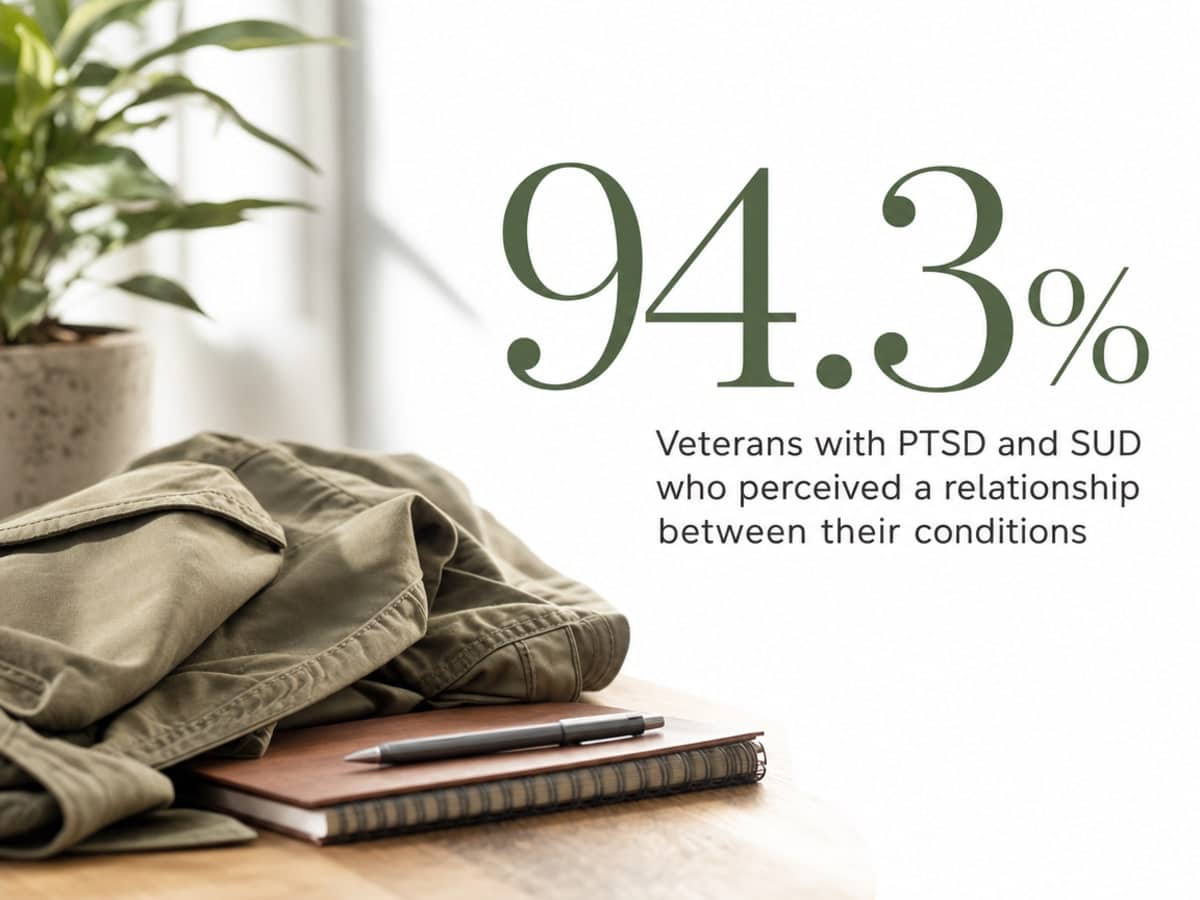
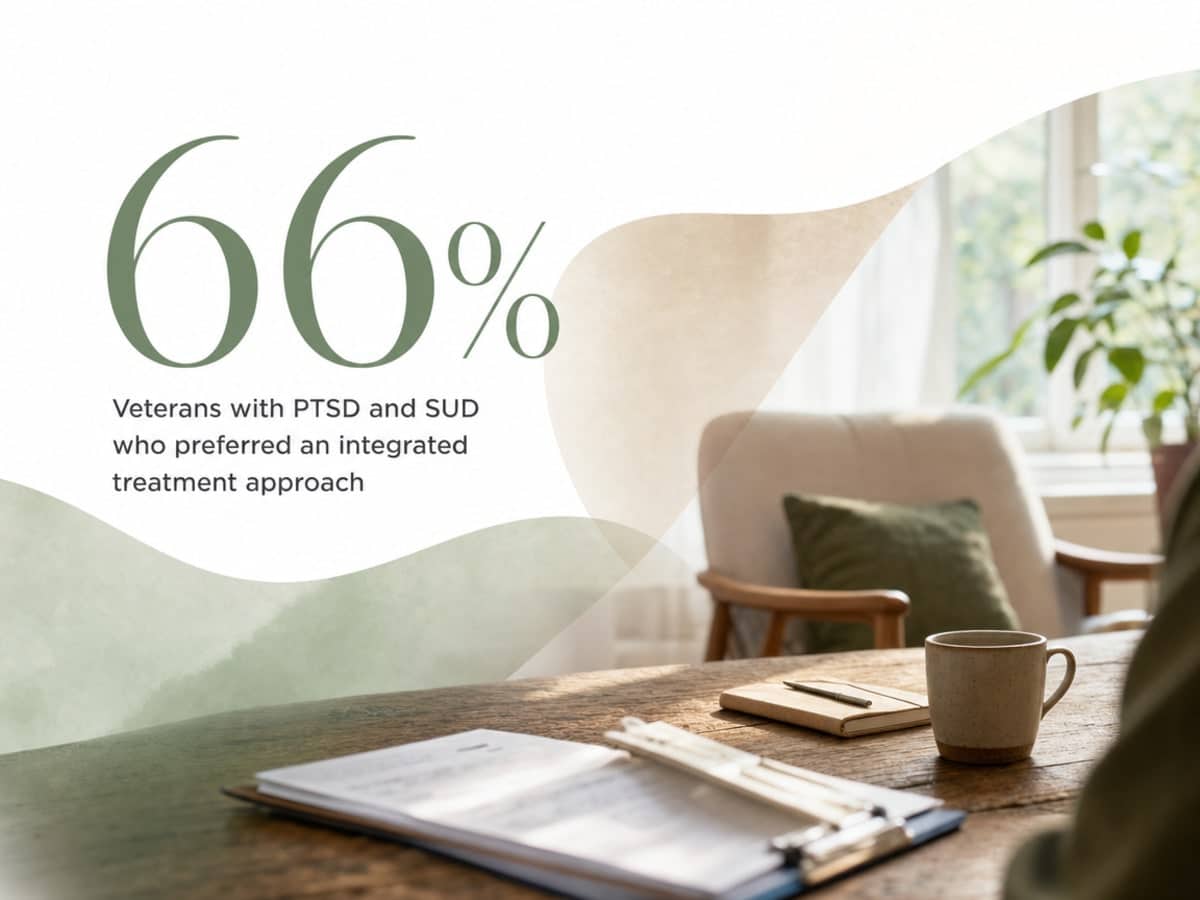
Veterans themselves often recognize the interconnectedness of these conditions. An exploratory study of military veterans with co-occurring PTSD and SUD found that 94.3% perceived a direct link between their substance use and PTSD symptoms. Approximately 66% expressed a preference for a treatment approach that addresses both conditions simultaneously rather than sequentially 1. This indicates a strong desire among veterans for integrated care.
How PTSD and substance use feed each other
The symptoms of PTSD—such as intrusive memories, avoidance, negative mood, and heightened arousal—often drive individuals toward substances for temporary relief 8. Alcohol might blunt nightmares, cannabis can reduce the startle response, stimulants may combat emotional numbness, and opioids can alleviate both physical and emotional pain. While the relief is immediate, it is also fleeting, leading to a cycle where symptoms rebound, often worse than before, and substance use escalates.
This cycle can transform substance use from a coping mechanism into a source of new trauma, leading to regrettable actions, memory gaps, damaged relationships, and job loss. The same exploratory study mentioned earlier revealed that 85.3% of participants linked their PTSD symptom flare-ups to increased substance use 1. This strong correlation highlights how these conditions reinforce each other, making integrated treatment crucial to prevent one from undermining progress in the other.
What concurrent treatment actually looks like
The sequential model vs. the integrated model, week by week
The traditional, sequential model often involved weeks or months of detox and substance use treatment before any trauma work began. PTSD symptoms might be acknowledged but not actively treated, leading to a frustrating cycle where untreated trauma could trigger relapse, thus disqualifying the veteran from trauma programs. This approach often left veterans stuck in a loop.
In contrast, the integrated model addresses both conditions from day one. A veteran might attend a Prolonged Exposure or CPT session, an SUD group focused on cravings, meet with a prescriber for medication, and check in with a case manager all within the same week. Clinicians monitor both PTSD symptoms and substance use concurrently. A challenging week with one condition is viewed as valuable information, not a reason to pause care for the other.
Will trauma therapy make my drinking worse? The honest answer
Many veterans worry that engaging with traumatic memories will exacerbate their substance use. However, research supported by the VA indicates that patients with co-occurring PTSD and SUD can tolerate and benefit from evidence-based trauma-focused treatment. Integrated approaches are shown to produce the strongest results across both conditions 2. While some sessions may be difficult, and cravings might temporarily increase, a skilled clinician anticipates these reactions and incorporates them into the treatment plan.
Trauma work is not always easy, and immediate relief is not guaranteed. Symptoms like nightmares may intensify before they improve. However, the fear that addressing trauma will undermine sobriety is often greater than what the data suggests actually occurs during treatment.
The therapies worth knowing by name
Prolonged Exposure, Cognitive Processing Therapy, and EMDR
Prolonged Exposure (PE), Cognitive Processing Therapy (CPT), and Eye Movement Desensitization and Reprocessing (EMDR) are highly recommended for PTSD treatment. The VA/DoD PTSD guideline places trauma-focused cognitive behavioral therapies (PE and CPT) at the top of its recommendations, with EMDR also endorsed 4, 10. Any program offering PTSD treatment should include at least one of these modalities.
PE involves confronting traumatic memories and situations that have been avoided. This typically includes recording and listening to accounts of the trauma and gradually re-engaging with avoided activities. CPT focuses on challenging and restructuring negative thoughts and beliefs that developed as a result of the trauma, often involving written exercises and discussions with a clinician. EMDR uses bilateral stimulation, such as eye movements, while the individual focuses on a traumatic memory. All three of these protocols can be initiated without requiring sobriety 2.
COPE: trauma processing built for people still using
COPE (Concurrent Treatment of PTSD and Substance Use Disorders Using Prolonged Exposure) is specifically designed for individuals with co-occurring PTSD and SUD. It integrates the PE protocol with relapse-prevention strategies within the same sessions, delivered by the same clinician, and guided by a unified treatment plan 13.
A typical COPE program consists of about twelve ninety-minute sessions. Participants engage in imaginal exposure to traumatic memories, in-vivo exposure to avoided situations, and structured craving and trigger management work within the same week. Studies involving veterans with co-occurring PTSD and SUD have shown improvements in PTSD symptoms, with substance use outcomes comparable to standalone SUD treatments 13. While COPE may not be suitable for acute suicidality, severe withdrawal, or unmanaged psychosis, it offers a proven path for those who need to address both trauma and substance use concurrently 13.
Seeking Safety and where the evidence is weaker
Seeking Safety is a present-focused, skills-based therapy that helps individuals manage PTSD symptoms and substance use without directly processing traumatic memories 14. It teaches grounding techniques, safe coping strategies, and practical skills. This approach can be beneficial for veterans who are not yet ready for trauma processing or are in early stabilization phases, as it is flexible, can be delivered in groups, and is relatively easy to begin.
However, the evidence for Seeking Safety is mixed, and its outcomes are generally weaker compared to integrated trauma-focused approaches like COPE 11, 14. While it can serve as a valuable initial step or an adjunct therapy, it is not a substitute for trauma-focused work when an individual is ready for it. A transparent clinician will explain these distinctions.
Medication for alcohol and opioid use disorder
Medication is a critical, yet often underutilized, component of treatment for veterans with substance use disorders 6. The 2021 VA/DoD SUD guideline recommends naltrexone, acamprosate, and disulfiram for alcohol use disorder, and buprenorphine, methadone, and extended-release naltrexone for opioid use disorder 5.
These medications are not merely “crutches” but therapeutic tools that can significantly support recovery and trauma work. For example, naltrexone can reduce alcohol cravings and the rewarding effects of drinking, which can be particularly helpful after challenging trauma therapy sessions. Buprenorphine can stabilize opioid receptors, allowing individuals to engage more effectively in therapy. Combining medication with psychotherapy generally leads to better outcomes than either approach alone 5. If a prescriber dismisses these medications or frames their use as a failure, it contradicts guideline-supported standards, which advocate for offering and explaining these options to allow for informed patient decisions 5.
What “culturally competent” care means when the culture is military
Culturally competent care for veterans goes beyond superficial gestures. It involves a clinician’s deep understanding of military culture without necessarily having served themselves. This means recognizing military acronyms, understanding the distinctions between deployments and duty stations, and appreciating the unique stressors veterans face, such as combat exposure, military sexual trauma, and the challenges of reintegrating into civilian life 15. A competent clinician will not flinch at difficult narratives, nor will they require constant translation of military terminology. They understand that military-specific experiences profoundly shape both trauma and subsequent substance use.
Key indicators of culturally competent care include clinicians who inquire about a veteran’s unit, role, and transition home. Conversely, programs that promise quick fixes or pathologize a veteran’s military identity as the core problem are less likely to provide effective care. The National Center for PTSD emphasizes that these military-specific stressors are not just background noise but integral to understanding and treating the veteran’s conditions 15.
The engagement myth: do veterans with SUD actually show up?
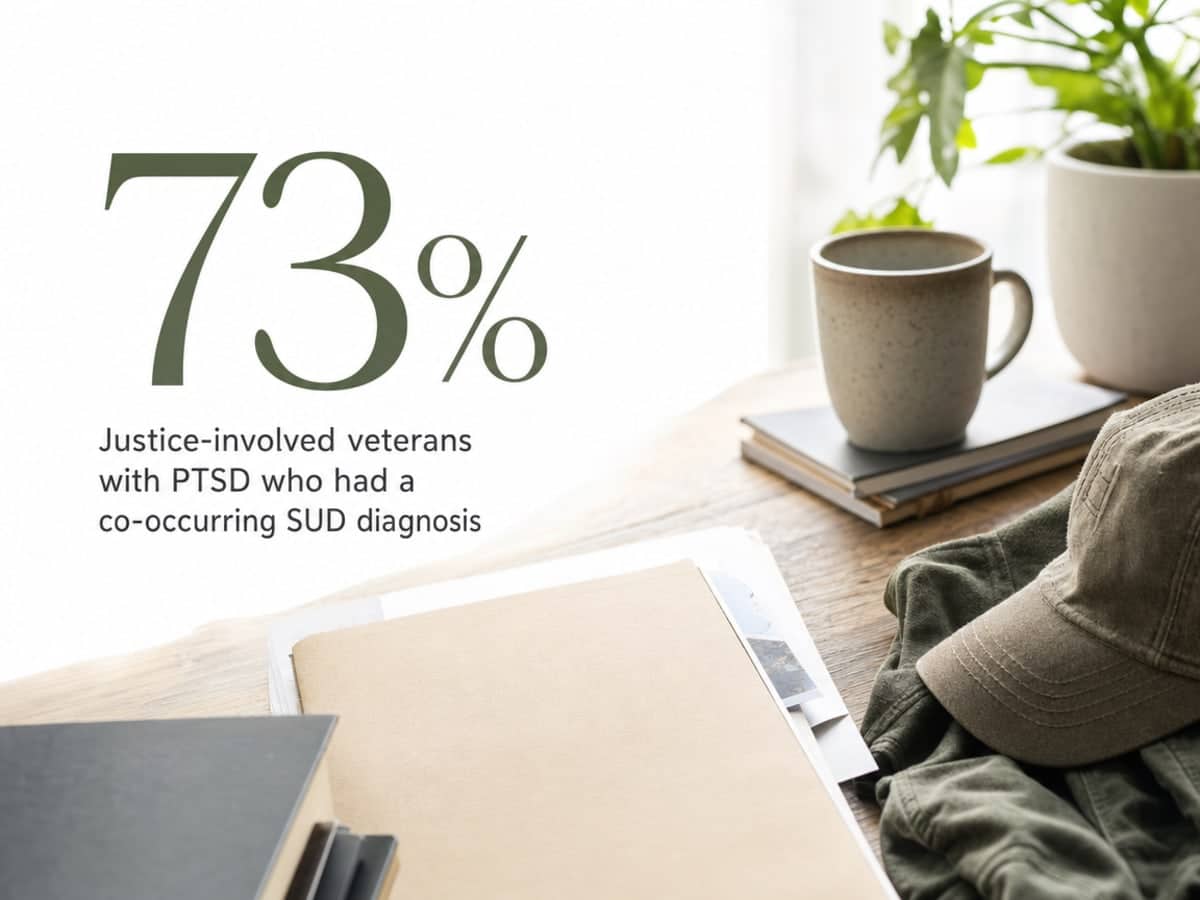
A common misconception in treatment settings is that veterans actively using substances are unlikely to commit to PTSD treatment. However, data challenges this assumption. A study of justice-involved veterans within the VA system found that 73% of those with PTSD also had an SUD diagnosis 7. Despite this high comorbidity, veterans with co-occurring PTSD and SUD attended an average of 10.98 outpatient PTSD visits, which was slightly more than the 9.67 visits for veterans with PTSD alone 7.
While this specific sample focused on justice-involved veterans, the findings strongly suggest that active substance use does not inherently predict poor engagement in PTSD treatment. Programs that screen out veterans based solely on active substance use may be operating on an unsupported assumption. The crucial factor is whether the program is designed to retain and support veterans once they engage, rather than whether they will show up in the first place.
How to start: VA, community, and private pathways
Working with VA, including telehealth for rural access
For veterans enrolled in VA health care, the most direct entry point is typically through their primary care team or the mental health clinic at their local VA medical center. When seeking care, it is beneficial to specifically request an assessment for co-occurring PTSD and substance use and to inquire about evidence-based therapies such as Prolonged Exposure, CPT, EMDR, or COPE. Naming these specific protocols can help steer the conversation toward appropriate, evidence-based options.
Telehealth services are a valuable resource, especially for veterans in rural areas. The VA offers evidence-based PTSD psychotherapies, including PE and CPT, via video sessions, with outcomes comparable to in-person care 16. This allows for trauma work to be conducted from home. For SUD medications and check-ups, many clinics combine video visits with occasional in-person appointments, reducing travel time without compromising care. If a local VA facility indicates that trauma-focused therapy is unavailable, inquire about telehealth options from other VA facilities.
Non-VA options: SAMHSA, community providers, accredited centers
For veterans who prefer or require care outside the VA system, several legitimate options exist. The SAMHSA National Helpline (1-800-662-HELP) is a free, confidential, 24/7 resource that connects individuals with treatment providers and community resources, including programs that accept TRICARE, VA Community Care referrals, and commercial insurance 9. This can be a good starting point for those unsure where to begin.
When evaluating community providers or private accredited centers, it is important to ask specific questions:
- Do they treat PTSD and substance use concurrently?
- Which trauma-focused protocols do they offer by name?
- Does their staff have experience working with veterans?
A program that can clearly answer these questions is worth further consideration, while evasive responses may indicate a lack of specialized care.
For the spouse, parent, or adult child reading this
For family members supporting a veteran, it’s important to understand your role: you are a source of support, not the solution or the problem. Trauma-focused therapy can be challenging for the veteran, potentially leading to temporary increases in sleep disturbances or irritability. These are often signs that the treatment is working, not failing 2. Your presence and quiet support during these times can be invaluable.
Avoid pressuring a veteran into a specific program you’ve researched. Veterans tend to engage more effectively when they choose their own path to treatment. Research suggests that willingness to start treatment increases when both PTSD and substance use are addressed from the outset 1. Offer information and allow them to make their own decisions. The SAMHSA National Helpline (1-800-662-HELP) is also available for family members seeking support and resources 9.
What good care should ask of you, and what it shouldn’t
Effective care requires active participation, including showing up consistently, being honest about substance use, and being willing to try new, potentially challenging interventions like engaging with memories, attending meetings, or taking medication. This approach aligns with the VA/DoD guidelines for shared decision-making and measurement-based care, which should be the standard, not an exception 4, 5.
Conversely, good care should not demand sobriety as a prerequisite for discussing trauma, nor should it discourage the use of evidence-based medications for SUD. It also should not frame a veteran’s military experience as inherently pathological. The fundamental principle is that having one disorder should not be a barrier to receiving evidence-based treatment for another 2. If a program imposes unreasonable demands or operates contrary to these principles, seeking alternative care is a valid and often necessary step.
Connect Now for Veteran-Focused Treatment Guidance
Speak directly with a specialist who understands veteran challenges and can guide your next steps right now.
Start confidentially mapping your recovery path today
Connect with a peer who understands veteran challenges and discuss your next steps without judgment.
Frequently Asked Questions
Do I have to be sober before I can start PTSD treatment?
No. Current guidelines from the 2023 VA/DoD PTSD and 2021 SUD state that having one disorder should not prevent access to evidence-based treatment for the other 2. You can begin trauma-focused therapy while still using substances or working to reduce your use. Programs that state otherwise are not aligned with current best practices.
Will trauma-focused therapy like PE or CPT make my drinking or drug use worse?
While the concern is common, the data is reassuring. The National Center for PTSD indicates that veterans with co-occurring PTSD and SUD can successfully engage in and benefit from trauma-focused therapy. Integrated approaches are shown to yield the strongest outcomes for both conditions 2. It’s possible that cravings might temporarily increase after intense sessions, but a competent clinician will anticipate and address this within the treatment plan.
Can I get treatment outside the VA, and will it still understand military experience?
Yes. The SAMHSA National Helpline (1-800-662-HELP) is a free, confidential, 24/7 resource that can connect you to community providers, accredited centers, and programs that accept TRICARE or commercial insurance 9. When contacting non-VA programs, ask if they offer integrated treatment for PTSD and SUD, which specific trauma-focused protocols they use, and if their staff has experience working with veterans.
What’s the difference between COPE and Seeking Safety?
COPE integrates Prolonged Exposure with relapse-prevention work, directly addressing traumatic memories within the same sessions 13. Seeking Safety is a present-focused, skills-based approach that helps build coping mechanisms without requiring direct trauma processing 14. While COPE generally shows stronger evidence for symptom reduction, Seeking Safety can be a gentler entry point, though it typically produces weaker overall outcomes 11.
Are medications like naltrexone or buprenorphine safe to use while treating PTSD?
Yes. The 2021 VA/DoD SUD guideline recommends medications such as naltrexone, acamprosate, and disulfiram for alcohol use disorder, and buprenorphine, methadone, and extended-release naltrexone for opioid use disorder 5. Combining these medications with psychotherapy generally leads to superior outcomes compared to either treatment alone 5. These medications can provide stability during trauma work and should not be viewed as a sign of failure. A prescriber who suggests otherwise is not adhering to established guidelines.
I live in a rural area. Can I actually get this kind of care?
Yes. The VA provides evidence-based PTSD psychotherapies, including Prolonged Exposure and CPT, via video sessions, with outcomes comparable to in-person care 16. This allows for trauma work to be done remotely. For SUD medications, many clinics offer a combination of video check-ins and periodic in-person visits. If your local VA indicates that trauma-focused therapy is unavailable, inquire about telehealth options from other VA facilities.
References
- Substance Use Disorders and PTSD: An Exploratory Study of Treatment Preferences among Military Veterans. https://pmc.ncbi.nlm.nih.gov/articles/PMC3855915/
- Treatment of Co-Occurring PTSD and Substance Use Disorder in VA. https://www.ptsd.va.gov/professional/treat/cooccurring/tx_sud_va.asp
- Substance Use and PTSD. https://www.ptsd.va.gov/understand/related/substance_misuse.asp
- VA/DoD Clinical Practice Guideline for the Management of Posttraumatic Stress Disorder and Acute Stress Disorder. https://www.healthquality.va.gov/guidelines/mh/ptsd/
- VA/DoD Clinical Practice Guideline for the Management of Substance Use Disorders (2021). https://www.healthquality.va.gov/guidelines/mh/sud/
- Treating Substance Use Disorders in the Same Way We Treat Other Chronic Conditions. https://hsrd.research.va.gov/publications/forum/spring20/default.cfm?ForumMenu=spring20-1
- The impact of substance use disorders on treatment engagement among veterans with posttraumatic stress disorder in the Veterans Health Administration. https://pmc.ncbi.nlm.nih.gov/articles/PMC6207483/
- PTSD Basics. https://www.ptsd.va.gov/understand/what/ptsd_basics.asp
- National Helpline. https://www.samhsa.gov/find-help/helplines/national-helpline
- Overview of Psychotherapy for PTSD. https://www.ptsd.va.gov/professional/treat/txessentials/overview_therapy.asp
- Treatment of Co-Occurring PTSD and Substance Use Disorder. https://www.ptsd.va.gov/professional/treat/cooccurring/tx_sud.asp
- Justice-Involved Veterans with PTSD and SUD. https://www.ptsd.va.gov/professional/treat/cooccurring/sud_justice.asp
- Concurrent Treatment of PTSD and Substance Use Disorders Using Prolonged Exposure (COPE). https://www.ptsd.va.gov/professional/treat/type/cope.asp
- Seeking Safety for PTSD and Substance Use Disorder. https://www.ptsd.va.gov/professional/treat/type/seeking_safety.asp
- Veterans with Co-Occurring PTSD and Substance Use Disorder. https://www.ptsd.va.gov/professional/treat/cooccurring/sud_veterans.asp
- Telehealth for PTSD. https://www.ptsd.va.gov/professional/treat/specific/ptsd_va_telehealth.asp