
Identifying Different Addiction Kinds in a Loved One
Key Takeaways
- Identifying addiction in a loved one means reading three layers at once: the substance’s behavioral signature, the eleven shared DSM-5-TR criteria, and any co-occurring mental health condition tangled into the use 17, 13.
- Severity is a count, not a judgment — two to three criteria met is mild, four to five is moderate, six or more is severe, and the same scale applies across every substance 17, 3.
- Co-occurring conditions are the rule, with SAMHSA estimating 21.2 million U.S. adults living with both a mental illness and substance use disorder in 2024, so timelines of mood and use both matter 1, 13.
- Overdose signs, alcohol withdrawal symptoms, suicidal talk, or escalating patterns mean calling today or this week — bring observations of the person and the household to a clinician who can run an integrated assessment 9, 3, 4.
What you’re actually trying to figure out at midnight
You’ve probably already asked yourself this question a hundred times, and the question keeps changing shape. Is it the drinking? Is it the pills? Is it the way they disappear into the basement for hours and come back someone else? You’re not looking for a textbook tour of every drug class. You’re trying to read a specific person you love.
Here’s what helps. Identifying the kind of addiction in front of you isn’t really about naming the substance. It’s about reading three things at the same time: the substance-specific behavior you can see from the kitchen, the shared clinical criteria a professional will use during assessment, and the mental health condition that may be driving or hiding inside the use 17, 13. Families who learn to read all three layers stop arguing about whether it “counts” and start making faster decisions about what to do next.
What you’re noticing is real. Substance use disorder is a treatable chronic condition, not a character verdict 6. The next sections give you the same diagnostic language a clinician will use, so when you finally make the call, you’re describing what you’ve already seen.
The three-layer lens: substance signature, shared criteria, co-occurring condition
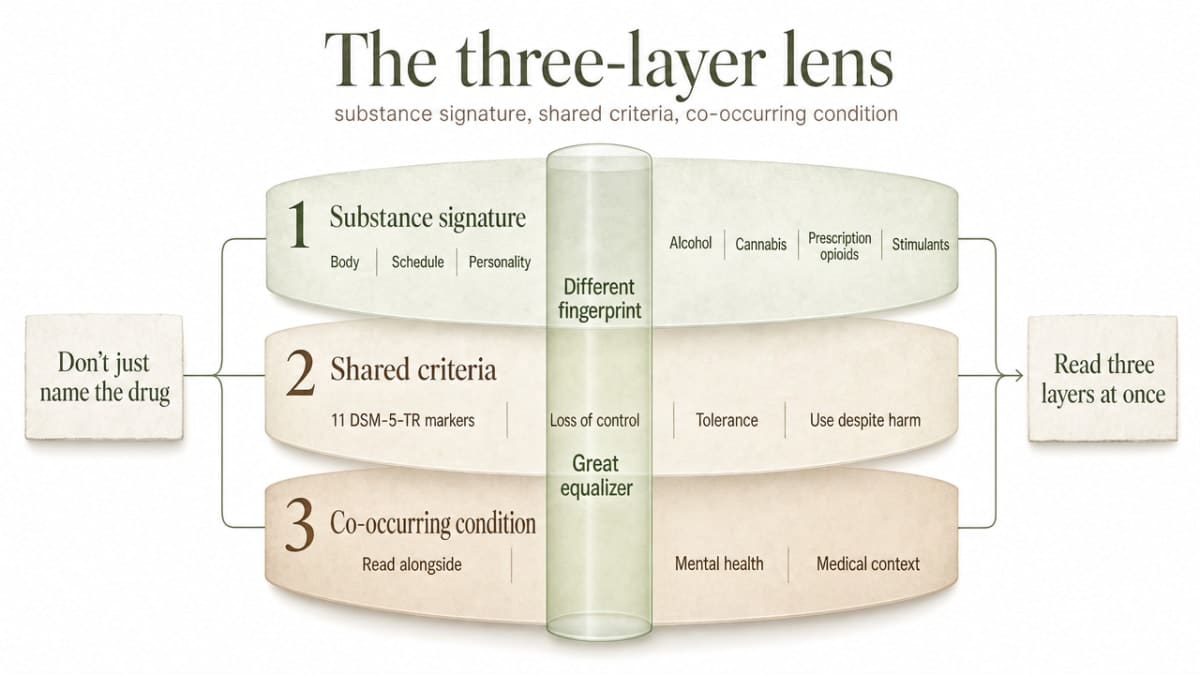
Most families try to identify addiction by naming the drug. That instinct makes sense, and it also keeps you stuck. A clinician’s first job isn’t to name the substance — it’s to read three layers at once, and you can learn to do the same thing from your own kitchen.
The first layer is the substance signature: what this particular drug does to your loved one’s body, schedule, and personality. Alcohol leaves a different fingerprint on a household than cannabis, and prescription opioids leave a different one than stimulants. You already see this layer; you may just not trust what you see.
The second layer is the shared diagnostic criteria — the eleven DSM-5-TR markers a clinician uses across every substance, from loss of control to tolerance to use despite harm 17. This layer is the great equalizer. A peer-reviewed analysis of alcohol, cannabis, cocaine, and heroin found that the criteria measure a single underlying dimension of addiction in adults in treatment, which is why the same diagnostic spine applies whether the substance is a glass of wine or a pill 19. One muscle, many substances.
The third layer is the co-occurring mental health condition that may be driving, masking, or amplifying the use 7. Depression, anxiety, PTSD, bipolar disorder — these don’t sit politely beside addiction. They braid into it.
Read all three, and the picture sharpens fast.
Layer one: the eleven criteria a clinician will actually use
The four clusters inside the DSM-5-TR criteria
When a clinician sits down with your loved one, they aren’t running through some secret checklist. They’re working from eleven criteria that fall into four natural groups, and you can learn to spot them from across the dinner table 17.
- The first cluster is impaired control. This is the gap between what your loved one says they’ll do and what actually happens. The two drinks that become five. The promise to quit by New Year’s that quietly evaporates by Valentine’s Day. The hours they meant to spend on something else, lost to using or recovering. You’ve watched this cluster play out more times than you can count.
- The second cluster is social impairment. The job that’s slipping. The friendships that have gone quiet. The kid’s recital they missed because they were sick again. Things that used to matter, dimming.
- The third cluster is risky use. Driving they shouldn’t be doing. Using even after the doctor said the liver numbers were bad. Continuing despite the argument, the accident, the warning that should have landed 2.
- The fourth cluster is pharmacological: tolerance and withdrawal. They need more to feel the same thing. Or they get shaky, sick, anxious, or irritable when they can’t use. This is the body talking back.
You don’t need to score this. You just need to notice that what you’re seeing isn’t one thing — it’s a cluster, and the cluster is the diagnosis.
Mild, moderate, severe: what the numbers mean when you hear them
When an intake clinician says “mild,” “moderate,” or “severe,” they’re not making a judgment call in the moment. They’re counting. Of the eleven DSM-5-TR criteria, 2 to 3 met is mild, 4 to 5 is moderate, and 6 or more is severe 17. That’s it. That’s the scale.
This matters for you in two specific ways.
First, “mild” doesn’t mean “not real.” It means early enough that intervention is often easier and less disruptive 4. Families sometimes hear “mild” and exhale, then back off the conversation entirely. The clinician didn’t say “fine.” They said “two or three of eleven warning lights are on.”
Second, the same scale applies whether the substance is wine, cannabis, oxycodone, or methamphetamine 3, 19. So if you’ve been agonizing over whether your loved one’s pattern is “as bad as” someone else’s, stop. The scale is the scale. Six criteria is severe whether the drink is vodka or a prescription was written for it.
When you make the call to a treatment provider, this is the language they’ll use back to you. Knowing it ahead of time means you stop translating in real time during the worst phone call of your year.
Why the old ‘abuse vs. dependence’ language still confuses families
If you’ve been researching this for any length of time, you’ve probably hit a wall of mismatched vocabulary. One article says “alcohol abuse.” Another says “alcohol dependence.” Your loved one’s doctor says “alcohol use disorder.” Which one is it?
It’s all one thing now. In 2013, the DSM-5 collapsed the old split between “abuse” and “dependence” into a single substance use disorder diagnosis with severity levels 18. The reason matters: clinicians found that the two categories overlapped so heavily in real patients that separating them created more confusion than clarity.
So when an older relative insists your loved one is “just abusing,” not “dependent yet,” they’re working from a framework that no longer exists clinically. You can let that argument go. The current question isn’t which label — it’s how many criteria, and what to do next.
Layer two: substance signatures you can read from the kitchen
Alcohol: the ‘I only had two’ that was four
Alcohol is the substance families miss longest, because it hides in the rituals you already accept. The glass of wine with dinner. The beers after the lawn. The nightcap that started helping with sleep and somehow became the reason for the sleep.
The signature you’re looking for isn’t the drinking itself. It’s the gap between what your loved one reports and what you can count. “I only had two” when you saw four bottles in the recycling. The pour that keeps getting taller. The bar tab that doesn’t match the story.
The CDC defines binge drinking as four or more drinks on an occasion for women, five or more for men 10. If that’s a normal Friday in your house, that’s the pattern, not the exception. NIAAA is direct about the threshold for concern: if any AUD symptoms are present, alcohol may already be a problem worth addressing 4.
Watch for the morning. Shaky hands. The first drink moved earlier. Sweating, nausea, or anxiety that lifts after a beer — that’s withdrawal talking, and withdrawal is the body confirming what you’ve been suspecting 3.
Cannabis: the 2 a.m. vape and the ‘it’s just weed’ problem
Cannabis is the substance you’ll get the most pushback on, often from your loved one and sometimes from yourself. It’s legal in many states. It’s framed as gentler than alcohol. Friends use it. So when you raise it, you’ll hear some version of “it’s just weed.”
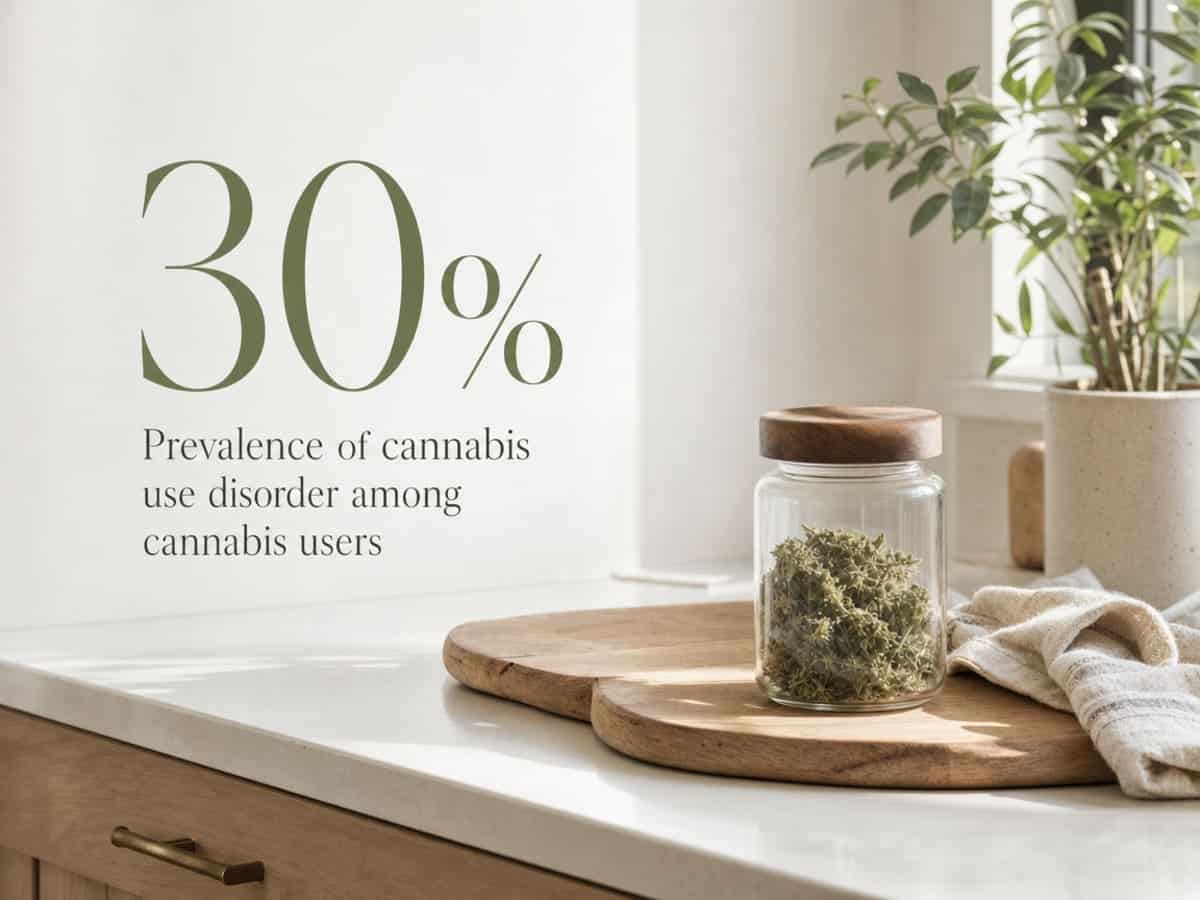
Here’s what the data says, and it’s worth quoting cleanly: about 3 in 10 people who use cannabis meet criteria for cannabis use disorder, according to the CDC 5. That’s the prevalence among users, not the general population — and it’s high enough that “it’s just weed” stops being a reassurance and starts being a question worth asking.
The signature in the kitchen looks like this. The vape that comes out before coffee. The 2 a.m. session on the couch with the lights low. Failed attempts to cut back or quit, dismissed as not really trying. Tolerance creeping up — what used to last an evening now lasts an hour 5. Motivation flattening. Plans quietly shrinking to fit the use.
The CDC also notes moderate evidence linking high-THC cannabis in adolescents and young adults to later mental health symptoms 5. If your loved one started young and is using high-potency products now, that’s a layer worth naming when you talk to a clinician.
Prescription opioids: the missing pills and the early refill
Prescription opioids confuse families more than any other class, because the bottle has a name on it. A doctor wrote it. A pharmacy filled it. How can that be addiction?
It can, and it does. NIDA is clear that prescription opioids — medications used for moderate to severe pain — carry real addiction risk even when taken as prescribed, and especially when use drifts past the prescription 8.
The signature here is administrative as much as behavioral. The pill count that doesn’t match the date. The “lost” prescription. The dentist, the urgent care, the second primary care doctor. Refills requested earlier and earlier. Pills missing from your own medicine cabinet — yours, your mother’s, the leftover bottle from a surgery two years ago.
Then the body signs. Pinpoint pupils. Long stretches of sedation that don’t match the day. Nodding off mid-conversation. Constipation that becomes a running joke and then stops being funny 9.
Stimulants and benzodiazepines: the energy spikes and the sedation no one explains
These two classes often show up together, and they pull in opposite directions — which is part of why they’re easy to miss separately and obvious in hindsight together.
Stimulants — prescription ones like Adderall or Ritalin, and illicit ones like cocaine or methamphetamine — leave a sharp signature. Long stretches awake. Talking faster, more, looping. Weight loss that isn’t explained by anything else. Money disappearing in patterns you can’t track. An evening crash that turns into irritability or a darker low than the day suggested. Then the next round, to climb back out.
Benzodiazepines — Xanax, Klonopin, Ativan, Valium — leave the opposite fingerprint. Slurred speech with no alcohol on their breath. Memory holes from yesterday afternoon. A flatness that looks like depression but lifts on a schedule. Doctor-shopping for anxiety prescriptions. SAMHSA also warns that benzodiazepines combined with some SUD medications can produce serious adverse effects, which is why clinicians ask about every pill in the house, not just the one you’re worried about 1.
The same DSM-5-TR criteria apply to both — loss of control, tolerance, withdrawal, use despite harm 17. The substance changes; the diagnostic spine doesn’t.
Layer three: the mental health condition tangled into the use
How depression, anxiety, and trauma hide inside substance patterns
If you’ve been watching your loved one and quietly wondering whether something else is going on underneath the drinking or the pills, you’re probably right. Co-occurring conditions are the rule, not the exception.
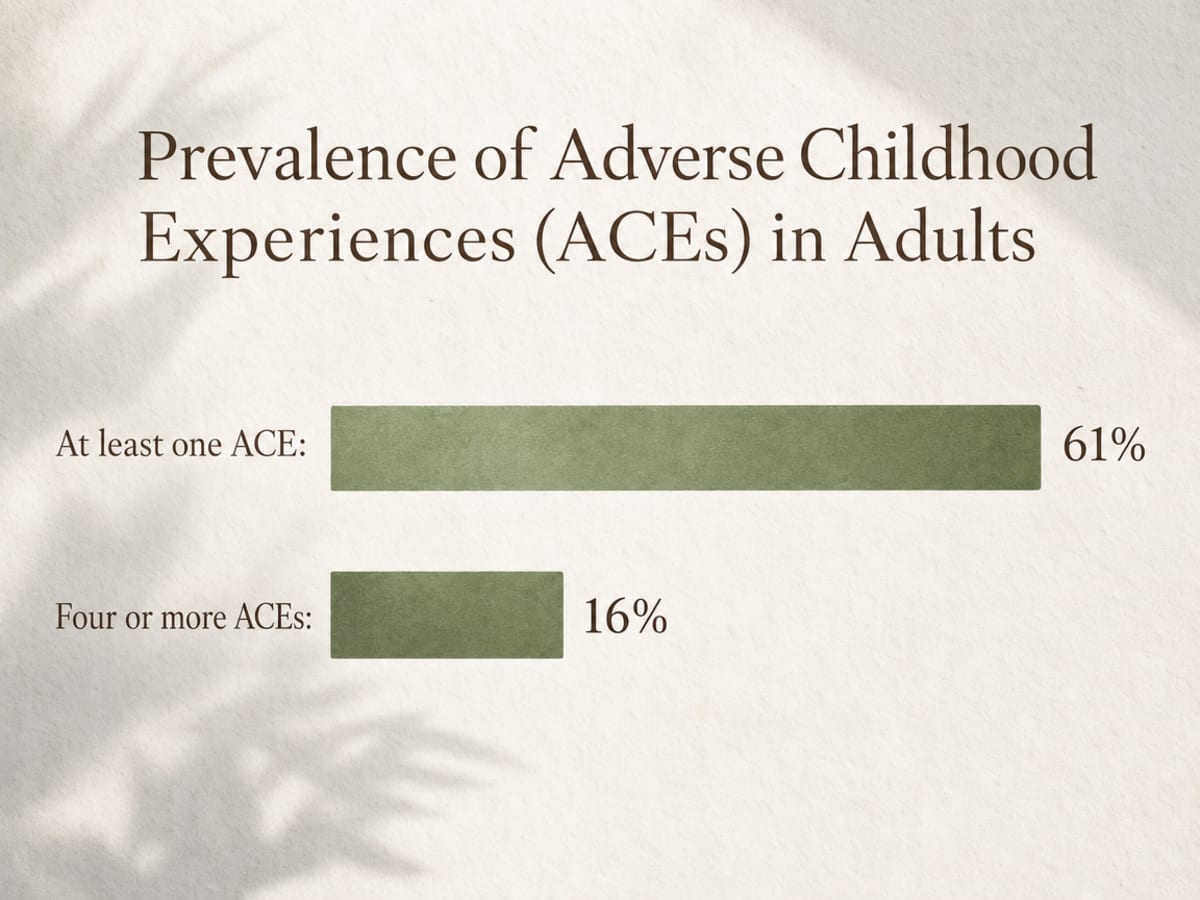
SAMHSA estimates that approximately 21.2 million U.S. adults had a co-occurring mental illness and substance use disorder in 2024 1. That’s a population-level estimate of American adults living with both at the same time — not people who once had one and then the other, but both, right now. And the upstream picture matters too: the CDC reports that 61% of adults have experienced at least one Adverse Childhood Experience, and 16% have experienced four or more 11. ACEs include growing up in a household with mental illness or substance use, and they raise the risk of both in adulthood.
What this means for you: if your loved one has a substance pattern, there is likely a second story braided into it. Depression that lifts after a drink and crashes harder the next morning. Anxiety that the cannabis was supposed to quiet. Trauma that the pills made bearable until they didn’t. You’re not imagining the second layer. You’re watching it 7.
Separating cause, consequence, and overlap when symptoms blur
Here’s the question that keeps families up: did the depression come first, or did the drinking cause it? You will not solve this from the kitchen, and you don’t have to. But you can describe what you see in a way that helps a clinician sort it out.
Three patterns are worth naming separately:
- Sometimes the mental health condition came first and the substance became a way to manage it — the social anxiety that quieted with two beers, then four.
- Sometimes the substance came first and reshaped mood, sleep, and motivation until what’s left looks like depression.
- And sometimes both have been there long enough that they feed each other, and the order stops mattering for the next decision 7.
NIMH is direct about this: symptoms overlap, and accurate diagnosis requires a clinician trained to assess both at once 13. When you call, bring a timeline. When did the mood change start? When did the use change? What came first in any given week — the bad night or the extra drink? You don’t need the answer. You need the observations.
Reading the household, not just the person
One of the hardest parts of identifying addiction in someone you love is that the evidence isn’t always on them. It’s on the calendar. The grocery bill. The way the kids have stopped bringing friends over. Substance use disorder is a family-system condition as much as an individual one, and the household often carries signals the person using can’t or won’t name 14, 16.
Look at the rhythms. Sunday nights that used to be quiet are now tense, because something is wearing off. The recycling bin that empties differently than it used to. Cash withdrawals you can’t account for. A car parked in odd places. The text thread with the same contact at 1 a.m. three nights a week. None of these prove anything alone. Together, they form a pattern.
Notice the other people in the house, too. Kids who have gone quiet, or louder. A teenager covering for a parent. A spouse who has stopped inviting friends in. Peer-reviewed reviews of family functioning find that SUD reshapes coping, communication, and roles across the whole household, often before anyone names what’s happening 15, 16.
Write some of this down. Not to build a case — to bring to a clinician who will ask exactly these questions.
When what you’re noticing crosses into ‘call someone today’
Some patterns can wait until Monday morning. Some can’t. Here’s how to tell the difference without second-guessing yourself for another week.
Call this week if you’re seeing the harder middle ground:
- Suicidal talk or hopelessness braided into the use 13.
- A pattern that’s escalating — more substances, higher doses, earlier in the day.
- Driving under the influence.
- Kids in the house witnessing things they shouldn’t.
- Repeated failed attempts to cut back on their own 4.
Any one of these means the window for an easier intervention is closing, not gone.
You don’t need a diagnosis before you call. You need a clinician who can do the assessment. Bring what you’ve already noticed.
What integrated assessment and treatment actually look like
Once you’ve read the three layers — substance signature, shared criteria, the mental health story underneath — the next question is what happens when you actually pick up the phone. The short version: a good intake doesn’t ask your loved one to pick a label. It asks them to describe a life, and it screens for both sides at once.
Integrated assessment means one team evaluating the substance pattern and the mental health pattern in the same conversation, using comprehensive tools designed to catch overlap rather than miss it 13. The clinician will walk through the eleven DSM-5-TR criteria, ask about mood, sleep, trauma history, and other substances in the house, and sort what’s driving what 17, 1. You can help by bringing the timeline you’ve already been building — when the drinking shifted, when the sleep stopped working, when the prescription changed.
Treatment is not one thing. NIDA describes a menu of evidence-based options: medications for opioid, alcohol, and nicotine use disorders, plus psychotherapies like CBT and motivational approaches, often combined 21. Care intensity ranges from residential to partial hospitalization to outpatient, matched to severity and to whether a co-occurring condition needs concurrent treatment 6. Families are part of the plan, not spectators — attending sessions, learning relapse warning signs, and staying in the loop are tied to better outcomes 15.
You don’t need to have this figured out before you call. Call with what you’ve seen.
Speak With Someone Who Understands Complex Addiction
Get immediate guidance on next steps for your loved one’s unique situation.
Talk With a Specialist About Your Concerns
Get expert guidance tailored to your loved one’s specific behavioral health challenges.
Frequently Asked Questions
How do I know if my loved one’s use has crossed from heavy use into an actual substance use disorder?
The clinical line isn’t a quantity — it’s a pattern across eleven DSM-5-TR criteria covering impaired control, social impairment, risky use, and tolerance or withdrawal. Two or three criteria met is mild, four to five is moderate, six or more is severe 17. If you’re counting more than two from across those clusters, it’s already worth a professional assessment 4.
What’s the difference between the old ‘abuse’ and ‘dependence’ labels and what clinicians say today?
Those two categories were combined into a single substance use disorder diagnosis when the DSM-5 was published in 2013, because the criteria overlapped so heavily that splitting them caused more confusion than it resolved 18. Today’s clinician will use one term — substance use disorder — with a severity level of mild, moderate, or severe attached to it 17.
My loved one says cannabis isn’t addictive. Is that true?
It’s not. The CDC lists cannabis use disorder as a recognized condition with its own symptom checklist — failed quit attempts, craving, tolerance, and continued use despite problems at home, school, or work 5. The threshold isn’t legality or social acceptance; it’s the same DSM-5-TR criteria used for every other substance 19. If the pattern fits, the diagnosis fits, regardless of what their friends say.
How can I tell if depression or anxiety is causing the substance use, or if the substance use is causing the mental health symptoms?
You probably can’t tell from home, and you don’t need to. NIMH says symptoms overlap so heavily that accurate sorting requires a clinician trained in both 13. Bring a timeline of what shifted first — the mood, the sleep, the use — and let the assessment do the untangling. Integrated treatment addresses both at once anyway, so the order matters less than getting in the door 1.
What counts as ‘mild,’ ‘moderate,’ or ‘severe’ when a clinician uses those words?
It’s a count, not a judgment. Of eleven DSM-5-TR criteria, two to three met is mild, four to five is moderate, and six or more is severe 17. The same scale applies to every substance, from alcohol to opioids 3. Mild doesn’t mean fine — it means warning lights are on, and earlier intervention is usually less disruptive than waiting 4.
If I’m seeing signs of more than one substance, do I need to figure out the ‘main’ one before getting help?
No. Polysubstance patterns are common, and a good intake will screen for every substance in the picture, not just the loudest one 17. SAMHSA specifically warns about dangerous interactions — benzodiazepines combined with some addiction medications can cause serious harm — which is why clinicians ask about every pill and drink in the house 1. Bring what you’ve noticed; let the team sort priority.
References
- Co-Occurring Disorders and Other Health Conditions – SAMHSA. https://www.samhsa.gov/substance-use/treatment/co-occurring-disorders
- Understanding Drug Use and Addiction DrugFacts – NIDA. https://nida.nih.gov/publications/drugfacts/understanding-drug-use-addiction
- Understanding Alcohol Use Disorder – NIAAA. https://www.niaaa.nih.gov/publications/brochures-and-fact-sheets/understanding-alcohol-use-disorder
- Treatment for Alcohol Problems: Finding and Getting Help – NIAAA. https://www.niaaa.nih.gov/publications/brochures-and-fact-sheets/treatment-alcohol-problems-finding-and-getting-help
- Understanding Your Risk for Cannabis Use Disorder – CDC. https://www.cdc.gov/cannabis/health-effects/cannabis-use-disorder.html
- Treatment of Substance Use Disorders | Overdose Prevention – CDC. https://www.cdc.gov/overdose-prevention/treatment/index.html
- Co-Occurring Disorders and Health Conditions – NIDA. https://nida.nih.gov/research-topics/co-occurring-disorders-health-conditions
- Prescription Opioids DrugFacts – NIDA. https://nida.nih.gov/publications/drugfacts/prescription-opioids
- Opioids | National Institute on Drug Abuse (NIDA). https://nida.nih.gov/research-topics/opioids
- Alcohol Use and Your Health – CDC. https://www.cdc.gov/alcohol/about-alcohol-use/index.html
- Adverse Childhood Experiences (ACEs) | VitalSigns – CDC. https://www.cdc.gov/vitalsigns/aces/index.html
- Substance Use Among Youth | CDC. https://www.cdc.gov/youth-behavior/risk-behaviors/substance-use-among-youth.html
- Finding Help for Co-Occurring Substance Use and Mental Disorders – NIMH. https://www.nimh.nih.gov/health/topics/substance-use-and-mental-health
- Chapter 2—Influence of Substance Misuse on Families – NCBI Bookshelf. https://www.ncbi.nlm.nih.gov/books/NBK571087/
- Family and social aspects of substance use disorders and treatment. https://pmc.ncbi.nlm.nih.gov/articles/PMC4158844/
- The Impact of Substance Use Disorders on Families and Children. https://pmc.ncbi.nlm.nih.gov/articles/PMC3725219/
- Substance Use Screening, Risk Assessment, and Use Disorder Diagnosis. https://www.ncbi.nlm.nih.gov/books/NBK565474/
- DSM-5 criteria for substance use disorders – PubMed. https://pubmed.ncbi.nlm.nih.gov/23903334/
- Proposed DSM-5 criteria for alcohol, cannabis, cocaine, and heroin disorders – PubMed. https://pubmed.ncbi.nlm.nih.gov/21963333/
- Addiction and Health – NIDA. https://nida.nih.gov/publications/drugs-brains-behavior-science-addiction/addiction-health
- Treatment | National Institute on Drug Abuse (NIDA). https://nida.nih.gov/research-topics/treatment
- Substance Use and Substance Use Disorders in Travelers – CDC. https://www.cdc.gov/yellow-book/hcp/travelers-with-additional-considerations/substance-use.html