
Can Drinking Cause Seizures?
Key Takeaways

- Alcohol can cause seizures, and for heavy daily drinkers the highest risk falls in the 6-to-48-hour window after the last drink, not during drinking itself 1.
- Three distinct pathways drive alcohol-related seizures: long-term brain changes from chronic dependence, acute withdrawal rebound when drinking stops, and binge episodes in people with prior vulnerability 2.
- A first alcohol-related seizure is a warning shot, not a one-off — prior withdrawal seizures strongly predict future ones, and untreated cases can progress to status epilepticus 3, 7.
- Self-tapering at home misses the electrolyte gaps, thiamine depletion, and hour-by-hour benzodiazepine dosing that supervised detox provides during the most vulnerable window 6, 9.
The Shaking Morning That Scared You
Maybe it was the 3 a.m. wakeup with your heart pounding so hard you could hear it in your pillow. Maybe it was the way your hands wouldn’t stop trembling when you tried to pour coffee, or the strange flicker of light at the edge of your vision when you stood up too fast. Maybe a partner found you on the bathroom floor and you don’t remember how you got there.
If you typed “can drinking cause seizures” into a search bar today, something already happened — to you, or to someone you love — that you can’t shake off. You’re scared. That fear is information. Listen to it.
Here’s what you need to know before anything else: yes, alcohol can cause seizures. And the fact that you’re reading this, right now, is not a small thing. People who are still drinking heavily often don’t ask this question until something forces them to. You’re asking. That counts.
What follows isn’t a lecture and it isn’t a scare campaign. It’s a plain explanation of how alcohol causes seizures, when the risk is highest (the answer surprises most people), and what to do next — whether you’ve already had one, felt one coming, or you’re watching someone you love go through it. You don’t have to figure this out alone, and you shouldn’t try to.
Yes — And the Most Dangerous Moment Isn’t When You Think
Here’s the part that almost no one tells you clearly: for heavy drinkers, the highest seizure risk usually isn’t during the drinking itself. It’s after you stop.
Read that again. The shot of vodka isn’t typically what drops someone to the floor. The empty hours after the last drink are. Most alcohol withdrawal seizures happen in a window of roughly 6 to 48 hours after your last drink, with many landing in the first 12 1. That’s the morning after a long bender. That’s day two of a quit attempt. That’s the Tuesday afternoon when you decided you’d “just stop for a while” on Sunday night.
If you’ve been drinking heavily and daily, your brain has been working around the alcohol for a long time. When the alcohol disappears, your brain doesn’t quietly settle. It rebounds. That rebound is what causes a seizure — not the alcohol, but its sudden absence.
This reframe matters because it changes the question you should be asking. The question isn’t “did I drink too much last night?” The question is “how am I going to stop, and who’s going to be there when I do?”
If you’ve already tried to quit on your own and felt that ramping, electric feeling in your chest — the racing heart, the sweat that doesn’t make sense, the sense that something inside you is winding too tight — your body was telling you it was approaching that window. It’s not weakness. It’s neurochemistry. And it’s the exact reason supervised detox exists.
Three Different Ways Alcohol Causes Seizures
Chronic Heavy Use and Long-Term Epilepsy Risk
The first pathway is the slowest, and it’s the one most people don’t see coming. When you drink heavily for years — not weekends only, but most days, in volumes that would scare a moderate drinker — your brain doesn’t stay neutral. It adapts. And those adaptations, repeated over and over, can leave permanent fingerprints on the tissue that controls electrical signaling.
In people with diagnosed alcohol dependence, the prevalence of epilepsy is estimated to be at least three times higher than in the general population 2. That’s a striking number, and it deserves a careful frame. This isn’t a stat about someone who has three glasses of wine on a Friday. It’s about people whose drinking has reached the clinical threshold of dependence — daily use, tolerance, cravings, drinking that no longer feels like a choice. If that describes you, the multiplier matters. If it doesn’t, the lesson is more about trajectory than alarm.
Several mechanisms stack here. Repeated withdrawal episodes appear to sensitize the brain over time, a process sometimes called kindling — each withdrawal makes the next one more likely to spark a seizure 1. Head injuries from falls or fights, common in heavy drinkers, leave scar tissue that can become a seizure focus 2. Chronic malnutrition and metabolic strain do their own quiet damage.
The hopeful piece: this risk is built up over time, which means it can be slowed down by stopping — safely. The brain has more capacity for repair than people give it credit for, but only if the stopping itself doesn’t trigger the next crisis.
Withdrawal Seizures: When Stopping Becomes the Trigger
This is the pathway that surprises people, and it’s the one that puts the most readers of this article in immediate danger. If you’ve been drinking heavily and you suddenly stop — because you ran out, because you got arrested, because you decided Sunday night that Monday was the day — your brain enters a window of acute vulnerability.
The shape of that window is fairly consistent. Most alcohol withdrawal seizures arrive between 6 and 48 hours after your last drink 1. In one study of patients seen at an epilepsy clinic who reported alcohol-related seizures, 95% of those seizures happened within 12 hours of stopping drinking 5. A scope note: that study followed people who already had epilepsy, so the percentage is sharper than it would be in the general drinker population. But the timing pattern — the first half-day after cessation being the most dangerous — shows up again and again in the research.
Picture what that means in real life. You wake up Monday morning with a hangover that feels different from the usual ones. Your hands shake harder. Your heart races at rest. By the afternoon, you feel a strange pressure building behind your eyes. By Monday night or Tuesday morning, you’re inside the highest-risk window — and that’s exactly when someone alone in an apartment, trying to white-knuckle their way to sobriety, is most likely to drop.
The cruel logic here is that the people most determined to quit — the ones who finally said enough — are the ones who walk straight into the danger zone without knowing it. Withdrawal seizures are not a sign that you tried wrong. They’re a sign that your brain became chemically dependent on alcohol to keep itself calm, and now it’s overcorrecting in the alcohol’s absence.
This is the entire reason medically supervised detox exists. Not as a luxury, not as a step for people who failed at quitting, but as the standard of care for anyone whose body has built that dependency. The window is predictable. So is the protection.
Binge Drinking as an Acute Trigger
The third pathway doesn’t require daily drinking at all. It’s the one that catches people who think the seizure conversation isn’t about them — the college-age drinker, the weekend warrior, the person who can go a month without alcohol and then drink fifteen drinks at a wedding.
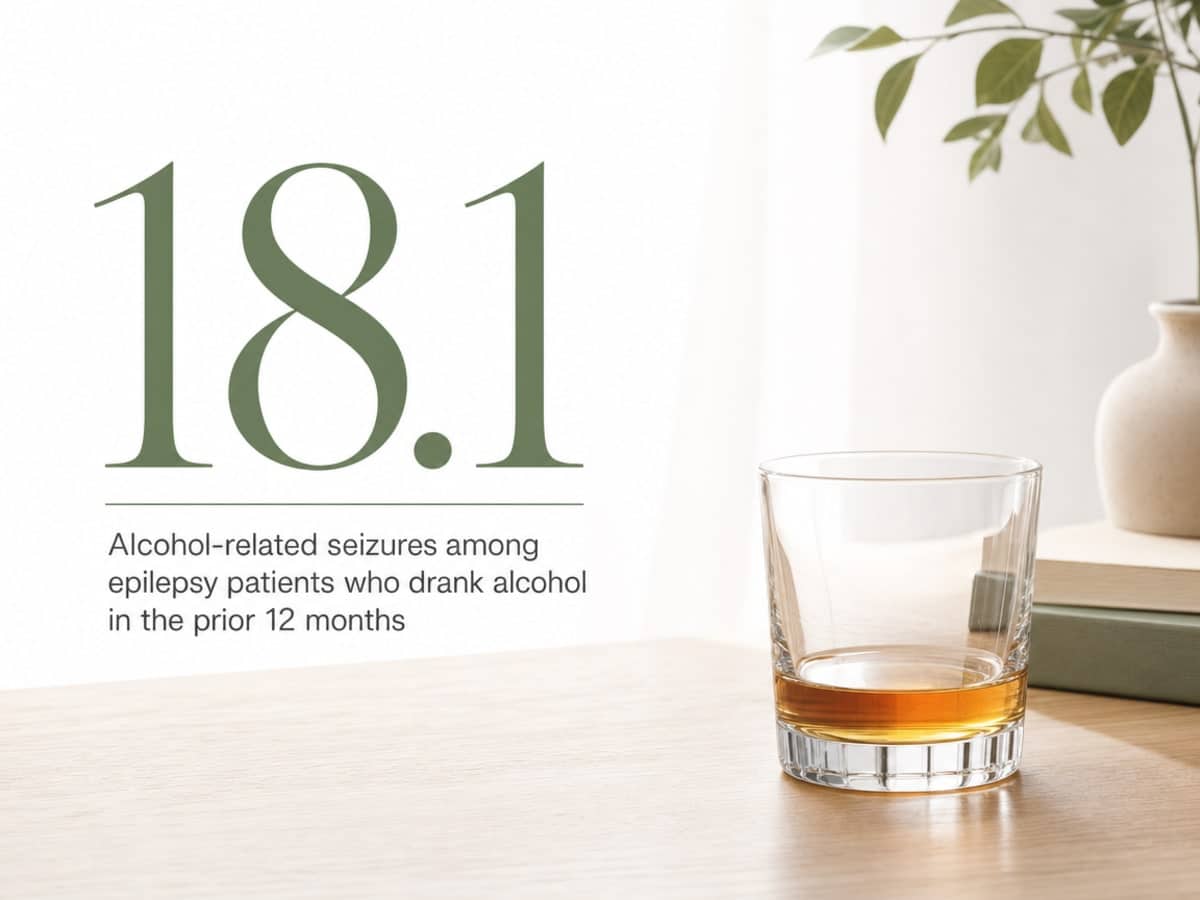
Heavy episodic drinking — a true binge, not a couple of extra glasses — can independently raise the risk of an acute seizure, and that risk climbs sharply in people who already have a vulnerability: a prior seizure, a head injury from years ago, a diagnosis of epilepsy 10. In epilepsy patients specifically, alcohol-related seizures tend to cluster after heavy drinking episodes rather than after light, social use 5.
The mechanism is partly the alcohol itself and partly the mini-withdrawal that follows it. After a single huge night, your brain spends the next morning in something close to a compressed version of the 6–48 hour withdrawal window. If you’re already prone to seizures, that compressed rebound can be enough.
If you have epilepsy and you drink, the honest counsel isn’t a units-per-week number — individual tolerance varies too much for that 5. The honest counsel is that binges are the part of your drinking pattern that’s most likely to put you on the floor, and a conversation with the doctor who manages your seizure medication should happen before, not after, the next holiday weekend.
What’s Actually Happening in Your Brain
You don’t need a neuroscience degree to understand this part, and the picture is simpler than it sounds. Your brain runs on a balance between two opposing chemical signals. One calms things down — that’s GABA. The other speeds things up — that’s glutamate. A healthy brain keeps these two in a kind of seesaw, tilting one way for sleep, the other way for focus, settling back to the middle.
Alcohol pushes hard on the calm side. Every drink boosts GABA’s effect and dampens glutamate’s. That’s why a couple of drinks feel relaxing — your brain is being chemically pressed toward sedation. So far, so familiar.
Here’s where it gets serious. When you drink heavily, day after day, your brain doesn’t just sit there being sedated. It fights back. It quietly turns down its own GABA receptors and turns up its glutamate signaling, trying to claw its way back to the middle of the seesaw 1. After months or years, your baseline brain — the one running underneath the alcohol — is wound tight as a guitar string. The drinking is the only thing keeping it tuned to something that feels normal.
Then you stop. The alcohol leaves. The GABA brake is gone, but the glutamate accelerator is still floored. Your brain rebounds into a hyperexcitable state, and somewhere in that 6 to 48 hour window after your last drink, the electrical activity can spike hard enough to produce a generalized tonic-clonic seizure 1.
Why a Single Seizure Isn’t Just a Single Seizure
Here’s the part that’s hard to hear, and worth hearing anyway: if you’ve already had one alcohol-related seizure, your odds of having another go up. A prior history of alcohol withdrawal seizures is one of the strongest predictors that more will follow, and the long-term mortality for people who’ve had withdrawal seizures runs higher than what you’d expect for the general population 3. That’s not said to frighten you. It’s said because the first seizure is often treated as a freak event — something that happened once, on a bad weekend — when the research treats it as a warning shot.
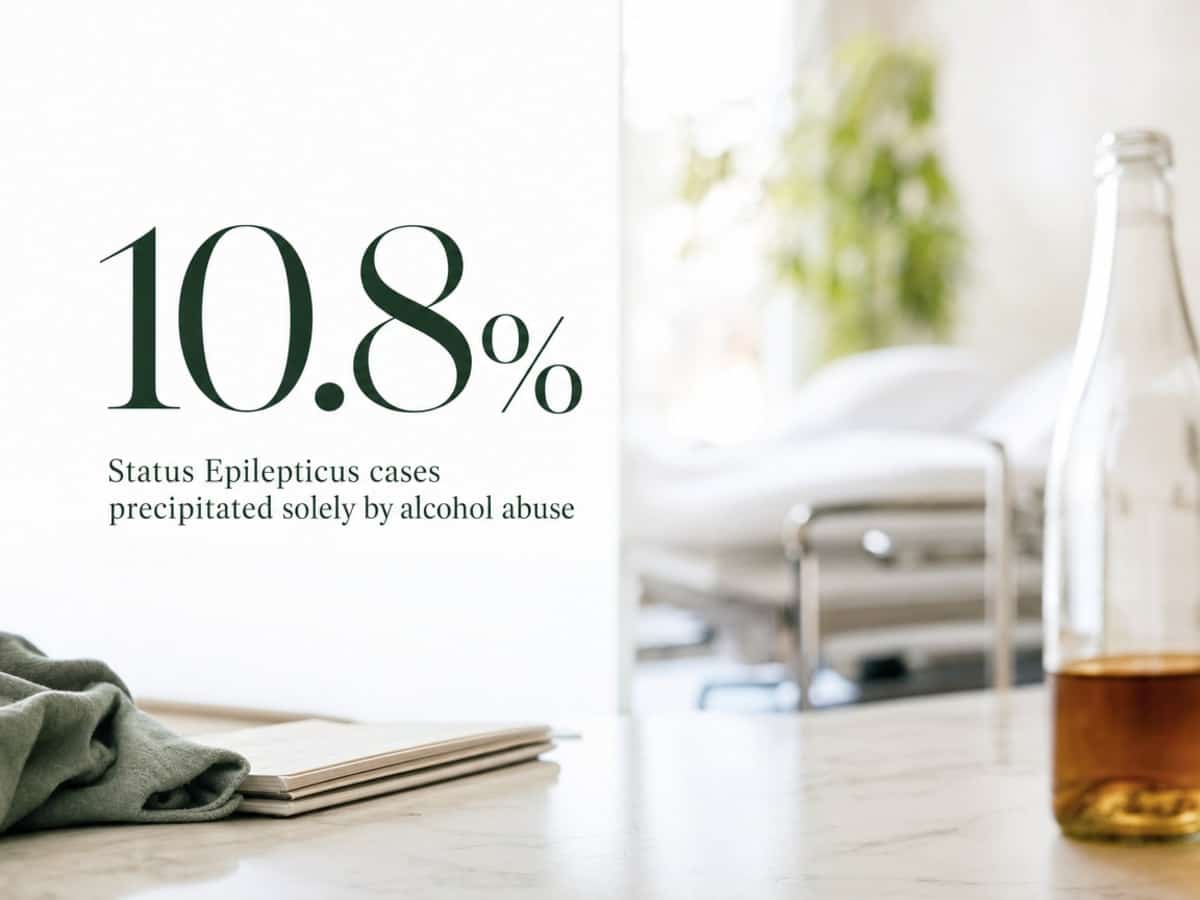
There’s a second reason to take that first seizure seriously. Alcohol-related seizures don’t always stop at one convulsion. In a cohort of 249 adults with generalized convulsive status epilepticus — seizures that don’t stop on their own and become a true medical emergency — 10.8% had alcohol abuse as the only identifiable trigger 7. Status epilepticus is the version of this that can cause permanent brain injury or kill you. It’s the reason a single seizure isn’t a story you walk away from with a shrug.
If you had one and you’re still here, reading this, that’s a real opening. The first seizure is usually the body’s loudest message before something worse. Treating it as the moment to get supervised care — rather than the moment to promise yourself you’ll be more careful next time — is the difference the research keeps pointing at.
Why Quitting Alone Is Riskier Than Most People Realize
Electrolytes, Thiamine, and the Hidden Seizure Drivers
When you picture a withdrawal seizure, you probably picture the brain — the GABA seesaw, the rebound, the wiring. But your brain doesn’t fire in isolation. It fires in a body that’s been quietly running on empty for months or years, and the body’s chemistry is part of what holds a seizure off or lets it through.
Heavy drinkers commonly arrive at withdrawal with low sodium, low magnesium, and low calcium — a trio of electrolyte problems that on their own can lower the seizure threshold and produce acute symptomatic seizures, even before withdrawal physiology peaks 9. You can’t feel your magnesium level. You can’t taste your sodium drop. But your neurons can, and a brain already primed by rebound chemistry doesn’t need much more of a nudge to misfire.
Then there’s thiamine — vitamin B1. Chronic heavy drinking depletes it through poor nutrition and impaired absorption, and severe deficiency leads to Wernicke encephalopathy, a neurologic emergency that can become permanent if it’s missed 8. Detox programs give thiamine before glucose for exactly this reason. At home, alone, with a sports drink and good intentions, you have no way to correct any of this. The hidden drivers stay hidden.
Why Leftover Pills and DIY Tapers Fail
You’ve probably read forum posts about tapering with beer, or rationing the last of a Xanax script, or trying gabapentin a friend handed over. The intent is good. The pharmacology isn’t.
The medication that actually prevents withdrawal seizure recurrence in clinical settings is a benzodiazepine, dosed and titrated based on how your symptoms are tracking hour by hour 6. That dosing isn’t a single pill. It’s a moving target that responds to your blood pressure, your tremor, your heart rate, your mental status. Phenytoin — an anti-seizure medication some people assume would help — has not been shown to prevent alcohol withdrawal seizures, and leaning on it instead of a benzodiazepine misses the actual problem 6.
The other failure mode is timing. A self-taper assumes you can predict your own withdrawal curve. You can’t. The 6-to-48-hour window doesn’t announce itself, and by the time you feel the wave coming, you’re already inside it — often alone, often without the medication or the monitoring that would catch a seizure before it became a fall, a head injury, or worse. Supervised detox isn’t about willpower. It’s about not being alone in the window.
Call 911 vs. Call a Detox Center: A Decision Moment
There’s a question that comes up in the middle of a scary moment, and the answer matters: do you call 911, or do you call a detox center? Both are right answers — for different situations. Knowing which is which can save a life, including your own.
Call 911 right now if:
- Someone is actively having a seizure — their body is convulsing, they’ve lost consciousness, or they fell and may have hit their head.
- A seizure lasts longer than five minutes, or a second seizure starts before the person has fully come back to themselves. That’s the territory of status epilepticus, which can be fatal without emergency care 7.
- The person is confused, feverish, sweating heavily, seeing things that aren’t there, or doesn’t know where they are. That can signal delirium tremens, which is a medical emergency, not a detox-center intake call 4.
- You can’t wake them up, their breathing is shallow or irregular, or their lips look blue.
- They’ve vomited and you’re not sure if their airway is clear.
In any of those moments, 911 first. Detox planning happens after the ER stabilizes them.
Call a detox center if:
- You or your loved one is drinking heavily every day and wants to stop — and the last drink hasn’t happened yet, or just happened.
- You’ve had a withdrawal seizure in the past and you’re about to try to quit again.
- You’re feeling early withdrawal — shaking hands, racing heart, nausea, anxiety that won’t settle — but you’re still oriented and able to talk.
- You’re scared about what stopping will do to your body, and you’d rather be monitored than alone.
A detox center can admit you directly, often the same day, with medical staff on site to manage the 6-to-48-hour window before it becomes the kind of emergency that needs 911. That’s the whole point of calling earlier rather than later.
What Supervised Detox Actually Looks Like
If the word “detox” makes you picture a hospital gown and a fluorescent ceiling, take a breath. A residential detox in a treatment setting looks more like a quiet bedroom than an ER bay — and the work happening around you is what keeps the 6-to-48-hour window from becoming a crisis.
When you arrive, a nurse checks your vitals and asks when your last drink was. Bloodwork goes out to look for the electrolyte gaps that quietly drive seizures in heavy drinkers 9. You get thiamine before anything sugary hits your system, because that order matters for protecting your brain 8. A doctor starts you on a benzodiazepine, dosed to your symptoms, adjusted hour by hour as your tremor, heart rate, and blood pressure shift — the medication approach that the evidence actually supports for preventing withdrawal seizures 6.
Then someone checks on you. Then someone checks on you again. Through the night. Through the next day. Through the window where a person alone in an apartment would be hoping nothing happened.
That’s what you’re really buying with supervised care: not willpower, not motivation, but the simple fact that you are not by yourself when your brain is at its most vulnerable. If you’re weighing this decision, Arrow Passage Recovery and programs like it exist for exactly this moment.
Talk to a Specialist About Alcohol-Related Seizures
Get immediate answers and support for managing withdrawal risks tied to alcohol use.
Talk With Someone About Alcohol and Seizure Risks
Get expert guidance on managing withdrawal risks and finding the safest path forward.
Frequently Asked Questions
How much do you have to drink to have a seizure?
There’s no clean number, and anyone who gives you one is guessing. Risk depends on how long you’ve been drinking, how much your brain has adapted, whether you have a prior seizure or head injury, and your current electrolyte and nutrition status. For people who already have epilepsy, even a single binge can be enough to trigger one.
How long after my last drink could a withdrawal seizure happen?
The window most commonly runs from about 6 to 48 hours after your last drink, with a lot of seizures landing in the first 12. That means the danger zone is often the morning and second day of a quit attempt — exactly when someone trying to white-knuckle it at home thinks the worst is behind them. It isn’t.
Can I just taper myself off alcohol at home to avoid a seizure?
Please don’t. The medication that actually prevents withdrawal seizures is a benzodiazepine, dosed and adjusted hour by hour to your vitals 6. You can’t replicate that with leftover pills, beer math, or gabapentin from a friend. A self-taper also assumes you can predict your own withdrawal curve — and the window doesn’t announce itself before it arrives.
What are the warning signs that a seizure might be coming?
Shaking hands that won’t settle. A racing heart at rest. Heavy sweating, nausea, and an anxious, electric feeling that builds through the morning. Sometimes hallucinations — seeing or hearing things that aren’t there. Confusion, fever, or not knowing where you are are red flags for delirium tremens, which is an emergency 4. If you feel that wave building, call before it crests.
If my loved one has a seizure, do I call 911 or a detox center?
If they’re actively convulsing, unconscious, hit their head, have a second seizure within minutes, or seem confused and feverish — call 911. That’s emergency territory and possibly status epilepticus 7. Detox centers come in afterward, or beforehand if your loved one is still oriented and wants to stop drinking safely. Calling early, before a seizure happens, is always the safer move.
I’ve had one alcohol-related seizure already — does that mean I’ll have another?
It raises the odds, honestly. A prior withdrawal seizure is one of the strongest predictors that more will follow, and overall mortality runs higher for people who’ve had one 3. That’s not a sentence — it’s a signal. The first seizure is the moment when supervised detox stops being optional and starts being the thing that protects you from the next one.
References
- Update on the Neurobiology of Alcohol Withdrawal Seizures. https://pmc.ncbi.nlm.nih.gov/articles/PMC1312739/
- Seizures in alcohol-dependent patients: epidemiology, pathophysiology and management. https://pubmed.ncbi.nlm.nih.gov/14594442/
- Long‐term outcome of alcohol withdrawal seizures. https://pmc.ncbi.nlm.nih.gov/articles/PMC11235997/
- Emergency management of acute alcohol problems. Part 2: Alcohol-related seizures, delirium tremens, and toxic alcohol ingestion. https://pmc.ncbi.nlm.nih.gov/articles/PMC2146857/
- Alcohol Use and Alcohol-Related Seizures in Patients With Epilepsy. https://pmc.ncbi.nlm.nih.gov/articles/PMC5996121/
- Prevention of alcohol withdrawal seizure recurrence and treatment of other alcohol withdrawal symptoms in the emergency department: a rapid review. https://pmc.ncbi.nlm.nih.gov/articles/PMC8572067/
- Status epilepticus related to alcohol abuse. https://pubmed.ncbi.nlm.nih.gov/8243353/
- A Clinician’s View of Wernicke-Korsakoff Syndrome. https://pubmed.ncbi.nlm.nih.gov/36431232/
- Electrolyte disturbances and seizures in chronic alcoholism. https://pubmed.ncbi.nlm.nih.gov/14504312/
- Binge drinking and the risk of seizures. https://pubmed.ncbi.nlm.nih.gov/16511936/