Key Takeaways: Your Recovery Decision Path
Before navigating the system, use this quick assessment to orient your next steps:
- Assess Urgency: If substance use is daily or life-threatening, prioritize Residential Treatment. If you are maintaining employment but need support, look for Intensive Outpatient Programs (IOP).
- Verify Coverage: Over 85% of Ohio facilities accept Medicaid. Check your eligibility or private insurance benefits immediately to understand your out-of-pocket costs.
- Location Strategy: Choose a facility accessible via local transit (like COTA or RTA) if you do not have reliable private transportation.
- Immediate Action: If you are in crisis, text 4HOPE to 741741 immediately.
Ohio’s Substance Use Crisis and Treatment Landscape
Understanding Ohio’s Unique Challenges
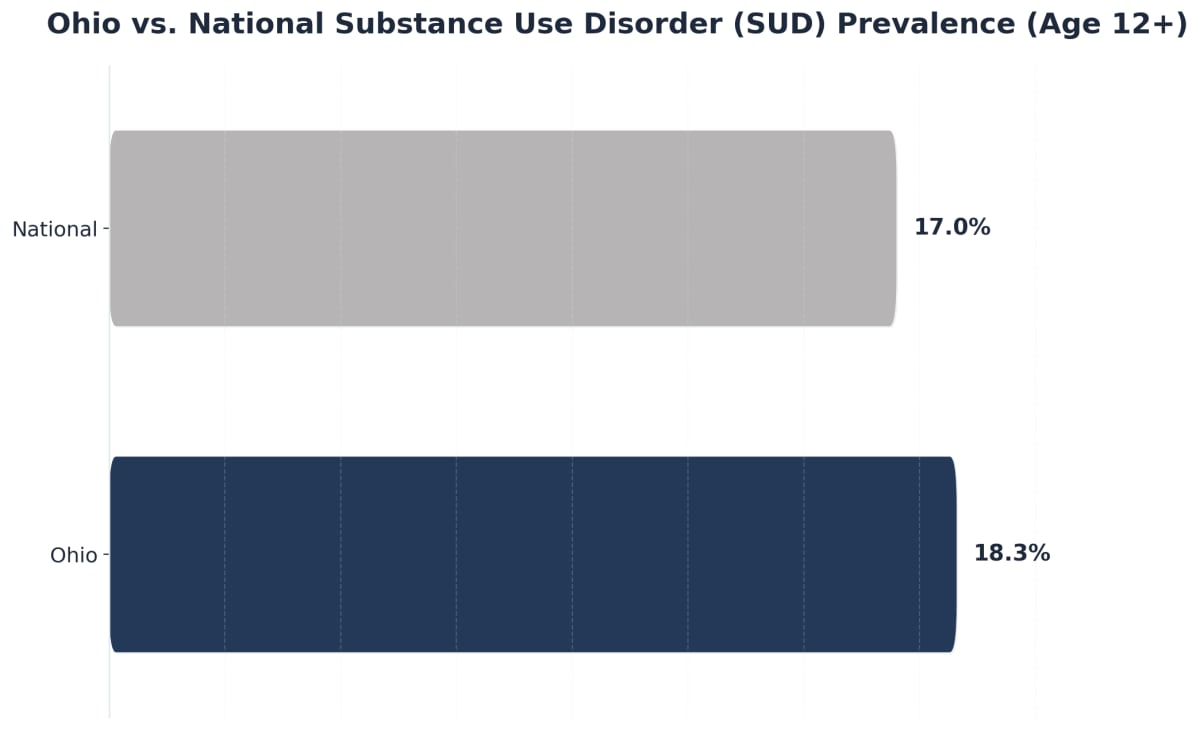
Ohio faces complex and deeply rooted challenges in its battle against substance use disorders. As you begin your search for drug rehab facilities near me, it is helpful to understand the scope of the issue to realize you are not alone. The state’s prevalence rate for substance use disorder among those aged 12 and older stands at 18.3%, which is higher than the national average2.
This statistic translates to nearly 700,000 Ohioans requiring rehabilitation services each year1. The crisis is further intensified by the presence of synthetic opioids; in 2023, illicit fentanyl or its analogs were involved in 78% of unintentional drug overdose deaths, impacting communities from Cincinnati’s West End to rural stretches of Adams County2.
| Metric | Ohio Data | National Average |
|---|---|---|
| Substance Use Disorder Prevalence (12+) | 18.3% | 17.0% |
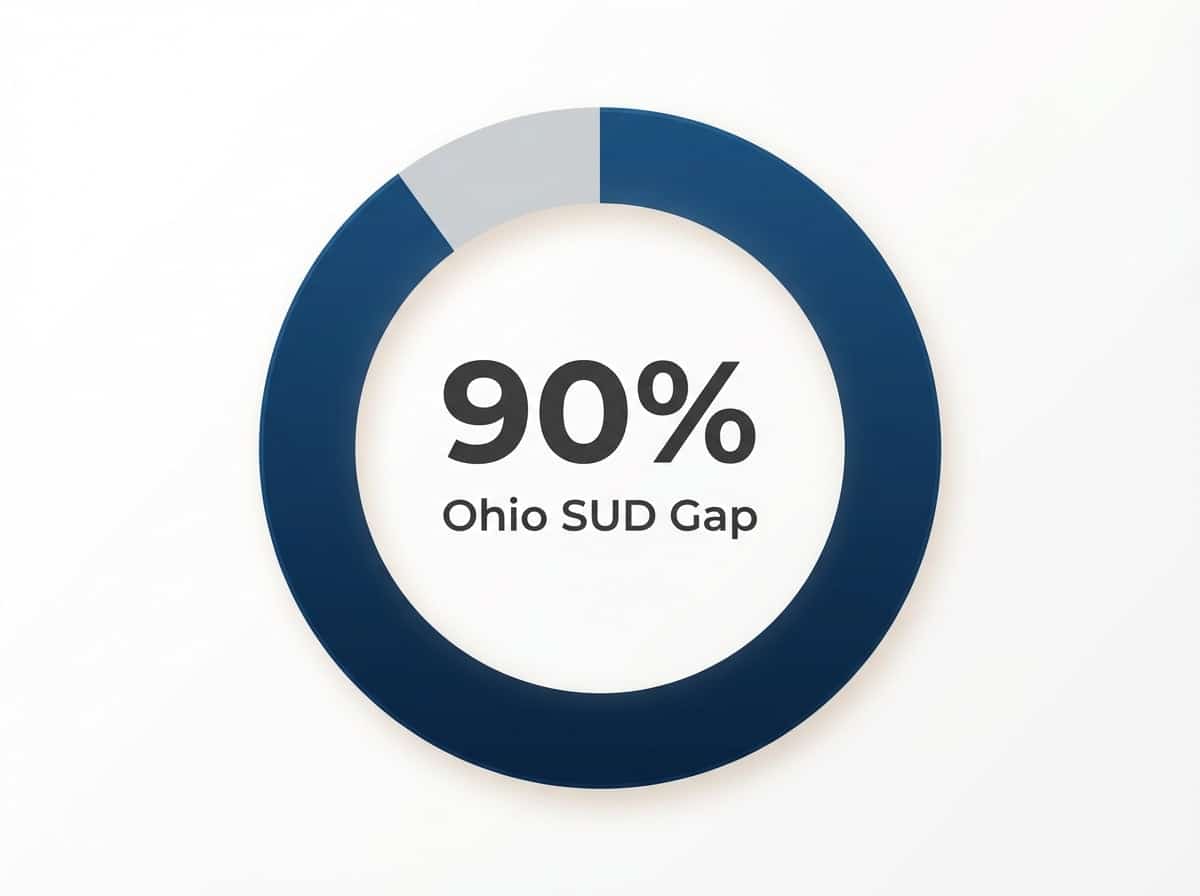
| Treatment Gap (Need vs. Receive) | ~90% | Varies |
| Fentanyl Involvement in Overdose | 78% | Varies by Region |
Access to care remains a significant hurdle. Approximately 90% of Ohioans who need treatment do not receive it due to specific barriers1:
- Transportation: Limited options in rural counties like Vinton or Meigs.
- Cost: Financial constraints and insurance navigation.
- Availability: Workforce shortages in specialized care.
- Stigma: Social pressure preventing individuals from seeking help.
Despite these obstacles, Ohio’s neighborhoods are home to people determined to build healthier futures. Tackling these unique challenges is essential to improving outcomes statewide.
Progress in Treatment Access Across Ohio
Over the past several years, Ohio has made significant progress in expanding access to treatment. One of the most notable changes is the 250% increase in opioid treatment providers since 2019, growing from just 35 facilities to 125 across the state1. This expansion means that individuals in neighborhoods from Cleveland’s Clark-Fulton area to the Short North in Columbus are more likely to find help close to home.
In 2024, overdose deaths in Ohio are projected to drop by 35%, the most substantial single-year decline in recent memory1. This signals that increased treatment options and harm reduction efforts are making a tangible impact. Key initiatives driving this progress include:
- Project DAWN: Available in over 350 organizations, distributing nearly 290,000 naloxone kits in 2023 alone3.
- Medicaid Expansion: 40% of adults covered by Medicaid now have a primary mental health or substance use disorder diagnosis, ensuring care regardless of income1.
While access gaps remain, especially in rural Ohio, these improvements reflect a statewide commitment to reducing stigma and increasing resources.
Evidence-Based Treatment Approaches at Drug Rehab Facilities Near Me
Medication-Assisted Treatment and Therapy Integration
Medication-Assisted Treatment (MAT) is a cornerstone of evidence-based care at many local facilities. In neighborhoods like University Circle in Cleveland or the Hilltop area of Columbus, MAT clinics are often located steps from major bus routes—such as the RTA Red Line stop at Cedar–University or the COTA Route 10 line. MAT combines FDA-approved medications with behavioral therapies to address opioid use disorder effectively.
Research indicates that individuals receiving MAT are up to three times more likely to achieve positive recovery outcomes compared to those who do not1. Ohio’s approach integrates MAT with:
- Personalized Counseling: One-on-one sessions to address root causes.
- Group Therapy: Peer-supported environments.
- Cognitive-Behavioral Therapy (CBT): Identifying and changing negative thought patterns6.
“I could walk from the Findlay Market to my MAT appointments and get support from neighbors who understood my journey.”
— Resident, Cincinnati’s Over-the-Rhine
Many facilities in Ohio also coordinate family involvement. Free parking is often available on nearby residential streets, and several centers are within a 10-minute walk of public transit stops, further reducing barriers to care7.
Dual Diagnosis Care for Co-Occurring Conditions
Dual diagnosis care addresses the reality that many Ohioans face both substance use and mental health challenges simultaneously. In neighborhoods like Olde Towne East in Columbus or Cleveland’s Detroit-Shoreway, local centers provide integrated support for depression, anxiety, PTSD, or bipolar disorder alongside substance use concerns.
Nationally, only 18% of addiction treatment programs are considered “dual diagnosis capable,” but Ohio has focused on raising these numbers8. One study found that addiction treatment programs improved from 11% to 48% dual diagnosis capability after participating in targeted quality improvement initiatives8.
Residents in Lakewood have noted, “Having counseling and psychiatric care under one roof saved so much time—and let me focus on my recovery without bouncing between offices.” Parking is available behind the 117th Street facility, and the center is just a five-minute walk from the Red Line stop at Madison Avenue.
Levels of Care: Finding the Right Drug Rehab Facilities Near Me
Residential and Partial Hospitalization Options
Residential and partial hospitalization programs are vital for individuals needing high-level support. These facilities are often located in accessible neighborhoods—such as near MetroHealth Medical Center in Cleveland or Alum Creek Drive in Columbus. These centers typically sit within a short walk of major bus lines, including the RTA HealthLine or COTA Route 1.
| Feature | Residential Treatment | Partial Hospitalization (PHP) |
|---|---|---|
| Environment | Live-in, 24/7 supervision | Day treatment, sleep at home |
| Intensity | Highest level of medical/clinical care | High intensity (6-8 hours/day) |
| Best For | Stabilization, detox, breaking routines | Transitioning from residential, high support needs |
According to statewide data, only about 10% of those who need treatment in Ohio actually receive it, making the accessibility of these programs especially important1. One resident from the Ohio City neighborhood shared, “Having a center right on my block meant I could finally get help without worrying about transportation.”
Outpatient Programs for Working Professionals
Outpatient facilities throughout Ohio neighborhoods—from Shaker Square in Cleveland to Grandview Heights in Columbus—offer practical support tailored for working professionals. Many centers are located near major intersections, such as Lee Road and Van Aken Boulevard, making them easy to reach before or after work.
Public transportation is a significant advantage; riders can access outpatient programs via the RTA Blue Line at Drexmore or the COTA Route 5 bus stop on Goodale Boulevard. Outpatient programs typically include:
- Individual and group counseling.
- Cognitive-Behavioral Therapy (CBT) to identify triggers6.
- Medication management.
- Flexible scheduling (evenings/weekends).
A Grandview resident recently shared, “Being able to attend therapy on my lunch break meant I didn’t have to choose between my career and my health.”
Navigating Insurance, Access, and Admission in Ohio
Substance use disorders continue to impact communities across Ohio, with the state reporting over 5,000 overdose deaths in recent years. For families in Northeast Ohio, understanding how to access help is critical. Most residential and outpatient treatment facilities in Ohio accept a range of insurance plans, including private insurance, Medicaid, and Medicare.
Over 85% of residential facilities accept Medicaid, which has expanded significantly to improve access. Before admission, facilities typically conduct a verification of benefits. To streamline this process, prepare the following Pre-Admission Checklist:
- Insurance Card: Have your physical card or digital copy ready.
- ID: Valid driver’s license or state ID.
- Medical History: A list of current medications and past diagnoses.
- Emergency Contact: Name and phone number of a trusted support person.
The admission process generally begins with a phone assessment to evaluate the level of care needed. Clinical staff will ask about patterns of use, mental health concerns, and medical conditions. Many facilities in Ohio can arrange admission within 24 to 48 hours for individuals who need immediate support.
For those without insurance, County Alcohol, Drug Addiction, and Mental Health Services (ADAMHS) boards coordinate local resources and can connect individuals with sliding-scale payment options. Transportation assistance is also frequently available, particularly in rural areas, to ensure you can reach your intake appointment.
Finding Comprehensive Care in Northeast Ohio
Having navigated the practical steps of admission, individuals can explore specific treatment resources in Northeast Ohio. The region offers a robust network from Cleveland’s University Circle to Akron’s healthcare corridor. Residents can access various levels of care, including medical detoxification, residential treatment, and intensive outpatient programs.
Many facilities in the region provide specialized services to meet diverse needs:
- Trauma-Informed Care: Programs designed for individuals with PTSD or childhood trauma.
- Gender-Specific Tracks: Separate programming for men and women to foster safety and vulnerability.
- LGBTQ+ Affirming Services: Staff trained in the specific needs of the LGBTQ+ community.
- EMDR Therapy: Eye Movement Desensitization and Reprocessing to process traumatic memories.
The region’s treatment landscape includes both private facilities and community-based programs. Strong partnerships between providers and recovery community organizations, like the Cleveland Recovery Network, create unique peer support opportunities. This comprehensive network reflects Northeast Ohio’s commitment to addressing chemical dependency with compassion.
Frequently Asked Questions
How many times do people typically attempt recovery before finding success?
Recovery is often a journey that requires multiple attempts, and this is true for many Ohioans seeking help at drug rehab facilities near me. Research shows that the typical number of serious recovery attempts before success is around two to three, but the average is higher—over five—because some people need many tries before lasting change10. Factors like previous treatment history, mental health conditions, and life stressors can affect how many attempts it takes. Remember, each step forward, even if it doesn’t lead to immediate success, is part of building a stronger recovery foundation10.
Can family members participate in my treatment program in Ohio?
Yes, many drug rehab facilities near me in Ohio encourage family involvement as part of the recovery process. Local centers in neighborhoods from Lakewood to Dublin often offer family therapy sessions, educational workshops, and visitation opportunities, recognizing that support from loved ones can greatly improve long-term outcomes. Research shows that when family members participate in evidence-based therapies, such as Cognitive-Behavioral Therapy (CBT), people experience better recovery success and a reduction in substance use7. Ask your treatment team about specific ways your family can participate, whether through in-person meetings, phone check-ins, or support groups tailored to families. Including loved ones in care helps build a stronger foundation for lasting recovery.
What should I do if I live in a rural area of Ohio with limited treatment options?
If you live in a rural part of Ohio and have limited access to drug rehab facilities near me, consider using telehealth services, which are expanding across the state to bridge these gaps3. Many rural Ohioans have started their recovery journey with virtual therapy sessions from locations like local libraries or community centers, then arranged transportation to in-person appointments as needed. Project DAWN sites in counties such as Athens and Muskingum also provide harm reduction resources and help connect residents to treatment when local options are scarce3. Reaching out to your county mental health board or a regional helpline can help you find available support and referrals.
Will my employer find out if I enter a rehab program?
Your privacy is protected by federal laws like HIPAA, so Ohio employers typically will not be informed if you seek help at drug rehab facilities near me. Treatment centers in neighborhoods from Worthington to Akron are required to keep your health information confidential unless you give written permission. The only exceptions are rare situations involving workplace safety or if you choose to use job-protected leave under the Family and Medical Leave Act (FMLA), in which case your employer may know you are on medical leave but not the reason. Seeking treatment is your private decision, and most local programs work hard to safeguard your confidentiality9.
Does Ohio Medicaid cover substance use disorder treatment?
Yes, Ohio Medicaid does cover substance use disorder treatment. This includes services like detox, counseling, outpatient and residential programs at many drug rehab facilities near me. In fact, nearly 40% of Ohio adults receiving Medicaid have a primary diagnosis related to mental health or substance use, highlighting how crucial Medicaid is for expanding access to care statewide1. Many local centers accept Medicaid and can help guide you through the application and admission process. If you have questions about specific services covered or need help with enrollment, your local treatment center or county mental health board can provide more details.
Are there specialized programs for veterans with PTSD and substance use issues in Ohio?
Yes, Ohio offers specialized programs for veterans experiencing both PTSD and substance use concerns. Many drug rehab facilities near me partner with the VA or local veterans’ organizations to provide trauma-informed care, including evidence-based therapies such as Cognitive-Behavioral Therapy (CBT) and Medication-Assisted Treatment (MAT)6. Centers in areas like Parma and around the Dayton VA campus offer group sessions tailored for veterans and may include peer support from other Ohio veterans who understand military experiences. Transportation assistance and free parking options are often available to accommodate those traveling from nearby neighborhoods. These programs aim to address both mental health and substance use together, supporting veterans in building healthier futures.
What is Project DAWN and how can it help me or my loved one?
Project DAWN (Deaths Avoided With Naloxone) is a statewide program in Ohio dedicated to preventing overdose deaths by providing free naloxone kits and education to the community. With over 350 organizations participating, Project DAWN distributed nearly 290,000 naloxone kits in 2023 alone, making this life-saving medication widely available in neighborhoods from Dayton to Zanesville3. Anyone can visit a Project DAWN site, often located near local health departments, libraries, or community centers, to receive naloxone and learn how to use it in case of an opioid overdose. For Ohioans searching for drug rehab facilities near me, Project DAWN can be a critical first step to staying safe while seeking long-term support.
Conclusion
Northeast Ohio’s substance use disorder treatment landscape offers both accessible pathways to care and comprehensive regional support—from county ADAMHS boards that coordinate local services to evidence-based treatment facilities and peer-led recovery communities. The region’s strength lies not just in the variety of options available, but in the coordinated network that helps individuals navigate from crisis to long-term recovery.
For those ready to take action, start by contacting your county’s Alcohol, Drug Addiction, and Mental Health Services (ADAMHS) board, which can assess your needs and connect you with appropriate local resources. If you’re in crisis, the Ohio Crisis Text Line (text 4HOPE to 741741) provides immediate support 24/7. Consider reaching out to facilities mentioned throughout this article—whether the Cleveland Clinic’s Addiction Services, Glenbeigh’s specialized programs, or community-based options like Oriana House—to discuss intake processes and treatment approaches that align with your situation.
The path forward begins with a single conversation. Connect with Arrow Passage Recovery today to get started on your healthier tomorrow.
References
- Access to mental health and substance use disorder treatment. https://www.healthpolicyohio.org/files/publications/2025medicaidstudymhsudrev05.16.20254.pdf
- SAMHSA Releases Annual National Survey on Drug Use and Health. https://www.samhsa.gov/newsroom/press-announcements/20250728/samhsa-releases-annual-national-survey-on-drug-use-and-health
- 2025 Annual Report. https://dbh.ohio.gov/wps/portal/gov/dbh/about-us/media-center/annual-reports/2025-annual-report
- Ohio SOR Initiatives. https://nasadad.org/wp-content/uploads/2024/09/Ohio-SOR-Brief-Draft-2024_Final.pdf
- Rural–urban differences in out‐of‐network treatment initiation. https://pmc.ncbi.nlm.nih.gov/articles/PMC11366955/
- Cognitive-Behavioral Therapy for Substance Use Disorders. https://pmc.ncbi.nlm.nih.gov/articles/PMC2897895/
- Involving family members in substance use disorder treatment. https://www.recoveryanswers.org/research-post/involve-family-in-treatment-enhance-substance-use-disorder-outcomes/
- Dual diagnosis capability in mental health and addiction treatment. https://pmc.ncbi.nlm.nih.gov/articles/PMC3594447/
- Words Matter – Terms to Use and Avoid When Talking About Addiction. https://nida.nih.gov/nidamed-medical-health-professionals/health-professions-education/words-matter-terms-to-use-avoid-when-talking-about-addiction
- How Many Recovery Attempts Does it Take to Successfully Resolve. https://pmc.ncbi.nlm.nih.gov/articles/PMC6602820/