
What Are the Types of Addictions to Know About?
Key Takeaways
- Addiction divides into substance and behavioral categories, with every major substance carrying a formal diagnosis but only gambling disorder and internet gaming disorder reaching that status on the behavioral side 13, 18.
- The type of addiction determines withdrawal risk and treatment path — alcohol and benzodiazepines can make stopping medically dangerous, while opioids respond best to medication-assisted treatment 15, 17.
- Co-occurring mental health conditions like depression, anxiety, and PTSD usually run alongside addiction and feed it, which is why addiction-only treatment so often fails the second time around 4, 5, 6.
- Families should focus on bringing the pattern, timeline, and mental health history to an integrated program that assesses and treats both conditions together rather than in sequential, siloed care 16, 17.
When You Can’t Quite Name What You’re Seeing at Home
You’ve been watching. That’s why you’re here. Maybe it started with a missing prescription bottle, a credit card statement that didn’t add up, or a teenager who stopped coming downstairs for dinner. You’re not sure if what you’re seeing has a name yet, but it has weight. It sits on your chest at three in the morning.
Here’s the thing about addiction: it isn’t one shape. It splits into two big categories that behave differently, look different from the outside, and respond to different kinds of help. There are substance addictions — alcohol, opioids, stimulants, sedatives, cannabis, nicotine, and others the CDC tracks as part of substance use disorder 1. And there are behavioral addictions, sometimes called process addictions, where the compulsion attaches to an activity rather than a drug 13, 18.
What you’re trying to do right now — match what you see at home to a category — is the right first move. The type matters. It changes what withdrawal looks like, what the risks are, and what kind of treatment actually works. The pages ahead will give you a map, not a checklist. And they’ll keep coming back to one quiet truth most families learn the hard way: addiction almost never travels alone.
A Two-Axis Map of Addiction Worth Keeping in Your Head
Picture a simple grid. You’ll use it more than you expect in the weeks ahead.
The vertical axis splits addiction into two camps. On one side: substance addictions — alcohol, opioids, stimulants, cannabis, nicotine, sedatives, hallucinogens, and inhalants. On the other: behavioral addictions (also called non-substance or process addictions) — gambling, gaming, internet and phone use, sex, food, and shopping. Medical literature treats these as two distinct categories sharing a common biology of craving, compulsion, and relapse 13, 18.
The horizontal axis is where families get tripped up. It separates what’s formally recognized in the diagnostic manuals clinicians actually use from what’s still emerging or contested. Every substance on that list above has a formal diagnosis attached to it — alcohol use disorder, opioid use disorder, and so on 13. On the behavioral side, the picture is narrower. Only gambling disorder and internet gaming disorder have reached formal diagnostic status. Food, sex, shopping, social media, and general internet use are still being studied and argued over 18.
Why does this map matter when your loved one is the one struggling? Because it tells you two useful things at once. First, what you’re seeing has a name, even if the name is provisional. A son who can’t put the controller down and a daughter who hides wine bottles are not facing the same condition, but the underlying pattern — losing control over something that’s hurting them — comes from the same neighborhood of the brain 13.
Second, the map shows you where the science is solid and where it’s still moving. That matters when you talk to a doctor, a school counselor, or a treatment center. You can say, plainly, “I think this is opioid use disorder” or “I think this is gambling disorder, and I’m worried about depression too” — and be speaking the same language as the clinician across the desk. The sections ahead fill in each quadrant. Keep the grid in mind as you read.
Substance Addictions: What the Major Categories Actually Look Like
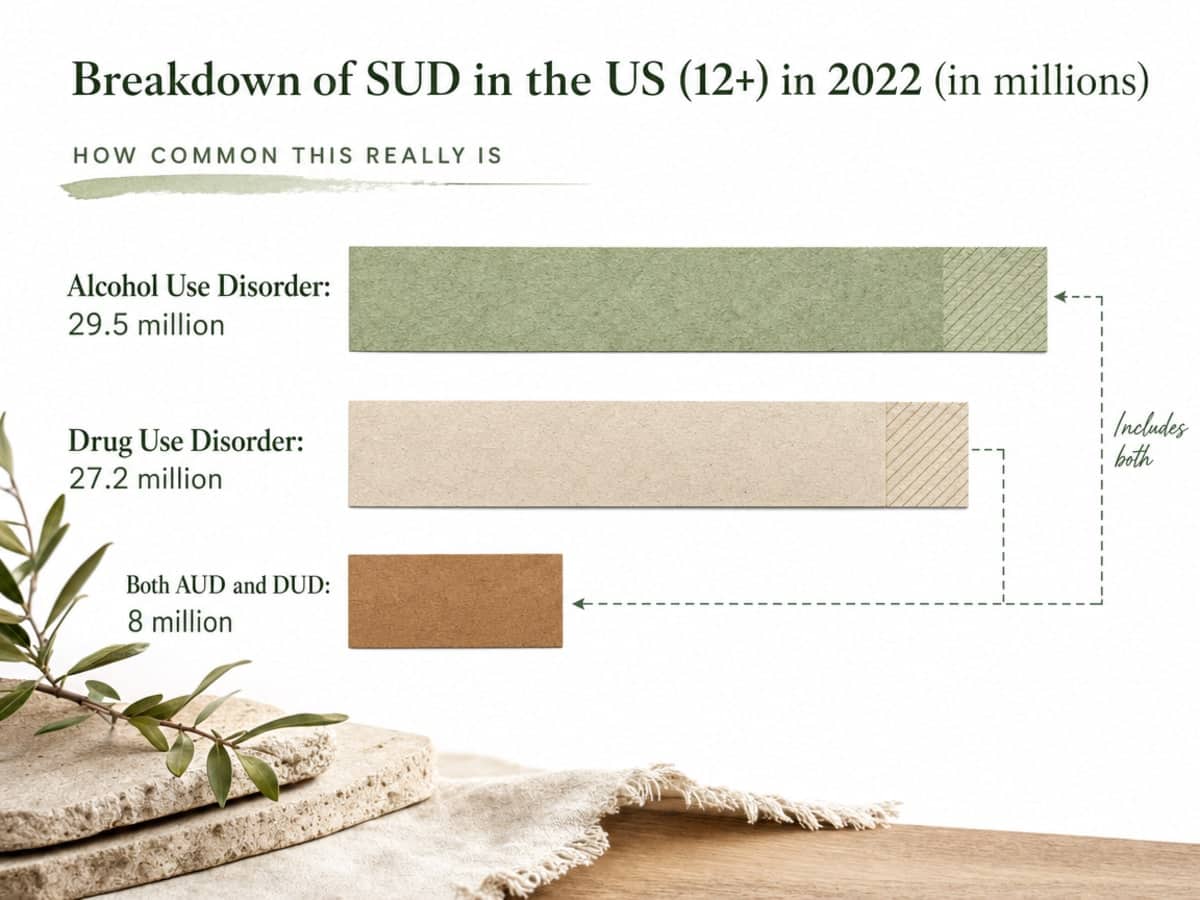
How Common This Really Is
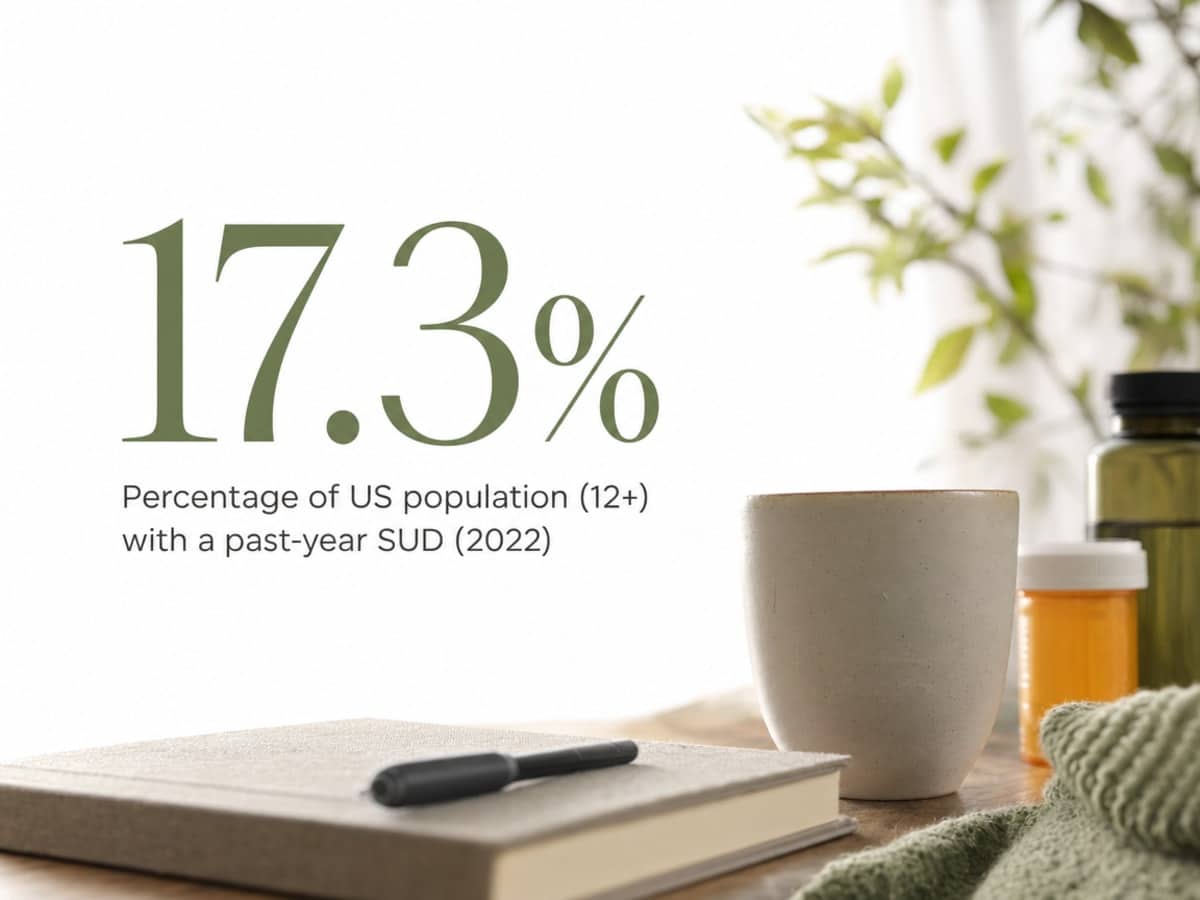
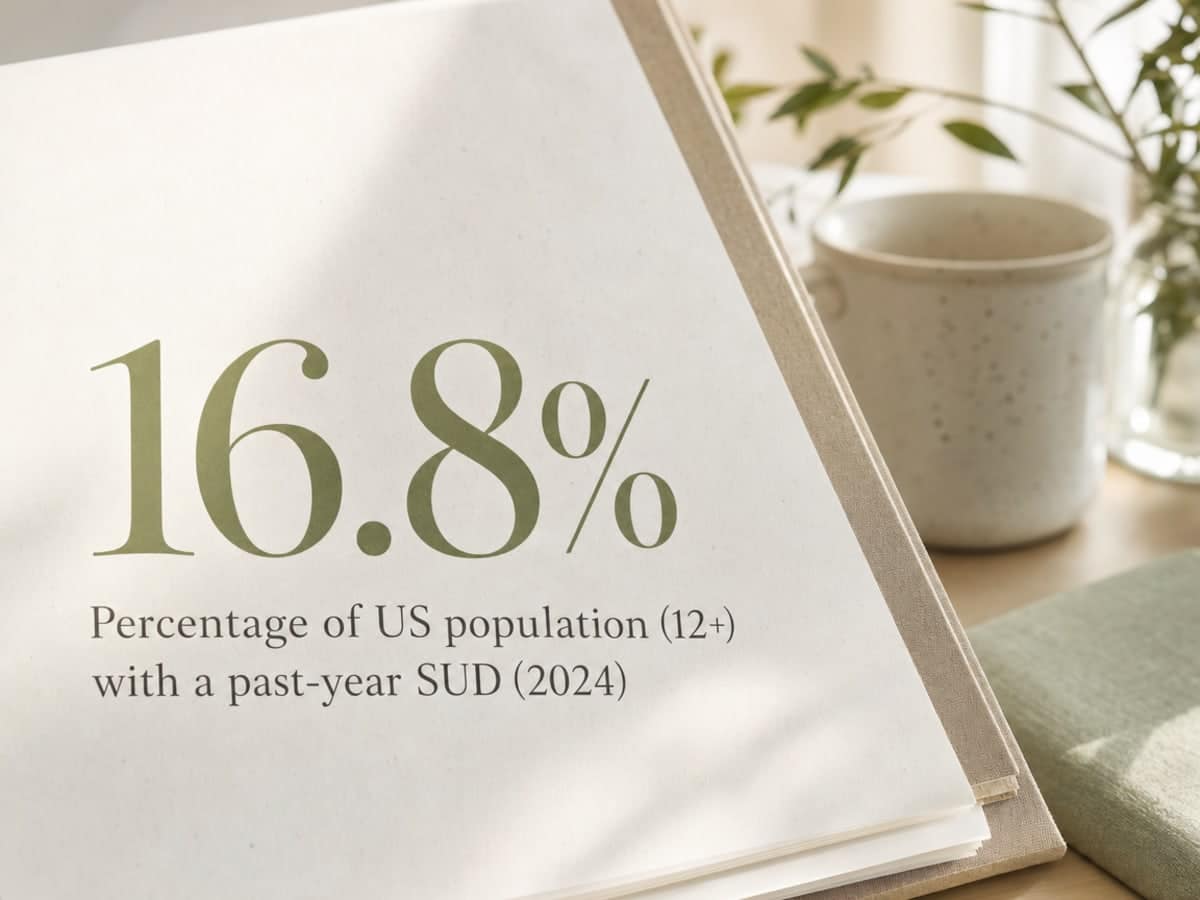
If part of you keeps wondering whether you’re overreacting, here are the numbers that pushed many families past that question. In 2022, about 48.7 million people in the U.S. aged 12 and older had a past-year substance use disorder. Of those, 29.5 million had an alcohol use disorder, 27.2 million had a drug use disorder, and 8.0 million carried both at the same time 2.
Sit with the overlap for a second. Eight million people aren’t choosing between alcohol and another drug — they’re using both, often to soften the edges of each. That polysubstance pattern is part of why “is it the drinking or the pills?” rarely has a clean answer at the kitchen table.
What this means for you: what you’re seeing isn’t rare, and it isn’t a character flaw in your family. Substance use disorder is a chronic, treatable medical condition with criteria a clinician can apply 1, 11. The work ahead is to figure out which category you’re actually dealing with, because the answer changes everything about what help should look like.
Alcohol: The Addiction That Hides Inside Normal
Alcohol is the one most families miss the longest, because so much of it looks like life. Wine at book club. Beer after the mower. A nightcap that became two, then four, then a bottle you don’t talk about. With 29.5 million Americans meeting criteria for alcohol use disorder in a single year 2, the odds that the heavy drinker you love is “just a drinker” are smaller than you’ve been telling yourself.
The household signals tend to be quiet ones. Recycling bins that fill faster than they used to. A spouse who showers before bed, every night, no exceptions. Mornings that start with shaky hands or a fast heart, smoothed out by 10 a.m. Defensiveness when you bring up cutting back. Promises that hold for three days.
Opioids: When Sleep, Skin, and Money Change First
Opioid use disorder often introduces itself through the body before it shows up in conversation. Prescription painkillers, heroin, and fentanyl all act on the same brain receptors, which is why a back surgery in 2019 can become a fentanyl problem in 2025 1, 15.
What you might notice at home: your son nodding off at the dinner table mid-sentence, then snapping awake and insisting he’s fine. Pinpoint pupils in bright rooms. Constant itching, especially on the face and arms. Long sleeves in July. A stomach that’s always off — constipation, nausea, cycles of both. Money that goes missing in small, deniable amounts. A prescription bottle that empties faster than the date on the label says it should.
Withdrawal from opioids is rarely life-threatening on its own, but it is brutal — body aches, sweats, vomiting, and the kind of psychological pain that sends people back to the drug within hours 15. This is why “just stop” almost never works with opioids, and why medication-assisted treatment with buprenorphine or methadone is considered a first-line option in evidence-based care 17. If you smell something acrid and chemical on foil or a spoon, call a treatment line that day. Fentanyl has changed what a single mistake costs.
Stimulants: Cocaine, Methamphetamine, and Misused ADHD Medication
Stimulants run in the opposite direction from opioids, and the signs follow suit. Where opioids slow a person down, stimulants speed them up — cocaine, crack, methamphetamine, and prescription medications like Adderall or Vyvanse when they’re taken outside of how a doctor wrote them 1, 15.
The pattern families describe sounds something like this: stretches of frantic productivity followed by days of sleeping through everything. Weight loss that can’t be explained by a new gym routine. Jaw clenching, tooth grinding, skin picking. A daughter whose pupils stay wide even in lamplight. Talking that loops back on itself, fast, with a brittle edge. Bank accounts that swing hard each month. For someone with a stimulant use disorder, the crash after a binge can look like severe depression — sleeping for two days, not eating, saying things that frighten you.
There is no FDA-approved medication for stimulant use disorder the way there is for opioids or alcohol, so treatment leans heavily on behavioral therapies, contingency management, and structure 17. The crash phase is also when suicide risk climbs, which is why families often need to involve a clinician sooner with stimulants than they think they should.
Sedatives, Cannabis, Nicotine, and the Ones Families Underestimate
The substances in this section share a single, frustrating quality: they all look less serious than they are.
Sedatives — benzodiazepines like Xanax, Klonopin, Ativan, and Valium, plus sleep medications like Ambien — start as a prescription for anxiety or insomnia and end as a daily dependency the prescriber may not know about. Withdrawal from long-term benzodiazepine use is in the same medically dangerous category as alcohol withdrawal; seizures and severe agitation are real risks, and tapering should be supervised 15. If your spouse is taking more than the bottle says, or filling at multiple pharmacies, treat it the way you’d treat opioids — quietly, urgently, and with professional help.
Cannabis is the one parents argue about most. Daily high-potency use, especially in adolescents and young adults, meets diagnostic criteria for cannabis use disorder and is associated with anxiety, depression, and, in vulnerable users, psychotic symptoms 1, 15. “It’s just weed” stops being true when grades collapse, friendships narrow to other users, and a 21-year-old can’t wake up without a dab pen.
Nicotine, including vaping, is on the CDC’s list of substances that cause use disorders for a reason 1. It’s not the one that breaks up a marriage, but it’s the one that shortens it. Hallucinogens and inhalants round out the list — less common, but inhalant use in particular (aerosols, solvents) can cause sudden cardiac death even on a first try 1.
The throughline: don’t let a substance’s cultural reputation set your alarm level. Let the pattern of use — the lying, the loss of control, the consequences your loved one keeps absorbing — do that instead 11.
Behavioral Addictions: Why a Phone or a Sportsbook Can Hook the Same Brain
The Shared Wiring Beneath Substance and Process Addictions
Here’s the part that surprises most parents: you don’t need a drug to get addicted. The brain’s reward system — the same circuitry that lights up when someone takes an opioid or pours a drink — also responds to a winning bet, a level cleared at 2 a.m., or a notification that pings just often enough to keep a thumb scrolling 14.
What researchers call behavioral or non-substance addictions share the core features of substance addictions: compulsive engagement, diminished control, and continued behavior despite consequences your loved one can clearly see 8, 13. The cycle of craving, indulgence, and regret looks the same from across the dinner table. That’s why it feels familiar to you even when there’s no bottle or baggie involved.
Gambling and Gaming: The Two With Formal Diagnostic Status
Among the seven behavioral addictions most studied worldwide — gambling, gaming, internet and communication technology use, sex, food, sports, and shopping — only two have crossed into formal diagnostic territory 9. Gambling disorder and internet gaming disorder are the ones clinicians can diagnose using the same kind of criteria they use for substances 7, 8.
Gambling at home rarely starts with a casino. It starts with a sports app, a fantasy league, or a few late-night spins. The signals families describe: a checking account that swings hard on Sundays, a partner who lies about a paycheck, secret credit cards, mood that rises and falls with a score you didn’t know was being tracked. Gambling disorder is the behavioral addiction with the longest research history, and brain imaging shows it activates reward pathways in patterns close to what stimulants do 8.
Gaming earned its diagnostic status — internet gaming disorder — because the evidence got hard to ignore 7. The pattern parents notice: a son who skips meals to keep playing, falling grades, irritability when the console is off, sleep cycles flipped backward, friendships that exist only inside a headset. Not every heavy gamer has gaming disorder. But when the game is winning against school, work, hygiene, and the people in the room, you’re not watching a hobby anymore.
Food, Sex, Shopping, Social Media: What the Science Does and Doesn’t Say
This is where you’ll want a careful answer, because the internet will sell you a louder one.
Food addiction, sex addiction, shopping addiction, problematic social media use, and broader internet addiction all show up in serious research 9, 18. People meet self-report criteria. Brain scans light up in suggestive ways. Families describe lives that have narrowed around a single behavior. And yet none of these have reached formal diagnostic status the way gambling and gaming have 7. The science isn’t denying these struggles — it’s still arguing about where the line falls between a compulsion, an impulse-control problem, and a true addiction 8.
For you, the practical answer is simpler than the academic one. If your spouse can’t stop online shopping despite mounting debt, if your daughter’s phone use is wrecking her sleep and her friendships, if your partner’s pornography use is hiding inside every spare hour — those are real problems that deserve real help, whether or not the DSM has caught up. A good clinician will treat the pattern, not wait for the label. Bring what you’re seeing. The name can come later.
The Co-Occurring Disorder Most Families Miss
Here’s something most families don’t learn until they’re deep into treatment: the addiction is usually only half the story. The other half is a mental health condition that’s been running alongside it, often for years, sometimes longer than the substance use itself.
Federal guidance defines co-occurring disorders as any combination of a substance use disorder and a mental health disorder identified in the DSM-5-TR — there’s no special named pairing required, and the combinations are essentially unlimited 4. Depression, anxiety, PTSD, bipolar disorder, ADHD, and personality disorders all sit at the top of the list of what shows up alongside addiction 5, 6. Generalized anxiety, panic disorder, and post-traumatic stress disorder are particularly common partners, which is why so many families describe their loved one as “self-medicating” without quite knowing they’re naming a clinical pattern 6.
The two conditions feed each other. The drinking quiets the panic; the panic gets worse when the drinking stops; the next drink arrives sooner. NIDA frames this plainly: co-occurring conditions interact and can worsen each other’s symptoms and outcomes 5. That’s why addiction-only treatment so often fails the second time around — the untreated anxiety or trauma is still in the room.
If you’ve ever thought, “He was anxious long before any of this started,” or “She’s been depressed since high school,” trust that instinct. Bring it to whoever assesses your loved one. You’re not adding a complication — you’re handing the clinician the other half of the picture.
What the Type Tells You About Risk, Withdrawal, and Next Steps
Once you have a category in mind, you can stop asking “is this bad?” and start asking the more useful question: how bad, how fast, and what’s the first call?
The type tells you about withdrawal risk first. Alcohol and benzodiazepines are the two where stopping cold can kill someone — seizures, dangerous spikes in heart rate, delirium. If your loved one is a heavy daily drinker or has been on a benzo for months, a supervised detox isn’t optional 15. Opioid and stimulant withdrawal feel unbearable but are rarely life-threatening on their own; the danger sits on the other side, in overdose after a few clean days when tolerance has dropped 15. Behavioral addictions don’t have a physical withdrawal in the medical sense, but the crash — irritability, depression, sleep loss when the behavior stops — is real and predictable 8.
The type also tells you what kind of treatment has the best evidence. Opioid use disorder responds to medication-assisted treatment. Alcohol use disorder has FDA-approved medications too. Stimulant and behavioral addictions lean on therapy and structure 17. Bring the type, the timeline, and any mental health history to your first call. That’s the next step.
What Integrated Treatment Looks Like When You Pick Up the Phone
When you finally call, the first thing a good program does is refuse to treat half the problem. Integrated care means the addiction and the mental health condition are assessed and treated together, by the same team, in the same plan — not handed off between a rehab and a separate therapist who never talk 16. Federal guidance recommends this approach precisely because sequential, siloed care is where so many families have already watched their loved one slip 16.
What that looks like in practice: a thorough intake that asks about substances and mental health and trauma history in the same conversation. Medical detox when the type calls for it — alcohol, benzodiazepines, opioids. Therapy that addresses depression, anxiety, or PTSD alongside the substance work, not after it. And a continuum of care — residential, partial hospitalization, intensive outpatient, ongoing counseling — built around the idea that addiction behaves like a chronic condition, not a one-time crisis 17.
You don’t need a perfect diagnosis before you call. Bring what you’ve noticed. A program like Arrow Passage Recovery will help sort the rest. You’ve already done the hard part — paying attention long enough to know something needs to change.
Talk Now About Support for All Addictions
Get guidance right away for addressing any type of addiction in your care.
Discuss Your Loved One’s Unique Recovery Needs
Connect with an expert to explore supportive treatment options tailored to your family’s specific challenges.
Frequently Asked Questions
What are the main types of addictions?
Addiction splits into two medical categories: substance addictions and behavioral (non-substance) addictions 13, 18. Substance addictions involve alcohol, opioids, stimulants, cannabis, sedatives, hallucinogens, inhalants, and tobacco 1. Behavioral addictions involve compulsive activities like gambling, gaming, internet use, sex, food, and shopping, with only gambling disorder and internet gaming disorder formally recognized in diagnostic manuals 7, 9.
Is behavioral addiction a real addiction, or just a bad habit?
It’s real. Brain imaging shows behavioral addictions activate the same reward circuits as substance addictions, and they share the same core features — compulsive engagement, diminished control, and persistence despite consequences 7, 8, 14. Gambling disorder and internet gaming disorder have formal diagnostic status, and your loved one’s struggle deserves real clinical help whether the specific label is settled or not 8.
How do I tell the difference between heavy use and an actual addiction in someone I love?
Watch for the pattern, not the quantity. Federal definitions describe addiction as compulsive use, loss of control, and continued use despite clear harm — relationship damage, money problems, health changes, broken promises 1, 11. Heavy use without those losses is risky but different. When the substance or behavior keeps winning against things your loved one says they value, you’re looking at something that needs clinical assessment 15.
Why does my family member’s addiction seem tied to depression or anxiety?
Because it usually is. Co-occurring disorders — a mental health condition alongside the addiction — are the rule, not the exception, and any DSM-5-TR mental disorder can pair with any substance use disorder 4. Anxiety, depression, PTSD, and mood disorders show especially high overlap 5, 6. Each condition worsens the other, which is why integrated treatment that addresses both at once is the recommended approach 16.
Does the specific type of addiction change what treatment should look like?
Yes, significantly. Alcohol and benzodiazepine withdrawal can be medically dangerous and require supervised detox 15. Opioid use disorder responds best to medication-assisted treatment with buprenorphine or methadone 17. Stimulant and behavioral addictions rely more on behavioral therapies and structured support 17. The Surgeon General’s guidance emphasizes matching evidence-based interventions to the specific disorder within a chronic-care model rather than a one-size approach 17.
Are food, sex, shopping, and social media officially recognized as addictions?
Not yet, in formal terms. These behaviors appear regularly in research, and people meet self-report criteria for compulsive patterns, but they haven’t reached the diagnostic status that gambling and gaming have 7, 9. Scientists are still debating where compulsion ends and addiction begins 8, 18. That doesn’t make the suffering less real — a good clinician treats the pattern and the harm it’s causing, regardless of where the label currently sits.
References
- Treatment of Substance Use Disorders | Overdose Prevention – CDC. https://www.cdc.gov/overdose-prevention/treatment/index.html
- Results from the 2022 National Survey on Drug Use and Health: Key Substance Use and Mental Health Indicators. https://www.samhsa.gov/data/sites/default/files/reports/rpt42731/2022-nsduh-annual-national-web-110923/2022-nsduh-nnr.htm
- SAMHSA Releases Annual National Survey on Drug Use and Health. https://www.samhsa.gov/newsroom/press-announcements/20250728/samhsa-releases-annual-national-survey-on-drug-use-and-health
- Co-Occurring Disorders and Other Health Conditions. https://www.samhsa.gov/substance-use/treatment/co-occurring-disorders
- Co-Occurring Disorders and Health Conditions. https://nida.nih.gov/research-topics/co-occurring-disorders-health-conditions
- Common Comorbidities with Substance Use Disorders Research Report. https://www.ncbi.nlm.nih.gov/books/NBK571451/
- Online Behavioral Addictions in 2023: An Overview and Current Challenges. https://pmc.ncbi.nlm.nih.gov/articles/PMC10417904/
- Introduction to Behavioral Addictions. https://pmc.ncbi.nlm.nih.gov/articles/PMC3164585/
- Global scientific production regarding behavioral addictions. https://pmc.ncbi.nlm.nih.gov/articles/PMC8664769/
- 2023 National Survey on Drug Use and Health (NSDUH) Releases. https://www.samhsa.gov/data/data-we-collect/nsduh-national-survey-drug-use-and-health/national-releases/2023
- Substance Use Disorder defined by NIDA and SAMHSA (legislative handout). https://wyoleg.gov/InterimCommittee/2020/10-20201105Handoutfor6JtMHSACraig11.4.20.pdf
- Challenges in addiction-affected families: a systematic review. https://pmc.ncbi.nlm.nih.gov/articles/PMC10273571/
- Drug Addiction. https://www.ncbi.nlm.nih.gov/books/NBK549783/
- The Neurobiology of Substance Use, Misuse, and Addiction. https://www.ncbi.nlm.nih.gov/books/NBK424849/
- Substance use disorders: a comprehensive update of classification, assessment and treatment. https://pmc.ncbi.nlm.nih.gov/articles/PMC10168177/
- Managing Life with Co-Occurring Disorders. https://www.samhsa.gov/mental-health/serious-mental-illness/co-occurring-disorders
- Early Intervention, Treatment, and Management of Substance Use Disorders. https://www.ncbi.nlm.nih.gov/books/NBK424859/
- Definition of Substance and Non-substance Addiction. https://pubmed.ncbi.nlm.nih.gov/29098666/